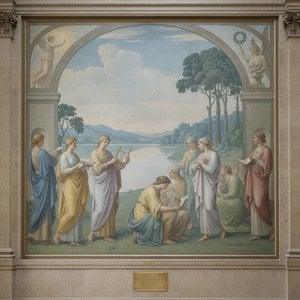
El Maestro de la Corte Milanesa
En la vibrante atmósfera, intelectualmente cargada, de la Milán renacentista, Giovanni Ambrogio de Predis emergió como una figura vital cuyo pincel capturó la esencia misma de la dinastía Sforza. Nacido en una distinguida familia de artistas lombardos alrededor de 1455, su juventud estuvo impregnada de las tradiciones de la iluminación y el diseño refinado. Junto a sus hermanos—Evangelista, Bernardino y Cristoforo—Ambrogio ayudó a forjar la identidad visual de una ciudad al borde de una revolución artística. Sus primeras incursiones en el mundo del arte estuvieron marcadas por la delicada precisión de un miniaturista, produciendo exquisitas iluminaciones para Libros de Horas en la década de 1470. Estas obras tempranas, aunque muchas se han perdido en el tiempo, establecieron su reputación de meticulosidad y gracia que más tarde definirían su retratística a mayor escala.
A medida que su carrera maduraba, de Predis trascendió la escala íntima de los manuscritos para abrazar las grandiosas exigencias de la corte de Ludovico Sforza. Este periodo marcó su ascenso a los círculos más altos de la sociedad milanesa, donde funcionó no solo como pintor, sino como un versátil diseñador de monedas, tapices e incluso escenografía teatral. Su capacidad para navegar las diversas necesidades de la ceca y el palacio ducal habla de un artista con un inmenso rango técnico, capaz de traducir el poder político en un esplendor visual perdurable.
Un Legado Entrelazado con Leonardo
Quizás el capítulo más cautivador de la vida de de Predis es su profunda conexión con el genio Leonardo da Vinci. Cuando Leonardo llegó a Milán, fue de Predis quien le ofreció hospitalidad, creando un puente entre dos de las mentes artísticas más significativas de la época. Esta relación trascendió la mera amistad, evolucionando hacia una monumental colaboración artística que dejaría una huella indeleble en la historia del arte. De la manera más célebre, se les atribuye a de Predis y a su hermano Evangelista la ejecución de los paneles laterales de la Virgen de las Rocas para la iglesia de San Francesco Grande. Mientras Leonardo infundía vida a las figuras centrales con su revolucionaria técnica del sfumato, los hermanos De Predis proporcionaron el marco estructural y atmosférico esencial que completó esta obra maestra sagrada.
Más allá de los retablos colaborativos, la labor de de Predis como retratista le permitió documentar los rostros de las figuras más influyentes de la era. Su habilidad para capturar la dignidad y el carácter de sus sujetos lo convirtió en el pintor predilecto para la diplomacia de alto nivel. Un caso notable ocurrió durante las negociaciones matrimoniales entre el emperador Maximiliano I y Bianca Maria Sforza; de Predis recibió la tarea de crear un retrato de la novia, una obra que la acompañaría a Innsbruck y serviría como embajadora visual de la elegancia milanesa.
Significado Artístico e Influencia Perdurable
La maestría artística de Giovanni Ambrogio de Predis se caracteriza por una mezcla única de precisión lombarda y las incipientes innovaciones atmosféricas del Alto Renacimiento. Aunque gran parte de su producción documentada sigue siendo objeto de debate académico debido a la naturaleza colaborativa de su taller, su influencia en la escuela milanesa es innegable. Sus contribuciones pueden resumirse a través de varios pilante clave de su carrera:
- Versatilidad de medio: Desde el detalle microscópico de la iluminación de manuscritos hasta las exigencias a gran escala del diseño de tapices y el grabado de monedas.
- Retrato cortesano: La capacidad de servir como cronista visual de la familia Sforza, capturando tanto el prestigio político como el parecido personal.
- Excelencia colaborativa: Desempeñar un papel crucial en la ejecución de grandes obras renacentistas junto a Leonardo da Vinci, ayudando a definir la estética de la corte milanesa.
- Maestría en el diseño: Su trabajo en la ceca local y el diseño escénico demostraron a un artista capaz de moldear el entorno físico y sensorial de su época.
Aunque falleció en 1522, dejando tras de sí un legado que a menudo se entrelaza con las sombras de grandes maestros, de Predis sigue siendo una piedra angular del Renacimiento lombardo. Su vida sirve como testimonio de la interconexión entre el arte, la política y la ciencia durante uno de los periodos más luminosos de la historia.
Preguntas y respuestas
¿En qué movimientos participó Giovanni Ambrogio De Predis?
Puedes explorar las obras de Giovanni Ambrogio De Predis por movimiento en su página de Todos los movimientos.
¿De dónde es Giovanni Ambrogio De Predis?
Giovanni Ambrogio De Predis nació en Italia.
¿A qué periodo histórico pertenecía Giovanni Ambrogio De Predis?
Giovanni Ambrogio De Predis trabajó durante el periodo Renacimiento. Este periodo sitúa la actividad del artista en su contexto histórico.