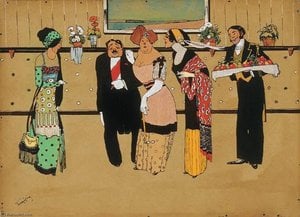
Geza Farago: A Hungarian Symbolist Visionary
Geza Farago (1877 – Present) stands as one of Hungary’s foremost figures in early 20th-century art, particularly celebrated for his distinctive contribution to the Symbolist movement and his mastery of the Art Nouveau style. His artistic legacy continues to resonate today through captivating paintings that explore profound themes—often imbued with melancholic beauty—and masterful depictions of human form intertwined with vibrant landscapes.
Early Life and Artistic Training
Born in Budapest, Farago’s formative years were marked by a dedication to artistic pursuits. He began his formal education under Ferenc Újházy, gaining foundational skills in drawing before venturing into the textile industry – an experience that would later inform his understanding of craftsmanship and visual composition. Recognizing his talent, he pursued further studies abroad, immersing himself in Parisian artistic circles where he honed his technique at the École des Arts Décoratifs and collaborated closely with the celebrated Czech artist Alphonse Mucha. This association proved pivotal, exposing him to Mucha’s innovative approach to decorative art and influencing his own stylistic sensibilities.
Parisian Influences and Artistic Development
Farago's time in Paris solidified his artistic vision. He participated in Salon exhibitions showcasing his evolving style—characterized by bold contours and luminous color palettes—demonstrating a commitment to experimentation and pushing the boundaries of artistic expression. Notably, he studied at Mucha’s workshop for two years, absorbing the Czech master’s techniques and aesthetic principles. His Parisian explorations extended beyond formal instruction; he frequented cafés and theaters, immersing himself in the vibrant cultural landscape of the era and drawing inspiration from its intellectual currents. The influence of Impressionism and Japonisme—particularly the stylized forms and flattened perspectives of Japanese woodcuts—became integral to his artistic vocabulary.
Style and Technique: Symbolist Elegance and Art Nouveau Flair
Farago’s distinctive style embodies the core tenets of Symbolism, prioritizing emotional resonance over literal representation. He skillfully blended decorative elements reminiscent of Art Nouveau with meticulous attention to detail and psychological depth. Recurring motifs—such as idealized female figures—were rendered in a graceful manner, reflecting Farago's fascination with beauty and femininity. His compositions were meticulously crafted, utilizing bold contour lines and expansive color fields to create immersive visual experiences. Like Mucha, he favored a decorative aesthetic that prioritized elegance and harmony, skillfully integrating ornamental patterns into his paintings.
Notable Works and Legacy
Farago’s oeuvre includes iconic pieces such as “Nakiri,” “Slim Woman with a Cat,” and “Paradise Lost”—each demonstrating his exceptional ability to convey complex emotions through evocative imagery. His posters—particularly those commissioned for Kerpel, Tingli Tangli, Janina and Tungsram —became emblematic of Hungarian Art Nouveau design, capturing the spirit of the time with humor, caricature, and striking visual impact. He served as a scenic designer for prominent theaters, including the King’s Theatre and Budapest Operetta Theatre, leaving an indelible mark on Hungarian theatrical culture. His ballet “Hungarian Wedding” toured internationally, showcasing his versatility as an artist and cementing his reputation as a visionary creative force. Today, Farago's paintings reside in prestigious collections—including the Hungarian National Gallery—testament to their enduring artistic merit and continuing relevance within the broader context of Symbolist art history.