La poesía del movimiento: La vida y el legado de George Rickey
George Rickey se erige como una figura singular en la escultura estadounidense, reconocido por su enfoque revolucionario del arte cinético: una fusión de abstracción geométrica y movimiento mecánico que cautivó al público a mediados del siglo pasado. Nacido en South Bend, Indiana, en 1907, los años formativos de Rickey estuvieron marcados por una fascinación temprana por los mecanismos simples, específicamente los cerrojos cónicos presentes en edificios históricos, lo que instiló en él una preocupación de por vida por los principios de diseño paradójicales. Este entendimiento intuitivo se convertiría en la piedra angular de su visión artística, dando forma a innumerables esculturas que desafían las nociones convencionales de la forma estática e invitan al espectador a contemplar el dinamismo dentro de estructuras aparentemente austeras. Su infancia estuvo profundamente influenciada por la atmósfera industrial de Glasgow, Escocia, donde su padre, ingeniero de la Singer Sewing Machine Company, fomentó un espíritu de innovación. Crecer cerca del río Clyde y aprender a navegar alrededor de las islas exteriores le proporcionó a Rickey una educación directa en los ritmos fluidos e impredecibles de la naturaleza, una base sensorial que más tarde se manifestaría en sus obras maestras impulsadas por el viento.Del lienzo a la ingeniería cinética
La trayectoria de la carrera de Rickey fue anything but lineal, evolucionando desde el mundo estático de la pintura hacia el complejo reino de la ingeniería mecánica. Tras estudiar en el Trinity College de Dublín y en el Balliol College de Oxford, se aventuró en París en 1926, sumergiéndose en la energía de vanguardia de la Académie L'Hote y la Académie Moderne. Estos años lo expusieron a los principios del constructivismo; sin embargo, su producción profesional temprana estuvo arraigada en medios mucho más tradicionales; durante la década de 1930 y principios de los 40, trabajó como pintor y muralista, completando incluso encargos a través de la WPA. No fue sino hasta su servicio en el Cuerpo Aéreo del Ejército durante la Segunda Guerra Mundial cuando una aptitud latente por la mecánica resurgió, alterando fundamentalmente su trayectoria artística. Comenzó a alejarse de la imagen fija hacia una exploración del movimiento mismo, buscando capturar lo que él llamaba "el vaivén de las ramas y el temblor de los tallos". A diferencia de muchos de sus contemporáneos que dependían de componentes motorizados, Rickey buscó una conexión más orgánica con el entorno, diseñando sus formas de acero inoxidable para reaccionar ante las alteraciones más delicadas en las corrientes de aire.La arquitectura del aire y el acero
La obra madura de Rickey se caracteriza por una elegancia profunda, donde materiales industriales pesados como el acero inoxidable se transforman en entidades líricas y sin peso. A menudo se refería a sus creaciones como "máquinas inútiles", un guiño juguetón a su falta de función utilitaria, aunque cumplían un propósito vital al redefinir la relación entre la escultura y el espacio. Sus esculturas, como la célebre serie Peristyle, utilizaban el principio del péndulo para crear un diálogo entre la gravedad y el aire. En estas obras, las láminas metálicas estaban calibradas con precisión para "hablar" entre sí a través del movimiento, desplazándose en una danza lenta, deliberada y, sin embargo, completamente impredecible que garantizaba que nunca colisionaran. Este dominio del equilibrio permitió que sus instalaciones de gran escala remodelaran paisajes, convirtiendo plazas públicas y jardines de museos en escenarios activos donde la luz, la sombra y el viento actúan en un flujo constante.Una impresión duradera en el modernismo
La importancia histórica de George Rickey reside en su capacidad para cerrar la brecha entre la geometría rígida de la abstracción y la belleza efímera del mundo natural. Si bien compartió mucho terreno con leyendas como Alexander Calder, Rickey se labró un nicho único al renunciar a lo motorizado en favor de lo atmosférico, centrándose menos en la forma física del objeto y más en los patrones de su movimiento. Su dedicación al "movimiento como medio" le valió el reconocimiento internacional y honores prestigiosos, incluido el Premio a la Trayectoria de por Vida del International Sculpture Center en 1999. Hoy en día, su legado persiste en las principales colecciones de museos de América del Norte, Europa y Asia, donde sus superficies brillantes y pulidas continúan capturando la luz e invitando al asombro. A través de su obra, se le recuerda al espectador que el arte no es simplemente algo que debe observarse en la quietud, sino un participante vivo y palpitante en un entorno en constante cambio.Preguntas y respuestas
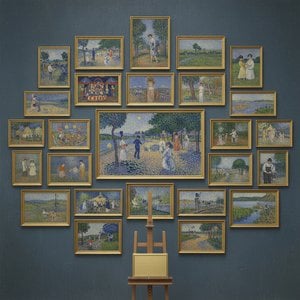
¿Dónde puedo visitar el museo virtual en 3D con las obras de George Rickey?
Las obras de George Rickey pueden verse en una galería 3D en la página Galería 3D del artista.
¿Dónde y cuándo nació George Rickey?
George Rickey nació en Glasgow en 1907.
¿Puedo explorar las obras de George Rickey por movimiento?
La página Todos los movimientos agrupa las obras de George Rickey por movimiento artístico.