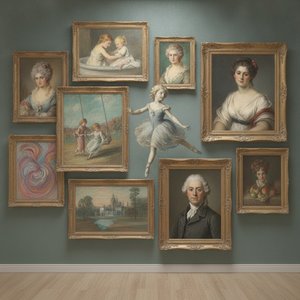
La Gracia Etérea de Gastón Bouy
En el vibrante y cambiante paisaje de la Francia de finales del siglo XIX, pocos artistas capturaron la delicada intersección entre la intimidad y la elegancia como Henri-Garant-Jules-Louis Bouy. Conocido en el mundo del arte simplemente como Gastón Bouy, surgió de las afueras de París, específicamente de Bois-Colombes, para convertirse en un maestro del medio pastel. Su vida, que abarcó desde 1866 hasta 1943, coincidió con una era transformadora en la estética europea, donde las estructuras rígidas del realismo académico comenzaron a ceder ante los ritmos fluidos y orgánicos del Art Nouveau y la experimentación luminosa del Impresionismo.
La trayectoria artística de Bouy estaba arraigada en las rigurosas tradiciones de la excelencia francesa. Su formación formal en la prestigiosa Académie Julian y en la École des Beaux-Arts le proporcionó una base técnica formidable. Durante estos años formativos, respiró la atmósfera de un París rebosante de revolución creativa, absorbiendo las sutiles lecciones de maestros como Auguste Renoir y Camille Pissarro. De ellos heredó una profunda sensibilidad hacia las cualidades efímeras de la luz y la capacidad de traducir los matices atmosféricos sobre una superficie, aunque eventualmente dirigiría su talento hacia una expresión más especializada y de bordes suaves.
Un Dominio de la Luz y el Pastel
Mientras muchos de sus contemporáneos buscaban la permanencia y el peso del óleo sobre lienzo, Bouy encontró su verdadera voz en el polvo efímero de los pasteles. Esta elección del medio fue fundamental para su identidad como artista. A diferencia de la naturaleza pesada y de lento secado del óleo, los pasteles le ofrecían una sensación de inmediatez y una luminosidad única que permitía gradaciones tonales sin precedentes. Poseía una capacidad poco común para superponer delicadas pinceladas de pigmento, mezclando meticulosamente los colores para crear superficies que parecían brillar desde el interior. Esta técnica dotó a sus retratos de una cualidad etérea, casi onírica, haciendo que la piel de sus sujetos pareciera translúcida y su presencia, cautivadoramente serena.
Su tema principal —la forma femenina— se convirtió en un vehículo para explorar los ideales de belleza prevalentes en la Belle Époque. A través de su observación meticulosa, Bouy no se limitaba a pintar rostros; capturaba los matices sutiles de la emoción, la curva suave de un cuello y la dignidad silenciosa de una mirada. Su obra encarna la esencia misma del Art Nouveau, caracterizada por:
- Fluidez Orgánica: Una integración perfecta entre el sujeto y la atmósfera mediante líneas fluidas.
Texturas Luminosas: El uso del pastel para lograr un tono de piel suave y aterciopelado junto a una luz radiante. - Belleza Idealizada: Un enfoque en la gracia, la elegancia y el espíritu femenino romantizado.
Legado y el Arte del Cartel
Más allá de los confines íntimos del retrato, el talento de Bouy se extendió al floreciente mundo del arte comercial y la litografía, donde su estética pudo alcanzar a un público mucho más amplio. Uno de sus logros más perdurables sigue siendo el cartel de 1897 "Chocolat Delacre". Esta obra sirve como un magnífico ejemplar del diseño Art Nouveau, combinando el encanto del lujo con una elegante figura femenina para crear una imagen que fue tanto un triunfo comercial como una pieza de gran arte. Demostró su habilidad para casar técnicas sofisticadas de bellas artes con los audaces requisitos gráficos del medio del cartel.
La importancia histórica de Gastón Bouy reside en su papel como puente entre la formación clásica de las Beaux-Arts y los movimientos modernos centrados en lo sensorial de principios de siglo. Sigue siendo una figura celebrada para aquellos que buscan el lado poético del arte francés: un pintor que podía transformar el simple pigmento en un testimonio vivo y luminoso de la elegancia. Su obra continúa resonando como una ventana a una era perdida de refinamiento, recordándonos un tiempo en que el arte buscaba capturar el alma misma de la belleza a través del toque más suave de una pincelada de pastel.
Preguntas y respuestas
¿Existe una cronología de las obras de Gastón Bouy?
Las obras de Gastón Bouy pueden verse en orden cronológico en la página de Cronología de obras del artista.
¿Dónde puedo explorar las obras de Gastón Bouy organizadas por color?
La página Índice de color organiza las obras de Gastón Bouy por color.
¿Dónde se encuentran las obras de Gastón Bouy agrupadas por técnica?
Puedes explorar las obras de Gastón Bouy por técnica en su página de Todas las técnicas.