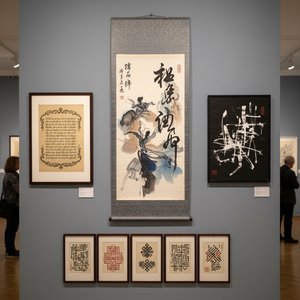
Fu Shan: Un Pionero del Arte Chino Moderno
Fu Shan (1607 – 1684), una figura que a menudo quedó bajo la sombra de la grandeza de los emperadores de la Dinastía Ming, se erige, sin embargo, como un artista influyente cuya distintiva escritura cursiva y sus pinturas de paisajes consolidaron su lugar en los anales de la historia del arte chino. Nacido en el seno de una familia profundamente arraigada en la tradición académica, los primeros años de Fu Shan estuvieron marcados por inquietudes intelectuales que, en última instancia, lo alejaron de las carreras oficiales; un camino que abrazó con valentía a través de su práctica médica, asegurando un sustento modesto pero respetado. A pesar de no superar los exámenes provinciales, fundamentales para el ascenso dentro de la burocracia imperial, Fu Shan poseía un talento innato que floreció en un logro artístico sin precedentes.- Primeras Influencias: Sus años formativos coincidieron con el floreciente movimiento neoconfuciano, lo que moldeó profundamente su visión del mundo e informó sus sensibilidades artísticas. El énfasis en el cultivo moral y la contemplación armoniosa impregnó su producción creativa, reflejando un profundo compromiso con los ideales filosóficos.
- Estilo Distintivo: El estilo característico de Fu Shan —definido por una escritura cursiva fluida y expresiva— representó una ruptura radical con las convenciones imperantes. A diferencia de la meticulosa precisión exigida por la caligrafía oficial, Fu Shan priorizó la transmisión de emociones y la captura de la esencia de la naturaleza mediante pinceladas dinámicas y composiciones poco convencionales.
- Innovaciones en la Pintura de Paisaje: Sobresalió en la pintura de paisajes, particularmente en el género conocido como shan shui, que defendía la espontaneidad y la belleza subliminal. Sus lienzos evitaban las representaciones idealizadas, favoreciendo montañas brumosas, acantilados escarpados y lagos serenos; elementos meticulosamente plasmados para evocar una profunda sensación de tranquilidad y contemplación espiritual.
Obras Notables y Legado Artístico
La producción artística de Fu Shan abarcó décadas, dando lugar a numerosas pinturas y pergaminos caligráficos que continúan cautivando tanto a eruditos como a conocedores. Entre sus piezas más celebradas se encuentra “Notes From Readings”, una representación impresionante de picos brumosos bañados por una luz etérea, testimonio de su maestría en la técnica shan shui. Del mismo modo, "Poem In Cursive Script" ejemplifica su expresivo estilo caligráfico, transmitiendo una emoción profunda a través de un pincel magistral y una letra elegante. Estas obras permanecen como símbolos perdurables de la estética neoconfuciana y representan una contribución fundamental al desarrollo del arte chino moderno.- “Notes From Readings” – Demuestra la capacidad de Fu Shan para capturar condiciones atmosféricas y transmitir la contemplación espiritual con una sutileza extraordinaria.
- “Poem In Cursive Script” – Ejemplifica su estilo caligráfico expresivo, mostrando un juego dinámico entre las pinceladas y la disposición de los caracteres.
Significado Histórico e Influencia
La visión artística de Fu Shan resonó profundamente en las corrientes intelectuales de su época, influyendo en las generaciones posteriores de artistas que buscaron emular su enfoque distintivo. Él defendió una estética humanista que priorizaba la armonía interior y la comunión con la naturaleza, valores que continúan inspirando los esfuerzos artísticos en la actualidad. Aunque nunca alcanzó la fama durante su vida, el legado de Fu Shan persiste como un faro de creatividad y contemplación espiritual; un recordatorio de que el verdadero arte trasciende las fronteras temporales y habla a través de las culturas. Su obra sirve como una ventana invaluable al paisaje intelectual de la China de la Dinastía Ming y permanece como una piedra angular de la historia del arte chino.Exploración Adicional
Para profundizar en los logros artísticos de Fu Shan, le invitamos a visitar Couplet in standard script y NOTES FROM READINGS, IN VARIOUS SCRIPTS. También puede admirar “Poem In Cursive Script” en POEM IN CURSIVE SCRIPT y explorar su vasta obra artística en fu shan.Preguntas y respuestas
¿Cómo puedo encontrar todas las obras de Fu Shan en una técnica determinada?
La página Todos los medios agrupa las obras de Fu Shan por técnica.
¿En qué movimientos trabajó Fu Shan?
La página Todos los movimientos agrupa las obras de Fu Shan por movimiento artístico.
¿Qué colores utilizaba con más frecuencia Fu Shan?
El uso del color de Fu Shan en las obras listadas en este sitio web puede estudiarse en la página Genoma de la Paleta del artista.