La visión escultórica de Francesco Mochi
Francesco Mochi se erige como una figura singular en la escultura italiana del siglo XVII, reconocido no solo por su prolífica producción, sino por su profunda contribución al establecimiento de la estética barroca. Nacido en Montevarchi, Toscana, en 1580, emprendió un viaje artístico que atravesó Florencia y Roma, culminando en un legado definido por la emoción dramática y una técnica magistral. Su obra sirve como un puente vital entre la elegancia estructurada del Renacimiento tardío y la grandeza explosiva y teatral de la era barroca, presagiando el estilo monumental que más tarde perfeccionaría Gian Lorenzo Bernini.
Los años formativos de Mochi fueron moldeados por las rigurosas tradiciones del arte florentino. Bajo la tutela del pintor Santi di Tito, abrazó el principio del disegno: la primacía de la línea y la forma. Esta formación le inculcó un aprecio fundamental por la armonía visual y el rigor intelectual, reflejando la claridad escultórica propia del taller de Giambologna. Si bien su temprana exposición a la pintura le proporcionó una profunda comprensión de la composición, fue su transición al reino tridimensional lo que le permitió traducir estos principios clásicos en piedra y bronce dinámicos y vibrantes.
Un ascenso romano y el nacimiento del drama barroco
Alrededor de 1599, Mochi se trasladó a Roma, sumergiéndose en un vibrante entorno artístico fomentado por la poderosa familia Farnese. En el taller de Camillo Mariani, refinó su comprensión de la textura y el movimiento, pero fue su conexión con el círculo de Pietro Bernini lo que verdaderamente catalizó su evolución. Esta asociación lo situó en el corazón mismo del floreciente fervor artístico de Roma, exponiéndolo a las innovaciones estilísticas que pronto redefinirían el arte occidental. Mochi comenzó a alejarse de las composiciones estáticas para abrazar, en su lugar, una sensación de movimiento capturado y profundidad psicológica.
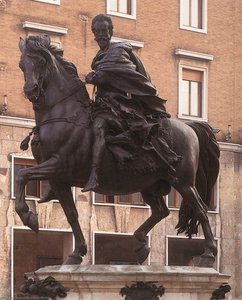
Su maestría fue más evidente en su capacidad para manipular el medio y la luz. Como maestro de la fundición en bronce, alcanzó un nivel de detalle que infundía vida al metal, como se observa en su icónica Estatua ecuestre de Alessandro Farnese. Esta obra maestra de 1620 refleja tanto el poder renacentista como una nueva y floreciente maestría artística, capturando la presencia imponente del sujeto a través de líneas fluidas y una sensación de movimiento inminente. Su trabajo durante este periodo demuestra una capacidad profunda para equilibrar la dignidad clásica con la intensidad emocional que caracteriza al Barroco temprano.
Legado y obras maestras eternas
El cenit de la carrera de Mochi se encarna quizás mejor en sus contribuciones a los espacios más sagrados de la cristiandad. Su escultura de Santa Verónica, ubicada en la Basílica de San Pedro, permanece como un testimonio conmovedor de su capacidad para evocar una compasión profunda. En esta obra, el momento de la creación del velo se captura con tal devoción y ternura que trasciende la mera piedra, invitando al espectador a un encuentro divino. Esta capacidad para la narrativa espiritual, combinada con una virtuosismo técnico, aseguró su lugar entre los escultores más destacados de su época.
A lo largo de su vida, los logros de Mochi dejaron una huella indeleble en la trayectoria de la escultura europea. Su carrera estuvo definida por hitos fundamentales:
- La fusión de estilos: Logrando combinar con éxito el disegno florentino con la teatralidad romana.
- Innovación técnica: Avanzando en el arte de la fundición en bronce para alcanzar un detalle expresivo sin precedentes.
- Reconocimiento papal: Asegurando encargos prestigiosos que situaron su obra en el centro del poder religioso y político.
- Influencia histórica: Actuando como un precursor crucial del Barroco pleno, allanando el camino para la siguiente generación de maestros.
Incluso en sus obras más íntimas, como el Busto de un joven, Mochi demostró una habilidad para capturar la belleza clásica a través de un prisma de vitalidad moderna. Su legado no se encuentra únicamente en los monumentos que llevan su nombre, sino en el lenguaje mismo del movimiento y la emoción que continúa definiendo el espíritu barroco.