Francesco d’Antonio da Viterbo: A Late Gothic Echo in Renaissance Color
Francesco d’Antonio Zacchi, commonly known as *il Balletta* (c. 1407 – before 1476), stands as a fascinating figure within the artistic landscape of late-gothic Italy and its burgeoning transition into the Renaissance. While biographical details remain scarce—a frustrating predicament for art historians eager to reconstruct his life’s narrative—his distinctive style, firmly rooted in sienese precedents yet imbued with an expressive dynamism, secures him a prominent place among the artists shaping the visual culture of his era. Primarily active in Viterbo, Lazio, he achieved renown for his monumental frescoes and altarpieces, particularly those adorning churches within the region.- Early Life & Training: Precise information regarding Zacchi’s formative years is elusive. However, scholarly consensus suggests he honed his artistic skills in Siena during Bartolo di Fredi's influential period, absorbing the stylistic innovations of that burgeoning Renaissance center. This exposure undoubtedly contributed to the characteristic blend of gothic solemnity and renaissance vibrancy found throughout his oeuvre. The influence of Bartolo di Fredi, a master sculptor known for his monumental works celebrating Saint Catherine of Alexandria, is palpable in Zacchi’s compositional choices and attention to detail—a testament to the enduring legacy of gothic artistic traditions.
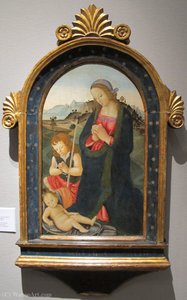
- Notable Works: Zacchi’s artistic legacy rests upon a handful of remarkable commissions—most notably the crucifixion fresco in Piazza Santa Maria Nova, Viterbo, executed around 1430-1467. This ambitious undertaking showcases his masterful command of color and composition, mirroring the stylistic sensibilities championed by Taddeo di Bartolo. Taddeo’s pioneering use of perspective—a technique rapidly gaining traction in Florence—served as an inspiration for Zacchi's fresco, demonstrating a willingness to embrace new artistic approaches while maintaining reverence for established iconography. The Madonna and Child depictions, frequently featuring a mandorla framing the Virgin Mary and infant Jesus—a motif deeply ingrained in gothic iconography—demonstrate Zacchi’s unwavering adherence to established traditions while simultaneously elevating them with nuanced emotional depth.
- The Polyptychs of Viterbo: Two monumental polyptychs, depicting the Virgin and Child enthroned alongside saints Rose and Catherine of Alexandria, exemplify Zacchi's artistic prowess. Painted for the sanctuary of Santa Rosa in Tuscania, these works represent a pinnacle of his stylistic development—a harmonious fusion of gothic grandeur and renaissance refinement. The meticulous gilding undertaken on the coat of arms of Pope Calixtus III further underscores Zacchi’s technical skill and commitment to elevating sacred art. This ambitious project reflects Zacchi's understanding of how artistic patronage could contribute to shaping civic identity and bolstering papal prestige.
- Influence & Legacy: Francesco d’Antonio da Viterbo’s artistic output reflects a pivotal moment in Italian art history—the gradual absorption of Renaissance ideals into gothic stylistic conventions. His work serves as a testament to the enduring power of tradition alongside the irresistible allure of innovation, cementing his position as an artist who bridged two distinct aesthetic epochs. He stands apart from many contemporaries for his ability to synthesize disparate influences into a singular visual language, resulting in artworks that resonate with both solemn piety and vibrant color—a characteristic that distinguishes him from artists primarily focused on classical imitation.
- Further Research: Despite the paucity of biographical data, ongoing scholarly investigations continue to illuminate aspects of Zacchi’s life and artistic practice. Researchers are currently analyzing pigments found within his frescoes to determine the extent of his engagement with emerging Renaissance color palettes—a fascinating endeavor that promises to refine our understanding of Zacchi's contribution to the broader context of Renaissance art.