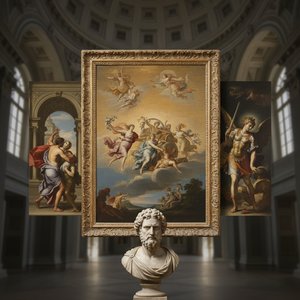
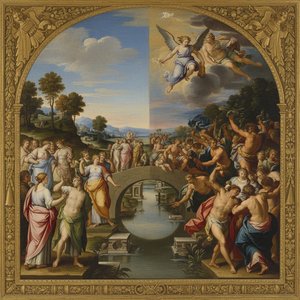
Francesco Brizio: A Dark Vision of Bolognese Baroque
Francesco Brizio (c. 1574 – 1623) stands as a compelling figure within the vibrant tapestry of Bolognese Baroque art, an artist whose oeuvre is characterized by a distinctive blend of realism and psychological depth—a stylistic hallmark that distinguishes him from many of his contemporaries. Despite initial confusion with Giovanni Francesco Bezzi or Cesare Malvasia (who erroneously attributed him to the sixteenth century), Brizio’s contribution to the artistic landscape of Bologna and Modena remains significant, fueled by collaborations with luminaries like Ludovico Carracci and Lucio Massari.
Early Life & Training: Born in Bologna, Brizio began his artistic journey under the tutelage of Bartolommeo Passarotti, absorbing the humanist ideals prevalent during the Renaissance. However, it was his association with Agostino Carracci that truly shaped his artistic sensibilities, introducing him to the revolutionary techniques championed by the Carracci brothers—particularly their meticulous attention to anatomical accuracy and chiaroscuro—a stylistic approach profoundly influential on Brizio’s subsequent works. This formative period instilled in him a deep understanding of classical proportions and humanist ideals, shaping his artistic vision for years to come.
Collaborations & Notable Projects: Brizio's involvement in monumental fresco commissions solidified his reputation as a master craftsman. He played an integral role in adorning the Palazzo Bentivoglio with narratives from Tasso’s epic poem “Gerusalemme Liberata,” alongside Massari and Spada, demonstrating his ability to convey complex themes through visual storytelling. The sheer scale of these undertakings demanded exceptional skill and coordination—a testament to Brizio's collaborative spirit and artistic prowess. Furthermore, he undertook the ambitious task of decorating the ceiling of Modena’s Oratorio della SS Trinità and frescoed the cloister of San Michele in Bosco—projects that showcased his technical mastery and artistic vision. These commissions cemented his place as one of Bolognese Baroque’s foremost artists.
Religious Art & Patronage: Brizio's dedication to religious art is evident in his depiction of “The Coronation of Madonna del Borgo” for the Church of San Petronio, a masterpiece reflecting the stylistic conventions of the time—a solemn portrayal imbued with profound spiritual contemplation. His work benefited from considerable patronage—particularly from influential families like the Sampieri—allowing him to produce ambitious artworks that served as emblems of piety and artistic excellence. The meticulous detail and expressive dynamism of this painting exemplify Brizio’s ability to capture the essence of religious devotion.
Engraving & Artistic Legacy: Beyond painting, Brizio excelled in engraving, mastering techniques honed under Agostino Carracci and adapting them to reproduce prints of his master’s works. This practice not only expanded his artistic repertoire but also ensured the dissemination of Carracci's stylistic innovations throughout Italy. His engravings are characterized by remarkable precision and tonal subtlety—a testament to his technical skill and artistic vision.
Family & Influence: Francesco Brizio’s son, Filippo, continued his father’s artistic lineage, becoming a student under Guido Renì—a testament to Brizio’s enduring influence on subsequent generations of artists. Domenico Ambrogi was also among Brizio's pupils, furthering the spread of Bolognese Baroque aesthetics. His legacy continues to inspire admiration for its expressive power and technical brilliance. He died in Bologna at the relatively young age of 49, leaving behind a body of work that remains a cornerstone of Bolognese Baroque art history.