El visionario silencioso: La vida y el legado de Eugène Laermans
En los rincones tranquilos y sombríos de la historia del arte belga, pocas figuras imponen tanto respeto profundo e intriga inquietante como Eugène Jules Joseph Baron Laermans. Nacido en 1864 en Molenbeek-Saint-Jean, Bruselas, su vida estuvo definida por una lucha contra la oscuridad invasora y el silencio de la enfermedad física. A la tierna edad de once años, un devastador episodio de meningitis le arrebató el oído y lo dejó casi mudo. Sin embargo, en lugar de permitir que esta tragedia cortara su conexión con el mundo, Laermans transformó su privación sensorial en una agudeza visual sin precedentes. Privado del sonido, volcó todo su ser hacia el poder de la vista, desarrollando una intensidad observacional que eventualmente le permitiría capturar el alma misma de los marginados y los desposeídos.
Su viaje a través del paisaje artístico fue uno de una notable metamorfosis estilística. Al inscribirse en la Académie Royale des Beaux-Arts en 1887, estudió bajo la guía de Jean-François Portaels, una experiencia que le proporcionó una riguro de base académica. Durante sus primeros años, Laermans se sintió atraído por lo provocativo y lo decadente. Influenciado por los evocadores escritos de Charles Baudelaire, participó activamente en el movimiento decadentista de 1890, llegando incluso a prestar su pincel para ilustrar la controvertida obra Les Fleurs du Mal. Este período de su vida estuvo marcado por una exploración de verdades incómodas y una voluntad de confrontar las facetas más oscuras y complejas de la naturaleza humana, utilizando a menudo una estética expresiva y, en ocasiones, perturbadora.
De la decadencia al realismo social
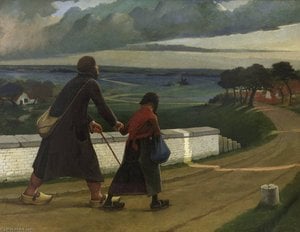
A medida que su carrera maduraba, Laermans experimentó un cambio profundo que finalmente definiría su importancia histórica. Hacia 1893, comenzó a alejarse de la decadencia estilizada de su juventud, gravitando en su lugar hacia un realismo rudo y terroso que recordaba al gran Pieter Bruegel. Esta transición lo llevó a abandonar los adornos ornamentales en favor de un enfoque más sombrío y monumental de sus sujetos. Se convirtió en un cronista de la condición humana, centrando su mirada en los trabajadores cargados de fatiga y los campesinos empobrecidos del campo belga. Su obra durante esta era no fue meramente observacional; fue un retrato empático, a menudo visceral, de la dignidad que se encuentra dentro de la adversidad.
Su maestría en la composición y el tono alcanzó nuevas alturas en obras como su celebrado tríptico, Landverhuisers (Emigrantes), inspirado en la novela La Nouvelle Carthage de Georges Eekhoud. En estas piezas, Laermans utilizó una paleta apagada y una profundidad atmosférica para transmitir el peso del desplazamiento y la lucha por la supervivencia. Aunque algunos críticos contemporáneos descartaron sus representaciones como "caricaturas perturbadoras", es precisamente esta honestidad cruda y sin adornos lo que ha asegurado su lugar en el canon del realismo social. Poseía una capacidad única para imbuir incluso las escenas más desoladas con un sentido de gravedad monumental, convirtiendo las luchas mundanas de la clase trabajadora en narrativas épicas de resistencia.
La luz que se apaga y la impresión eterna
La trayectoria de la vida de Laermans dio un giro final y trágico en 1924, cuando su visión comenzó a fallar. Para un artista cuya identidad entera se había forjado a través del lente de la percepción visual, esta pérdida fue catastrófica. Declaró su famosa frase: "Ya no soy Laermans", al dejar de pintar y retirarse a una existencia reclusiva. A pesar de haber sido elevado al rango de Barón en 1927 por el Rey Alberto, sus últimos años estuvieron marcados por el profundo aislamiento de la ceguera total. Falleció en 1940, dejando tras de sí una obra que sirve como testimonio de la resiliencia del espíritu humano.
Hoy en día, el legado de Eugène Laermans perdura a través de pinturas que continúan inquietando e inspirando. Su capacidad para encontrar belleza en lo sombrío y fuerza en el silencio sigue siendo su mayor logro. Contemplar un lienzo de Laermans es presenciar:
- Una experiencia sensorial intensificada: Donde la ausencia de sonido crea una profunda quietud visual.
- Empatía social: Una conexión profunda y respetuosa con las vidas de aquellos que a menudo son ignorados por la historia.
- <Evolución técnica: Un viaje desde la intrincada decadencia de finales del siglo XIX hasta el realismo poderoso y despojado de principios del siglo XX.
Su obra permanece como un pilar vital del arte belga, recordándonos que incluso cuando el mundo se vuelve oscuro y silencioso, los ojos del alma aún pueden percibir las verdades profundas de la existencia.
Preguntas y respuestas
¿Puedo explorar las obras de Eugène Laermans por paleta de colores?
Las obras de Eugène Laermans pueden explorarse por paleta de colores en la página de Por paletas de colores del artista.
¿En qué ciudad y país nació Eugène Laermans?
Eugène Laermans nació en Sint-jans-molenbeek, en Bélgica.
¿Qué tan populares son las obras de Eugène Laermans?
La página de Estadísticas de Eugène Laermans presenta estadísticas calculadas a partir de las obras del artista listadas en este sitio web.