La Emperatriz Viuda Cixi: Un Reinado Definido por el Poder y la Transformación
La Emperatriz Viuda Cixi (1835-1908) se erige como una de las figuras más formidables de la historia china: una mujer que ejerció la autoridad absoluta sobre la dinastía Qing durante casi medio siglo, redibujando su trayectoria hacia la modernidad en medio de turbulentos cambios políticos. Nacida como Yehe Nara Xingzhen, ascendió a la prominencia mediante un matrimonio estratégico y una astuta maniobra política, convirtiéndose en una fuerza fundamental para salvaguardar la China imperial frente a la disidencia interna y la agresión externa. Su legado continúa fascinando tanto a historiadores como a artistas, provocando un debate constante sobre sus motivación e impacto en el destino de la nación.- Primeros años y matrimonio: Los orígenes de Cixi se encuentran en el clan Manchu Niohuru del Estandarte Amarillo Bordado, un linaje profundamente arraigado en la gobernanza imperial Qing. Su matrimonio con el emperador Xianfeng, Gaozong, fue orquestado como parte de una calculada alianza diplomática, asegurando la estabilidad de la dinastía en un momento de considerable vulnerabilidad. A pesar de enfrentar las limitaciones sociales típicas de su época, Cixi demostró una inteligencia y ambición excepcionales, cualidades que resultarían instrumentales para moldear su papel futuro.
- El ascenso al poder: Tras la muerte de Xianfeng en 1861, Cixi navegó con destreza la crisis de sucesión resultante, orquestando un golpe junto a la Emperatriz Viuda Ci'an, un movimiento que desplazó a regentes rivales y consolidó su dominio. Esta acción decisiva la estableció como coregente con Ci'an, marcando el inicio de una era caracterizada por el control centralizado y una determinación inquebrantable.
- Esfuerzos de consolidación y modernización: El reinado de Cixi fue testigo de una transformación notable: la supresión de rebeliones como la Rebelión Taiping y la Rebelación Nian, junto con ambiciosas iniciativas para modernizar el sistema militar, económico y educativo de China. Si bien estas reformas a menudo fueron impulsadas por consideraciones pragmáticas más que por visiones idealistas, sin duda impulsaron a China hacia su encuentro con el mundo occidental.
- El retrato de Katharine Augusta Carl: Reconociendo la importancia de fortalecer su imagen en el extranjero, Cixi encargó a la artista estadounidense Katharine Augusta Carl la creación de un retrato monumental, una representación impactante que capturaba tanto la dignidad regia como un inquietante matiz de ferocidad latente. Esta obra sirvió como un símbolo deliberado de la ambición de Cixi de presentarse como una protectora de los intereses de China.
- Legado y trascendencia histórica: A pesar de las críticas respecto a sus tendencias autocráticas y la supresión de la disidencia, la Emperatriz Viuda Cixi presidió innegablemente el capítulo final del dominio Qing, un periodo marcado por cambios geopolíticos significativos. Sus acciones influyeron profundamente en la trayectoria de la China del siglo XX, moldeando su relación con las potencias occidentales y contribuyendo, finalmente, a la caída de la dinastía en 1912.
Expresión Artística: Caligrafía y Pintura – Reflejos de una Visión Imperial
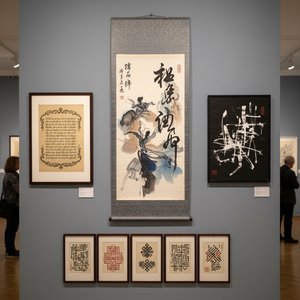
Las búsquedas artísticas de Cixi, principalmente la caligrafía y la pintura, ofrecen perspectivas invaluables sobre su visión del mundo y sus sensibilidades intelectuales. Su devoción por esta forma de arte no era un mero pasatiempo; representaba una estrategia deliberada para cultivar el prestigio y proyectar una imagen de liderazgo benevolente. Notablemente, produjo “Felicidad”, una cautivadora pieza de caligrafía en tinta negra que muestra un pincel dinámico y una energía tranquila, testimonio de su habilidad artística e intención simbólica. Esta obra ejemplifica el deseo de Cixi de transmitir armonía y estabilidad, valores centrales en su gobierno.- La importancia de la caligrafía: La caligrafía poseía una inmensa importancia cultural en la China Qing, simbolizando la virtud moral y la autoridad imperial. El dominio de Cixi sobre esta forma de arte subrayaba su compromiso con el mantenimiento de los ideales confucianos, piedra angular de la ideación Qing.
- El motivo de la flor de ciruelo: Sus pinturas presentaban frecuentemente flores de ciruelo, un símbolo de resiliencia y perseverancia ante la adversidad, reflejando su determinación inquebrantable al salvaguardar los intereses de China en tiempos de crisis. El detalle meticuloso y las pinceladas expresivas transmitían un profundo aprecio por la belleza y la armonía.
Obra Notable: Copia de la Pintura de Flor de Ciruelo y un Par de Urracas de Tang Zhengzhong
Los esfuerzos artísticos de Cixi se extendieron más allá de la mera contemplación estética; participó activamente en la réplica de obras de arte célebres, una práctica considerada honorable entre los artistas imperiales Qing. Su interpretación de “Copia de la Pintura de Flor de Ciruelo y un Par de Urracas” de Tang Zhengzhong ejemplifica su dedicación a preservar el patrimonio cultural, demostrando simultáneamente su propia destreza artística. Esta pieza sirve como evidencia tangible del compromiso de Cixi con las tradiciones artísticas chinas clásicas.Reflexiones Finales: Un Icono del Poder Imperial
La Emperatriz Viuda Cixi permanece como un símbolo perdurable de la China imperial, una mujer cuyo reinado alteró irrevocablemente el curso de la nación. Sus búsquedas artísticas, particularmente su caligrafía y pintura, proporcionan una ventana a su complejo carácter: una mezcla de dignidad regia, intelecto astuto y resolución inquebrantable. A través de su arte, Cixi buscó encarnar las virtudes del liderazgo —armonía, estabilidad y resiliencia— dejando una huella indeleble en la historia china e inspirando un debate académico continuo sobre su legado.Preguntas y respuestas
¿Puedo explorar las obras de Emperatriz Viuda Cixi por tema?
El Atlas de temas de Emperatriz Viuda Cixi es una página que organiza las obras del artista según sus temas.
¿Qué estados de ánimo expresan las obras de Emperatriz Viuda Cixi?
La página de Galería de estados de ánimo del artista muestra las obras de Emperatriz Viuda Cixi organizadas según su atmósfera.
¿Dónde puedo ver las obras de Emperatriz Viuda Cixi en una galería 3D?
Las obras de Emperatriz Viuda Cixi pueden verse en una galería 3D en la página Museo 3D del artista.