E.T.A Hoffmann: A Gothic Visionary Shaping Romantic Art
Ernst Theodor Wilhelm Hoffmann (1776-1822) stands as a singular figure in German Romanticism—a composer, jurist, author, and artist whose unsettling tales captivated audiences and profoundly impacted the artistic landscape of his time. Born in Königsberg, Prussia, Hoffmann’s life was marked by intellectual curiosity and personal tragedy, yet it fueled an extraordinary creative output that continues to inspire artists today. His work transcends genre boundaries, blending fantasy with horror, psychological exploration with meticulous detail, establishing him as a pioneer of gothic literature and visual art.
Early Life & Influences: Königsberg’s Shadow
Hoffmann's formative years were steeped in the intellectual ferment of Königsberg, Prussia—a city renowned for its university and burgeoning Enlightenment ideals. His father, Wilhelm Hoffmann, was a professor of law, instilling in Ernst Theodor Wilhelm a love for scholarship and legal reasoning. However, Hoffmann’s artistic inclinations emerged early on, nurtured by his mother, Therese Charlotte Friederike von Wedekind, who encouraged his musical pursuits. Notably, he studied music with Johann Friedrich Reichardt, honing his compositional skills and absorbing the stylistic nuances of the Classical era. Yet, Hoffmann's true passion lay in storytelling—a fascination that would propel him to become one of Germany’s most celebrated writers. The pervasive influence of Romanticism itself shaped his worldview, emphasizing emotion, imagination, and individualism – principles he wholeheartedly embraced and translated into his artistic endeavors.
Hoffmann’s education was overseen by his uncle Otto Doerffer, a brother of his mother, who instilled in him a strict moral compass and a disciplined approach to learning. Despite the constraints imposed by his upbringing, Hoffmann possessed an innate talent for both music and drawing—skills that would prove invaluable throughout his life. He began his musical studies with Carl Gottlieb Richter (1728–1809), mastering the piano and bassoon, and later studied violin with Christian Wilhelm Gladau, absorbing the stylistic traditions of the Classical period. This early exposure to musical excellence undoubtedly contributed to Hoffmann’s lifelong dedication to artistic pursuits—a commitment that would define his literary career as well.
Literary Achievements: Tales That Haunt the Imagination
Hoffmann's literary output cemented his reputation as a master storyteller. His magnum opus, *Die Geschichten vom Hoffmann* (Tales of Hoffmann), published in 1822, remains an enduring masterpiece of Romantic literature. This collection of interconnected novellas delves into themes of obsession, delusion, and psychological torment—drawing heavily on gothic horror tropes and exploring the darker recesses of human consciousness. The novella *Der Sandmann*, with its chilling depiction of childhood nightmares and the insidious influence of imagination, stands as a cornerstone of gothic fiction—establishing Hoffmann as a forerunner of psychological realism. His tales captivated readers with their atmospheric prose and unsettling imagery—demonstrating his ability to evoke profound emotional responses through carefully crafted narratives.
The opera adaptation by Jacques Offenbach catapulted *Die Geschichten vom Hoffmann* to international fame, solidifying Hoffmann’s place in cultural history. Beyond *Die Geschichten vom Hoffmann*, he penned numerous short stories, including “The Devil's Elixirs” and “The Life and Opinions of Kater Murr,” which explored philosophical dilemmas and psychological complexities with remarkable insight—further cementing his legacy as a literary innovator. His masterful use of symbolism and imagery—combined with his exploration of the subconscious mind—influenced generations of writers who followed him—making Hoffmann one of the most significant figures in German Romantic literature.
Artistic Style & Techniques: A Painter’s Delicate Obsession
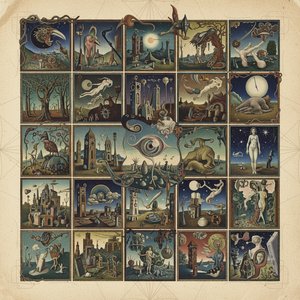
Hoffmann's artistic style was characterized by meticulous detail, expressive brushstrokes, and an uncanny ability to evoke mood and atmosphere. Primarily active in Berlin during his final years, he produced approximately 150 paintings—primarily watercolors—that explore themes of fantasy, mythology, and psychological drama. His palette favored muted tones—often incorporating blues and greens—creating a sense of melancholy and mystery that mirrored the emotional core of his literary works. Hoffmann’s technique involved layering thin washes of color to achieve luminous effects, capturing fleeting moments of beauty alongside unsettling visions. Influenced by artists like Angelica Kauffman and Henry Fuseli, he skillfully employed chiaroscuro—the dramatic interplay of light and shadow—to heighten visual impact and convey psychological tension. His paintings frequently depict scenes from mythology and folklore—reflecting his fascination with the supernatural and exploring universal human anxieties.
Hoffmann’s artistic vision was profoundly shaped by his engagement with Romantic ideals—particularly the emphasis on emotion, imagination, and individualism. He meticulously studied the works of artists such as Fuseli and Kauffman—absorbing their stylistic techniques and incorporating them into his own paintings—demonstrating a deep understanding of artistic tradition. His watercolors—characterized by delicate brushstrokes and subtle tonal gradations—captured ethereal landscapes and fantastical figures with breathtaking precision—establishing him as one of Germany’s most accomplished watercolorists. Hoffmann's oeuvre continues to inspire artists today, reminding us that beauty can coexist with terror—and that the most profound narratives reside within the realm of dreams and anxieties.