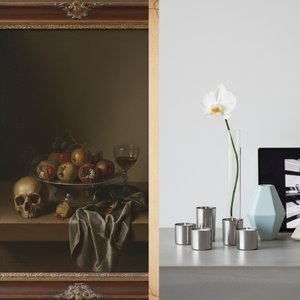
Donald K. Sultan: A Pioneer of Industrial Still Life
Donald K. Sultan (born Asheville, United States of America in 1951) represents a singular voice within contemporary painting, distinguished by his audacious reimagining of the still life genre—traditionally characterized by delicate brushstrokes and idealized beauty—and his uncompromising embrace of industrial materials like tar, enamel, spackle, and vinyl tiles. His artistic vision transcends conventional boundaries, presenting visceral textures that confront viewers with unsettling juxtapositions, prompting contemplation on mortality and challenging preconceived notions of form and materiality. Sultan’s formative years were shaped by Asheville, North Carolina, where he absorbed influences from a family deeply rooted in artistic tradition. His father, a tire company owner, pursued painting as a personal passion—a practice that instilled in young Donald an unwavering appreciation for experimentation and techniques outside established norms—while his mother actively participated in theatrical productions, nurturing his understanding of visual storytelling and dramatic impact.
Donald Sultan’s academic pursuits solidified these early impulses. He earned his Bachelor of Fine Arts degree from the University of North Carolina at Chapel Hill in 1973, establishing a foundation for his subsequent explorations into artistic expression. Recognizing the importance of formal training, he continued his studies at the Art Institute of Chicago, culminating in an MFA in 1975—a pivotal step toward honing his craft and developing his distinctive aesthetic sensibilities. Moving to New York City in 1975 propelled him into the epicenter of the burgeoning ‘New Image Movement,’ a movement that championed abstraction alongside figuration, rejecting academic conventions and embracing bold visual vocabularies. This stance perfectly mirrored Sultan’s evolving artistic philosophy.
The artist's breakthrough arrived swiftly during this period, securing recognition as a prominent voice within the avant-garde landscape of the late 1970s. His canvases are monumental in scale and imbued with an uncompromising dedication to textural exploration—a hallmark of his oeuvre. He meticulously applies industrial substances—tar, enamel, spackle—to create surfaces that evoke weathered landscapes or decaying structures, mirroring themes of vulnerability and confronting uncomfortable truths. These materials aren’t merely decorative; they serve as conduits for conveying profound emotional resonance, reflecting Sultan's preoccupation with psychological states and personal experience. This technique distinguishes him from many contemporaries and underscores his commitment to artistic integrity.
Sultan’s artistic vision extended beyond mere visual representation; it encompassed a broader philosophical engagement with the human condition. Influenced by Abstract Expressionism and Surrealism, he sought to capture the complexities of emotion and memory through unconventional mediums—a deliberate departure from traditional artistic conventions. His exploration of industrial materials—tar, enamel, vinyl tiles—was not simply stylistic choice but a conscious effort to disrupt established perceptions of beauty and materiality. He aimed to provoke viewers into confronting uncomfortable realities and questioning idealized notions of aesthetics.
Throughout his career, Sultan’s work has garnered critical acclaim and secured its place within prestigious museum collections worldwide. His enduring influence can be seen in subsequent generations of artists who embrace experimentation and explore unconventional materials—a testament to Sultan's pioneering spirit and unwavering commitment to artistic innovation. He received numerous awards for his contributions to art, cementing his legacy as one of the most innovative painters of his generation.
- Notable Works: “Yellow Roses,” “Still Life with Pears and Lemons,” “Pears”, “Donald K. Sultan”
- Influences: Abstract Expressionism, Surrealism
- Technique: Layered pigment application, Industrial material incorporation (tar, enamel, spackle)
The New Spirit (Donald Duck)
Donald K. Sultan’s artistic trajectory gained momentum during the New Image Movement, establishing him as a prominent voice within the avant-garde landscape of the late 1970s. His canvases are characterized by monumental scale and an uncompromising dedication to textural exploration—a hallmark of his oeuvre. He meticulously applies industrial substances—tar, enamel, spackle—to create surfaces that evoke weathered landscapes or decaying structures, mirroring themes of vulnerability and confronting uncomfortable truths. These materials aren’t merely decorative; they serve as conduits for conveying profound emotional resonance, reflecting Sultan’s preoccupation with psychological states and personal experience. This technique distinguishes him from many contemporaries and underscores his commitment to artistic integrity.
Andy Warhol's "El Nuevo Espíritu (Donald Duck)" exemplifies this movement's boldness—a vibrant serigraph Pop Art piece featuring the iconic Disney character. Bold colors, mass production, and playful design encapsulate Warhol’s aesthetic vision, aligning seamlessly with Sultan’s evolving sensibilities. The artwork serves as a powerful commentary on consumer culture and celebrity iconography, mirroring Sultan’s broader interest in challenging conventional artistic boundaries.
Industrial Texture: A Revolutionary Approach
Sultan's distinctive technique—the painstaking layering of pigment and material—represents a radical departure from traditional painting methods. He meticulously applies industrial substances—tar, enamel, spackle—to create surfaces that resemble weathered landscapes or decaying structures, mirroring themes of vulnerability and confronting uncomfortable truths. These materials aren’t merely decorative; they serve as conduits for conveying profound emotional resonance, reflecting Sultan's preoccupation with psychological states and personal experience. This technique distinguishes him from many contemporaries and underscores his commitment to artistic integrity.
Critical Recognition and Legacy
Throughout his career, Sultan’s work has garnered critical acclaim and secured its place within prestigious museum collections worldwide. His enduring influence can be seen in subsequent generations of artists who embrace experimentation and explore unconventional materials—a testament to Sultan's pioneering spirit and unwavering commitment to artistic innovation. He received numerous awards for his contributions to art, cementing his legacy as one of the most innovative painters of his generation.
Further Exploration
Donald K. Sultan’s exploration of industrial textures continues to inspire artists today—a reflection of his profound understanding of materiality and its capacity to convey emotion. His work stands as a beacon for those who seek to push artistic boundaries and challenge conventional perceptions of beauty, solidifying his place within the annals of contemporary art history.