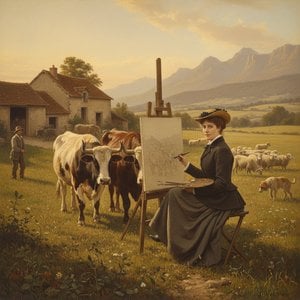
Djanira da Motta e Silva: A Voice of Brazilian Naïve Art
Djanira da Motta e Silva, affectionately known as Djanira, emerged from the fertile soil of Brazil in 1914, leaving an indelible mark on the landscape of Brazilian art. Born in Avaré, São Paulo State, her artistic journey began amidst a burgeoning interest in anthropology and visual documentation—a passion that would profoundly shape her distinctive style and thematic concerns. Unlike many artists of her era preoccupied with grand narratives or formal experimentation, Djanira focused intently on capturing the essence of everyday life within rural Brazil, particularly amongst marginalized communities. Her canvases pulsate with vibrant colors and simple forms, reflecting a deep connection to the traditions and beliefs of her people.
Early Life & Education
Little is known about Djanira’s formative years beyond her birth in Avaré. However, she pursued formal education, earning degrees in anthropology and pedagogy—disciplines that instilled in her a meticulous observation of human behavior and cultural practices. This academic grounding provided the intellectual framework for her artistic endeavors, informing her understanding of Brazilian society and fostering her sensitivity to its diverse traditions. Her early exposure to ethnographic research undoubtedly influenced her stylistic choices, prompting her to prioritize direct representation over stylized abstraction—a deliberate decision that underscored her commitment to documenting authentic experiences.
Influences: The Spirit of Modernism
Djanira's artistic vision was undeniably shaped by the Brazilian Modernist movement, which championed vernacular art forms as counterpoints to European academic conventions. Artists like Portinari and Candido Portinari served as inspiration for her exploration of Brazilian identity and social realities. These figures demonstrated the power of art to convey emotion and engage with pressing social issues—values that resonated deeply with Djanira’s own artistic convictions. She absorbed their techniques, particularly their use of bold colors and simplified shapes, adapting them to her unique aesthetic sensibility. Furthermore, she drew inspiration from European artists such as Pieter Bruegel the Elder, Fernand Léger, Joan Miró, and Marc Chagall—artists who similarly embraced expressive abstraction while retaining a connection to folk traditions.
The Style of Naïve Art: A Celebration of Simplicity
Djanira’s artistic style is undeniably rooted in the principles of naïve art—a movement characterized by its unpretentious aesthetic and rejection of illusionistic techniques. Unlike polished realism, her paintings prioritize expressive color palettes and stylized depictions of subjects—often religious icons or scenes from rural Brazilian life—to convey emotion and spiritual significance. Her compositions are deliberately uncluttered, emphasizing geometric shapes and bold lines that lend a sense of immediacy and authenticity to her work. This stylistic choice wasn’t merely an aesthetic preference; it was a deliberate strategy for communicating directly with the viewer, bypassing intellectual analysis in favor of visceral experience. The simplicity of her forms—often circles, squares, and triangles—served as a visual shorthand for conveying complex ideas about faith, community, and human connection.
- Color Palette: Djanira employed vibrant hues—primarily reds, yellows, and blues—to imbue her canvases with energy and luminosity. These colors weren’t used to create photographic accuracy but rather to evoke feelings of joy, reverence, and connection to the natural world.
- Technique: Her technique involved applying paint thickly onto canvas, creating textured surfaces that mirrored the materiality of her subjects—the rough bark of trees, the weathered faces of villagers—further enhancing the sense of realism despite its stylized presentation.
Themes and Subjects: Portraits of Brazilian Soul
Djanira’s paintings consistently explore themes central to Brazilian culture and spirituality. Recurring motifs include depictions of saints—particularly Nossa Senhora Aparecida, Brazil's patron saint—and scenes from the Catholic faith that resonate deeply with rural communities. However, her artistic focus extended beyond religious iconography; she meticulously documented daily life in villages across Brazil, portraying farmers, artisans, and families engaged in traditional activities. These portraits aren’t merely representations of individuals but embodiments of Brazilian identity—a testament to resilience, piety, and unwavering connection to ancestral traditions. She sought to capture the essence of these communities through simple forms and bold colors, conveying their spiritual values without resorting to elaborate symbolism or narrative complexity.
Notable Achievements & Legacy
Djanira da Motta e Silva's contribution to Brazilian art is recognized globally. Her work has been showcased in prestigious institutions such as the Museu Nacional de Belas Artes and MASP (Museu de Arte Contemporânea São Paulo), cementing her place among Brazil’s most important artists of the 20th century. Furthermore, her paintings are featured prominently in the Inhotim Contemporary Art Museum, demonstrating the enduring relevance of her artistic vision. Djanira's legacy lies not only in her distinctive style but also in her unwavering commitment to preserving and celebrating Brazilian folklore—a mission that continues to inspire artists and scholars alike. Her work remains a powerful reminder of the beauty and dignity found in everyday life and a testament to the transformative power of art to communicate profound truths about human experience.