Andrea Sacchi: A Master of Baroque Classicism
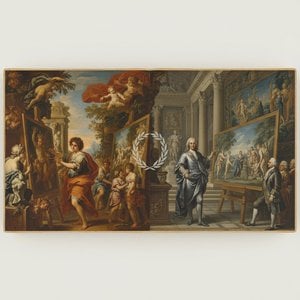
Andrea Sacchi (1599 – 1661) stands as a pivotal figure in the High Baroque artistic landscape of Rome, embodying a synthesis of classical ideals and dramatic theatricality. Born into a modest family, his father, Benedetto Sacchi, was himself an artist—albeit one whose ambitions fell short of his son’s prodigious talent—and it was Giuseppe D’Arpino who recognized Andrea's exceptional aptitude and steered him towards the tutelage of the celebrated sculptor Alessandro Algardi. This formative influence instilled in Sacchi a profound appreciation for sculptural form and proportion, shaping his artistic sensibilities from an early age.
Sacchi’s artistic journey began with apprenticeships under Francesco Albani and Pietro da Cortona, experiences that exposed him to the prevailing stylistic currents of Rome during his time. Notably, he engaged in spirited debates at the Accademia di San Luca concerning Cortona's expressive style—a discussion that underscored Sacchi’s commitment to intellectual rigor alongside artistic excellence. He championed a restrained aesthetic rooted in Raphael’s harmonious compositions and meticulous observation of nature, rejecting what he perceived as excessive ornamentation. This careful consideration for proportion and balance distinguishes Sacchi from many of his contemporaries who embraced flamboyant displays of emotion and grandeur.
His patronage by Cardinal Antonio Barberini proved instrumental in propelling his career forward, securing commissions for monumental frescoes within the Palazzo Barberini and the Cappella Gavotti at Sant’Andrea della Valle—projects that cemented his reputation as one of Rome’s foremost painters. These ambitious undertakings demanded masterful technique and a profound understanding of narrative storytelling, characteristics that define Sacchi’s oeuvre. He skillfully employed illusionistic painting techniques to create immersive environments, transporting viewers into biblical scenes with breathtaking realism and emotional depth. The frescoes commissioned for Sant'Andrea della Valle are considered among the finest achievements of Baroque art, demonstrating Sacchi’s unparalleled ability to convey spiritual grandeur through visual splendor.
Sacchi's artistic explorations extended beyond Rome, encompassing visits to Venice and Parma where he studied the works of Correggio—a formative encounter that further honed his grasp of spatial perspective and chiaroscuro. He meticulously analyzed the techniques employed by Correggio, incorporating elements of dramatic lighting and atmospheric perspective into his own compositions. This dedication to observation and experimentation solidified Sacchi’s position as a leading innovator within the Baroque movement.
Sacchi's legacy resides in his monumental frescoes – particularly “The Divine Wisdom” (Cappella Gavotti) and “The Coronation of the Virgin” (Pinacoteca Vaticana) – which remain unparalleled examples of Baroque art. These canvases exemplify Sacchi’s mastery of composition, color palette, and dramatic lighting, establishing him as a cornerstone of Italian Baroque artistic achievement and securing his place among the most influential painters of his era. His work continues to inspire admiration for its beauty, intellectual sophistication, and enduring power to convey profound spiritual themes. He is remembered not merely for his technical skill but also for his unwavering belief in the transformative potential of art—a conviction that resonated throughout his life’s artistic endeavors.