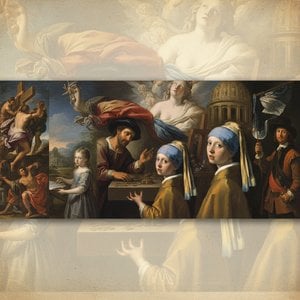
Cornelis van der Beek: A Baroque Drummer's Echoes
Cornelis van der Beek (1948-1998) wasn’t a painter in the traditional sense, but rather a pivotal figure in Dutch music history—specifically, as drummer for Shocking Blue, arguably the most successful psychedelic rock band of the 1970s. While his canvases remained unseen by the public eye, his rhythmic contributions resonated powerfully through the vibrant sonic landscape of his era, cementing his place as an icon of Dutch counterculture and a testament to the enduring influence of Baroque musical sensibilities.
Early Life & Influences
Born in Mechelen, Belgium, Cornelis van der Beek’s formative years were steeped in European artistic tradition. Though biographical details remain somewhat sparse, it's understood that he possessed an innate appreciation for visual art—particularly landscapes reminiscent of Jan van Goyen and Godert van der Capellen – artists who championed a meticulous observation of nature combined with masterful draughtsmanship. These influences subtly permeated his musical approach, fostering a disciplined technique rooted in precision and textural richness. The Baroque period’s emphasis on grandeur and dramatic contrasts found an unexpected parallel in the energetic rhythms he brought to Shocking Blue's performances. He absorbed the careful detailing and tonal depth characteristic of these masters, translating them into a musical sensibility marked by unwavering focus and expressive nuance.
Shocking Blue & Musical Innovation
Van der Beek joined Shocking Blue in 1972, propelling them to international stardom with hits like “Venus” and “Soul Survivor.” The band’s sound was characterized by a blend of psychedelic rock instrumentation—guitar riffs layered with reverb and delay—and driving drum beats that pulsed with an almost hypnotic energy. Critics noted striking similarities between Shocking Blue's rhythmic patterns and the Baroque tradition’s use of basso continuo, highlighting Van der Beek’s remarkable ability to create music that possessed both complexity and emotional impact. He wasn’t merely keeping time; he was sculpting sound itself, mirroring the Baroque artist’s dedication to crafting meticulously balanced compositions—a deliberate choice reflecting his profound understanding of musical architecture. This innovative approach distinguished Shocking Blue from many contemporaries, establishing Van der Beek as a pioneer in blending stylistic elements.
Beyond Shocking Blue: Continued Artistic Exploration
Following Shocking Blue's initial success, Van der Beek continued his musical journey, collaborating with artists spanning jazz and reggae genres. He demonstrated an exceptional adaptability—a willingness to embrace new sonic territories while retaining the core principles of his Baroque-influenced style. This ongoing exploration underscored his conviction that artistic expression transcends stylistic boundaries, prioritizing genuine emotional resonance above all else. His performances consistently conveyed a sense of controlled dynamism, mirroring the Baroque artist’s pursuit of harmonious balance and dramatic impact.
Legacy & Recognition
Cornelis van der Beek’s contribution to Dutch music culture extends beyond his work with Shocking Blue. He served as a respected educator and mentor, nurturing young musicians and fostering a spirit of experimentation within the Netherlands' burgeoning artistic community. Although he didn’t leave behind a substantial body of visual art, his rhythmic legacy—captured in recordings that continue to captivate audiences today—stands as a powerful reminder of how musical innovation can draw inspiration from seemingly disparate sources – the grandeur of Baroque painting and the dynamism of psychedelic rock. His influence persists within contemporary music circles, demonstrating the timeless appeal of disciplined technique and profound artistic vision. He remains remembered not only for his role in shaping 1970s popular culture but also for inspiring generations of musicians to pursue excellence with unwavering dedication.