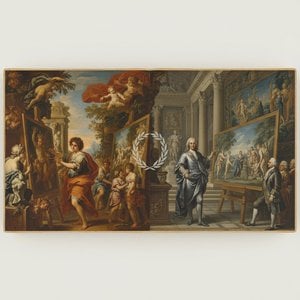
Claude Deruet: Un Maestro Barroco de Nancy
Claude Deruet (1588 – 1660) se erige como una figura prominente en el paisaje artístico de la Francia del siglo XVII, particularmente dentro de la vibrante tradición barroca que emanaba de Nancy. Nacido en el seno de una familia noble, sus años formativos estuvieron impregnados de mecenazgo artístico y se vieron fortalecidos por un aprendizaje bajo la tutela de Jacques Bellange, el pintor de la corte de Carlos III, Duque de Lorena; una conexión que moldeó profundamente su trayectoria profesional. Esta influencia temprana le inculcó una atención meticulosa al detalle y un dominio magistral de la técnica, características que definirían su legado perdurable.- Primeros años y formación: El viaje artístico de Deruet comenzó con una formación formal bajo Bellange, lo que le permitió acceder a los niveles más altos de los círculos artísticos y lo dotó de habilidades invaluables en el retrato y la pintura decorativa.
- Periodo romano (c. 1612 – 1619): En busca de mayor refinamiento e inspiración, Deruet viajó a Roma alrededor de 1612, donde estudió diligentemente junto a Antonio Tempesta, un renombrado grabador y pintor cuyas innovaciones estilísticas resonaron profundamente con la sensibilidad de Deruet. Este periodo fue testigo de la creación de su primer fresco significativo en la Villa Borghese, mostrando un talento emergente para la composición dramática y las paletas de colores matizadas.
- Pinturas notables: Entre las obras celebradas de Deruet se encuentran “La partida de las Amazonas” (1620) y “El camino al Calvario” (1620), escenas imbuidas de dinamismo e intensidad emocional que sirven como testimonio de su destreza artística.
- Mecenazgo real y reconocimiento: Al reconocer el talento excepcional de Deruet, Carlos III le otorgó la nobleza en 1621, seguido por el nombramiento como caballero de la Orden de San Miguel en 1645 por parte de Luis XIII, un testimonio de su contribución al prestigio cultural de Lorena.
Legado y Significado Histórico
El legado artístico de Claude Deruet se extiende más allá de sus obras maestras individuales; él estableció una tradición de narrativa dramática y técnica refinada que impactó profundamente a las generaciones posteriores de pintores. Su obra continúa inspirando admiración por su poder expresivo y sofisticación estilística, asegurando su lugar como uno de los artistas más importantes de la era barroca en Francia. La fascinación perdurable por sus representaciones de samuráis subraya el intercambio cultural más amplio entre Europa y Asia durante este periodo, un testimonio de la visión artística y la curiosidad intelectual de Deruet.Preguntas y respuestas
¿Dónde se pueden explorar las obras de Claude Deruet clasificadas por tema?
El Índice temático de Claude Deruet es una página que organiza las obras del artista según sus temas.
¿Qué tan populares son las obras de Claude Deruet?
Puedes consultar la página de Estadísticas de Claude Deruet, donde se presentan estadísticas sobre sus obras en este sitio web.
¿Puedo explorar las obras de Claude Deruet por técnica?
Puedes explorar las obras de Claude Deruet por técnica en su página de Todas las técnicas.