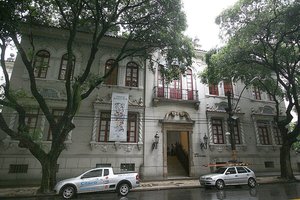
Carybé, 1911 – 1997

Las 24 pinturas más famosas de Carybé

La pintura que hizo famoso a Carybé es Baiana Sambando - Série Bonfim (1950); se encuentra en el Museo de Arte de Bahia, Salvador. Baiana e Pescador (1950) y Baianas Chegando Para a Lavagem (1950) les siguen en el corazón de coleccionistas y visitantes de museos. De las 24 obras de Carybé en nuestro catálogo, estas 24 son las más admiradas, cada una presentada con su fecha, su museo y lo que la hace especial.

Clasificado según nuestra puntuación de popularidad, que combina las búsquedas, visitas y pedidos de cada obra. Actualizado octubre 2026.

Retrato de Carybé
Carybé · 1911 – 1997
Nacimiento · fallecimiento
1911 – 1997, Lanús
Movimiento
Contemporary realism
Obras de nuestro catálogo
24
Las más famosas
Baiana Sambando - Série Bonfim (1950)
Más obras en
Museo de Arte de Bahia

Carybé: las diez obras maestras

Baiana Sambando - Série Bonfim (1950) de Carybé
1

Baiana Sambando - Série Bonfim

1950 · Ink · Museo de Arte de Bahia, Salvador

In the delicate dance of ink and paper, Baiana Sambando - Série Bonfim emerges as a profound celebration of cultural identity and movement. Created in 1950 by the master Argentine-Brazilian artist Héctor Julio Páride Bernabó, famously known as Carybé, this work is far more than a mere sketch; it is a rhythmic capture of the very heartbeat of Bahia. The piece depicts a woman dressed in traditional Bahian attire, caught…

Baiana e Pescador (1950) de Carybé
2

Baiana e Pescador

1950 · Ink On Paper · Museo de Arte de Bahia, Salvador

In the quiet, rhythmic strokes of "Baiana e Pescador," we are transported to a moment of profound stillness captured by the legendary Argentine-Brazilian master, Héctor Julio Páride Bernabó, known affectionately as Carybé. Created in 1950, this evocative black and white drawing serves as a window into a world where human connection and cultural identity intersect through the medium of pen and ink. The artwork depicts two figures seated in profile,…

Baianas Chegando Para a Lavagem (1950) de Carybé
3

Baianas Chegando Para a Lavagem

1950 · Lithograph · Museo de Arte de Bahia, Salvador

In the evocative lithograph Baianas Chegando Para a Lavagem, created in 1950 by the master Héctor Julio Páride Bernabolt—affectionately known as Carybé—we are transported into the heart of a Brazilian cultural ritual. The artwork captures a fleeting, high-energy moment of a procession, where the figures of the Baianas move with a grace that is both grounded and ethereal. Through the medium of black and white lithography, Carybé strips away the…

Jangadas ao Mar - Série Pesca do Xaréu (1950) de Carybé
4

Jangadas ao Mar - Série Pesca do Xaréu

1950 · Drawing · Museo de Arte de Bahia, Salvador

In the evocative work Jangadas ao Mar - Série Pesca do Xaréu, the legendary Argentine-Brazilian master Carybé (Héctor Julio Páride Bernabó) invites us to witness a timeless ritual of the sea. Created in 1950, this piece serves as a profound window into the coastal soul of Brazil, capturing the rhythmic dance between man and the Atlantic. The artwork belongs to a series dedicated to the pesca do xaréu (the fishing…

Torso retangular IV (1950) de Carybé
5

Torso retangular IV

1950 · Painting · Museo de Arte de Bahia, Salvador

In the evocative realm of mid-century Latin American modernism, few names resonate with as much cultural depth and rhythmic grace as Héctor Julio Páride Bernabó, known affectionately to the world as Carybé. His work, Torso retangular IV, serves as a profound window into a period of intense artistic exploration. Created in 1950, this piece captures a moment where form and identity converge. The composition presents a captivating study of femininity,…

Baiana Sambando - Série Bonfim (1950) de Carybé
6

Baiana Sambando - Série Bonfim

1950 · Ink · Museo de Arte de Bahia, Salvador

In the evocative lines of Baiana Sambando - Série Bonfim, we are transported to the heart of Bahia, where the pulse of the drum meets the spiritual essence of the streets. Created in 1950 by the master Héctor Julio Páride Bernabó, known affectionately as Carybé, this striking black and white drawing serves as a profound window into the soul of Brazilian folk culture. The piece captures a moment of intense…

Vendedora de Carimã - Série Feira de Água de Meninos (1950) de Carybé
7

Vendedora de Carimã - Série Feira de Água de Meninos

1950 · Drawing · Museo de Arte de Bahia, Salvador

In the delicate, monochromatic strokes of Vendedora de Carimã - Série Feira de Água de Meninos, we are transported to a mid-century world where the rhythm of daily life was dictated by the sun and the seasonal bounty of the market. Created in 1950 by the master Héctor Julio Páride Bernabó, known affectionately as Carybé, this evocative drawing captures more than just a scene; it captures an atmosphere. The subject—a…

Puxando o Barco - Série Rampa do Mercado (1950) de Carybé
8

Puxando o Barco - Série Rampa do Mercado

1950 · Drawing · Museo de Arte de Bahia, Salvador

In the evocative monochrome of Puxando o Barco - Série Rampa do Mercado, we are transported to a moment of raw, unadorned human effort. Created in 1950 by the master Héctor Julio Páride Bernabó—affectionately known as Carybé—this drawing captures the visceral essence of coastal life. The scene depicts a man engaged in the strenuous task of pulling a boat across the land, a moment caught between the stillness of the…

O Homem e a Jaca - Série Feira de Água de Meninos (1950) de Carybé
9

O Homem e a Jaca - Série Feira de Água de Meninos

1950 · Drawing · Museo de Arte de Bahia, Salvador

In the evocative black and white drawing O Homem e a Jaca, part of the evocative Série Feira de Água de Meninos, we are transported to a moment of profound simplicity and strength. Created in 1950 by the master Argentine-Brazilian artist Héctor Julio Páride Bernabó, known affectionately as Carybé, this work captures a singular, heavy moment in time. The composition centers on a man navigating a sandy path, his body…

O vendedor de rolete de cana/ Serie Bonfim (1950) de Carybé
10

O vendedor de rolete de cana/ Serie Bonfim

1950 · Ink · Museo de Arte de Bahia, Salvador

In the quiet, monochromatic depths of "O vendedor de rolete de cana," we are transported to a bygone era, where the rhythm of daily life was dictated by the sun and the simple commerce of the streets. Part of the evocative Serie Bonfim, this masterful drawing by the legendary Argentine-Brazilian artist Héctor Julio Páride Bernabó—affectionately known as Carybé—serves as a poignant window into the cultural fabric of mid-century Brazil. Through…

Más obras maestras de Carybé, de 11 a 24

O Menino e o Mar - Série Pesca do Xaréu (1950) de Carybé
#11

O Menino e o Mar - Série Pesca do Xaréu

1950 · Museo de Arte de Bahia

In the evocative drawing O Menino e o Mar - Série Pesca do Xaréu, created in 1950 by the master Héctor Julio Páride Bernabó, known affectionately as Carybé,…

Torso retangular II (1950) de Carybé
#12

Torso retangular II

1950 · Museo de Arte de Bahia

In the evocative realm of mid-century modernism, few artists captured the intersection of human anatomy and structural rhythm as masterfully as Héctor Julio Páride Bernabó, known affectionately to…

Mestre de Terra - Série Pesca do Xaréu (1950) de Carybé
#13

Mestre de Terra - Série Pesca do Xaréu

1950 · Museo de Arte de Bahia

In the evocative work Mestre de Terra - Série Pesca do Xaréu, we are transported to a moment of profound cultural resonance, captured through the masterful hand of…

Elevador Lacerda - Série Rampa do Mercado (1950) de Carybé
#14

Elevador Lacerda - Série Rampa do Mercado

1950 · Museo de Arte de Bahia

In the delicate interplay of light and shadow captured within Elevador Lacerda - Série Rampa do Mercado, we are transported to the mid-century atmosphere of Bahia. Created in…

Capoeira 17/ Festa da Conceição da Praia (1950) de Carybé
#16

Capoeira 17/ Festa da Conceição da Praia

1950 · Museo de Arte de Bahia

In the evocative drawing Capoeira 17/ Festa da Conceição da Praia, the legendary Argentine-Brazilian master Héctor Julio Páride Bernabó, known affectionately as Carybé, invites us into a world…

Elevador Lacerda/Festa da Conceição da Praia (1950) de Carybé
#21

Elevador Lacerda/Festa da Conceição da Praia

1950 · Museo de Arte de Bahia

In this evocative black and white drawing from 1950, titled Elevador Lacerda/Festa da Conceição da Praia, the legendary Argentine-Brazilian master Héctor Julio Páride Bernabó—affectionately known as Carybé—captures a…

The Pier (1987) de Carybé
#22

The Pier

1987 · Centro Cultural Banco do Brasil
Baiana Sambando - Série Bonfim (1950) de Carybé
#23

Baiana Sambando - Série Bonfim

1950 · Museo de Arte de Bahia

In the delicate interplay of light and shadow found within Baiana Sambando - Série Bonfim, we encounter more than just a drawing; we witness the very heartbeat of…

Igreja da Conceição da Praia (1950) de Carybé
#24

Igreja da Conceição da Praia

1950 · Museo de Arte de Bahia

In the delicate, monochromatic strokes of Igreja da Conceição da Praia, we are transported back to 1950, standing amidst the rhythmic pulse of Bahia. The artist, the legendary…

Los temas que más pintó Carybé

Los cuatro temas que aparecen con mayor frecuencia entre estas obras maestras, con el mejor ejemplo de cada uno.

Dónde ver las pinturas de Carybé

Los 2 museos que albergan la mayoría de las pinturas de esta página.

Museos Ciudad Obras de Carybé Pinturas de esta lista
Museo de Arte de Bahia, SalvadorMuseo de Arte de Bahia Salvador 23 Baiana Sambando - Série Bonfim, Baiana e Pescador, Baianas Chegando Para a Lavagem
Centro Cultural Banco do Brasil, BrasíliaCentro Cultural Banco do Brasil Brasília 1 The Pier

Carybé, año tras año: las pinturas que lo definen

Desde 1950 hasta 1987, 38 años del arte de Carybé, año tras año, a través de sus mejores pinturas.

  1. 1950
    Baiana Sambando - Série Bonfim (1950) de Carybé
    Puesto 1 / 24

    Baiana Sambando - Série Bonfim

    Edad 39 · Museo de Arte de Bahia

    In the delicate dance of ink and paper, Baiana Sambando - Série Bonfim emerges as a profound celebration of cultural identity and movement. Created in 1950 by the…

  2. 1950
    Baiana e Pescador (1950) de Carybé
    N.º 2 de 24

    Baiana e Pescador

    Edad 39 · Museo de Arte de Bahia

    In the quiet, rhythmic strokes of "Baiana e Pescador," we are transported to a moment of profound stillness captured by the legendary Argentine-Brazilian master, Héctor Julio Páride Bernabó,…

  3. 1950
    Baianas Chegando Para a Lavagem (1950) de Carybé
    #3 de 24

    Baianas Chegando Para a Lavagem

    Edad 39 · Museo de Arte de Bahia

    In the evocative lithograph Baianas Chegando Para a Lavagem, created in 1950 by the master Héctor Julio Páride Bernabolt—affectionately known as Carybé—we are transported into the heart of…

  4. 1950
    Jangadas ao Mar - Série Pesca do Xaréu (1950) de Carybé
    #4 de 24

    Jangadas ao Mar - Série Pesca do Xaréu

    Edad 39 · Museo de Arte de Bahia

    In the evocative work Jangadas ao Mar - Série Pesca do Xaréu, the legendary Argentine-Brazilian master Carybé (Héctor Julio Páride Bernabó) invites us to witness a timeless ritual…

  5. 1950
    Torso retangular IV (1950) de Carybé
    #5 de 24

    Torso retangular IV

    Edad 39 · Museo de Arte de Bahia

    In the evocative realm of mid-century Latin American modernism, few names resonate with as much cultural depth and rhythmic grace as Héctor Julio Páride Bernabó, known affectionately to…

  6. 1950
    Baiana Sambando - Série Bonfim (1950) de Carybé
    N.º 6 de 24

    Baiana Sambando - Série Bonfim

    Edad 39 · Museo de Arte de Bahia

    In the evocative lines of Baiana Sambando - Série Bonfim, we are transported to the heart of Bahia, where the pulse of the drum meets the spiritual essence…

  7. 1950
  8. 1950
    Puxando o Barco - Série Rampa do Mercado (1950) de Carybé
    Puesto 8 / 24

    Puxando o Barco - Série Rampa do Mercado

    Edad 39 · Museo de Arte de Bahia

    In the evocative monochrome of Puxando o Barco - Série Rampa do Mercado, we are transported to a moment of raw, unadorned human effort. Created in 1950 by…

  9. 1950
  10. 1950
    O vendedor de rolete de cana/ Serie Bonfim (1950) de Carybé
    Puesto 10 / 24

    O vendedor de rolete de cana/ Serie Bonfim

    Edad 39 · Museo de Arte de Bahia

    In the quiet, monochromatic depths of "O vendedor de rolete de cana," we are transported to a bygone era, where the rhythm of daily life was dictated by…

  11. 1950
    O Menino e o Mar - Série Pesca do Xaréu (1950) de Carybé
    #11 de 24

    O Menino e o Mar - Série Pesca do Xaréu

    Edad 39 · Museo de Arte de Bahia

    In the evocative drawing O Menino e o Mar - Série Pesca do Xaréu, created in 1950 by the master Héctor Julio Páride Bernabó, known affectionately as Carybé,…

  12. 1950
    Torso retangular II (1950) de Carybé
    Puesto 12 / 24

    Torso retangular II

    Edad 39 · Museo de Arte de Bahia

    In the evocative realm of mid-century modernism, few artists captured the intersection of human anatomy and structural rhythm as masterfully as Héctor Julio Páride Bernabó, known affectionately to…

  13. 1950
    Mestre de Terra - Série Pesca do Xaréu (1950) de Carybé
    Puesto 13 / 24

    Mestre de Terra - Série Pesca do Xaréu

    Edad 39 · Museo de Arte de Bahia

    In the evocative work Mestre de Terra - Série Pesca do Xaréu, we are transported to a moment of profound cultural resonance, captured through the masterful hand of…

  14. 1950
    Elevador Lacerda - Série Rampa do Mercado (1950) de Carybé
    #14 de 24

    Elevador Lacerda - Série Rampa do Mercado

    Edad 39 · Museo de Arte de Bahia

    In the delicate interplay of light and shadow captured within Elevador Lacerda - Série Rampa do Mercado, we are transported to the mid-century atmosphere of Bahia. Created in…

  15. 1950
  16. 1950
    Capoeira 17/ Festa da Conceição da Praia (1950) de Carybé
    #16 de 24

    Capoeira 17/ Festa da Conceição da Praia

    Edad 39 · Museo de Arte de Bahia

    In the evocative drawing Capoeira 17/ Festa da Conceição da Praia, the legendary Argentine-Brazilian master Héctor Julio Páride Bernabó, known affectionately as Carybé, invites us into a world…

  17. 1950
  18. 1950
  19. 1950
  20. 1950
  21. 1950
    Elevador Lacerda/Festa da Conceição da Praia (1950) de Carybé
    Puesto 21 / 24

    Elevador Lacerda/Festa da Conceição da Praia

    Edad 39 · Museo de Arte de Bahia

    In this evocative black and white drawing from 1950, titled Elevador Lacerda/Festa da Conceição da Praia, the legendary Argentine-Brazilian master Héctor Julio Páride Bernabó—affectionately known as Carybé—captures a…

  22. 1950
    Baiana Sambando - Série Bonfim (1950) de Carybé
    Puesto 23 / 24

    Baiana Sambando - Série Bonfim

    Edad 39 · Museo de Arte de Bahia

    In the delicate interplay of light and shadow found within Baiana Sambando - Série Bonfim, we encounter more than just a drawing; we witness the very heartbeat of…

  23. 1950
    Igreja da Conceição da Praia (1950) de Carybé
    N.º 24 de 24

    Igreja da Conceição da Praia

    Edad 39 · Museo de Arte de Bahia

    In the delicate, monochromatic strokes of Igreja da Conceição da Praia, we are transported back to 1950, standing amidst the rhythmic pulse of Bahia. The artist, the legendary…

  24. 1987
    The Pier (1987) de Carybé
    #22 de 24

    The Pier

    Edad 76 · Centro Cultural Banco do Brasil

Las obras maestras de Carybé: preguntas y respuestas

¿Por qué pintura es más conocido Carybé?Mostrar la respuesta

Baiana Sambando - Série Bonfim (1950), Museo de Arte de Bahia, Salvador. A continuación se encuentran Baiana e Pescador (1950) y Baianas Chegando Para a Lavagem (1950).

¿Qué edad tenía Carybé cuando pintó Baiana Sambando - Série Bonfim?Mostrar la respuesta

39 años: Baiana Sambando - Série Bonfim data de 1950 y Carybé nació en 1911.

¿Cuáles son las diez mejores pinturas de Carybé?Mostrar la respuesta

Baiana Sambando - Série Bonfim, Baiana e Pescador, Baianas Chegando Para a Lavagem, Jangadas ao Mar - Série Pesca do Xaréu, Torso retangular IV, Baiana Sambando - Série Bonfim, Vendedora de Carimã - Série Feira de Água de Meninos, Puxando o Barco - Série Rampa do Mercado, O Homem e a Jaca - Série Feira de Água de Meninos y O vendedor de rolete de cana/ Serie Bonfim. El ranking anterior indica el año y el museo de cada una.

¿Cuántas obras pintó Carybé?Mostrar la respuesta

Nuestro catálogo incluye 24 obras de Carybé, datadas desde 1950 hasta 1987.

¿En qué museos puedo ver las obras maestras de Carybé?Mostrar la respuesta

La mayoría se encuentran en Museo de Arte de Bahia (Salvador) y Centro Cultural Banco do Brasil (Brasília). La tabla anterior enumera los museos uno por uno.

¿Cuándo pintó Carybé sus obras maestras?Mostrar la respuesta

En 1950: 23 de las 24 obras de esta página datan de entonces, entre ellas Baiana Sambando - Série Bonfim.

¿Cuáles son las primeras y últimas pinturas famosas de Carybé?Mostrar la respuesta

La obra más antigua en esta página es de Baiana Sambando - Série Bonfim (1950) y la más reciente es de The Pier (1987).

¿Cuáles eran los temas favoritos de Carybé?Mostrar la respuesta

Black and white (14), Daily life (5) y Fishing (4), entre las 24 obras de esta página.

¿Qué técnica prefería Carybé?Mostrar la respuesta

Drawing: 12 de las 24 obras en esta página.

¿A qué movimiento artístico pertenece Carybé?Mostrar la respuesta

Contemporary realism y Modernism, como muestran las pinturas de esta página.

¿Qué obras maestras de Carybé se encuentran en el Museo de Arte de Bahia?Mostrar la respuesta

Baiana Sambando - Série Bonfim, Baiana e Pescador y Baianas Chegando Para a Lavagem se encuentran entre las 23 obras de esta página que pertenecen al Museo de Arte de Bahia, Salvador.

La vida de Carybé

Biography

Héctor Julio Páride Bernabó, known by his artistic name Carybé (Argentina, 1911 – Brazil, 1997), was an Argentine-Brazilian artist, researcher, writer, historian, and journalist. His life was profoundly shaped by a fervent passion for the arts from a young age. He settled in Brazil and naturalized as a Brazilian citizen. Carybé’s artistic journey spanned decades, resulting in an astonishing output of approximately five thousand artworks—paintings, drawings, sculptures, and sketches—demonstrating remarkable versatility and creative genius. Throughout his career, Carybé explored diverse themes rooted in indigenous Brazilian culture and folklore, particularly the traditions of Bahia. His distinctive style combined meticulous observation with imaginative interpretation, capturing the essence of rituals, myths, and landscapes. He was recognized as an Obá de Xangô, a prestigious honorary position within Ilê Axé Opô Afonjá, a significant Afro-Brazilian religious community where he served as spiritual leader. Carybé’s dedication to preserving cultural heritage earned him considerable acclaim both in Argentina and Brazil.

Artistic Contributions

Carybé's artistic output encompassed a wide range of mediums and styles. He excelled in painting, producing monumental murals that celebrated Brazilian identity and spirituality—most notably two impressive works commissioned for Miami International Airport, which continue to inspire visitors today. His meticulous attention to detail and masterful use of color were particularly evident in his depictions of indigenous rituals and landscapes. Carybé’s artistic explorations extended beyond visual art; he conducted extensive research into Brazilian folklore and mythology, documenting traditions passed down through generations. Furthermore, Carybé collaborated closely with prominent literary figures like Jorge Amado and Gabriel García Márquez, illustrating their novels with evocative imagery that enriched the narratives and captured the spirit of Latin American storytelling. His illustrations for “One Hundred Years of Solitude” are considered masterpieces of visual literature, cementing his reputation as a storyteller alongside writers. He produced five thousand pieces of work, including paintings, drawings, sculptures and sketches.

Notable Works

Carybé’s artistic legacy includes several celebrated artworks that exemplify his distinctive style and thematic concerns. Among these stand out: “Torso Retangular Ou Pano Da Costa I,” a painting characterized by its masterful manipulation of form and texture—a testament to his technical prowess—available for viewing on WahooArt's platform. The artwork "The Pier," an oil canvas piece showcased at the Centro Cultural Banco do Brasil in Brasília, Brazil, captivated audiences with its vibrant colors and symbolic representation of maritime traditions. Finally, “Baiana Sambando - Série Bonfim,” a pen drawing housed at the Museu de Arte da Bahia in Salvador, Brazil, captured the dynamism and vibrancy of Bahian religious processions.

Legacy and Honors

Carybé’s contributions to Brazilian art and culture are commemorated through numerous initiatives—including his murals at Miami International Airport—that underscore his enduring influence on artistic expression and cultural preservation. His unwavering commitment to documenting indigenous traditions and fostering intercultural dialogue solidified his position as a pivotal figure in Latin American intellectual history. He was honored with the Obá de Xangô title, recognizing his leadership within Ilê Axé Opô Afonjá and symbolizing his profound connection to Afro-Brazilian spirituality. Carybé’s artistic achievements continue to inspire artists and scholars alike, ensuring that his legacy persists for generations to come.