Blanche Hoschedé-Monet: Una compañera silenciosa del Impresionismo
Dentro del tapiz luminoso y a menudo turbulento del movimiento impresionista, ciertos nombres brillan con una brillantez innegable, mientras que otros existen en un suave resplandor periférico. Blanche Hoschedé-Monet (1865-1947) pertenece a esa evocadora segunda categoría: una figura de arte silencioso y profundo cuya vida estuvo inextricablemente tejida en la esencia misma de Giverny. Nacida en París el 10 de noviembre de 1865, Blanche era hija de Ernest Hosché de, un destacado hombre de negocios y un mecenas vital para Claude Monet. Sus primeros años estuvieron marcados por la intersección entre el comercio y las bellas artes, ya que la colección de su padre ayudó a nutrir el talento floreciente del hombre que se convertiría en su mentor, padrastro y, finalmente, su esposo.
La trayectoria de la vida de Blanche se vio alterada irrevocablemente por los cambios en la fortuna de su familia. Cuando el imperio financiero de Ernest Hoschéde se derrumbó en 1877, la subasta posterior de su colección forzó un traslado al pintoresco paisaje de Vétheuil. Fue aquí, entre las amplias vistas del río y la serenidad pastoral, donde Blanche comenzó a encontrar su propia voz artística. Si bien la historia suele recordarla a través del prisma de su relación con Claude Monet, su presencia en Giverny fue mucho más que la de una simple pariente; fue una estudiante dedicada y una asistente devota, absorbiendo las técnicas del maestro de la pintura en plein air y aplicándolas a sus propias y sensibles observaciones de la naturaleza.
El arte de la luz y el legado de Giverny
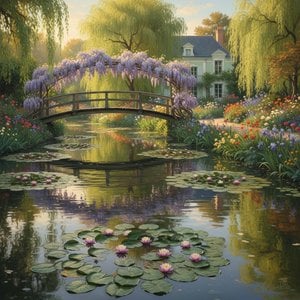
El desarrollo artístico de Blanche se caracterizó por una conexión profunda y rítmica con los ciclos estacionales de los jardines de Giverny. A medida que transitaba por los roles de estudiante y colaboradora, su pincelada comenzó a reflejar las cualidades efímero de la luz y la atmósfera que definieron la era impresionista. Ella no se limitó a pintar paisajes; documentó el alma del jardín. Sus obras a menudo se centraban en el delicado juego entre el agua, la flora y la luz, capturando los sauces llorones y los lirios flotantes con una precisión que se sentía tanto íntima como expansiva.
Su enfoque técnico estuvo fuertemente influenciado por su estrecha proximidad a las obras maestras del periodo tardío de Monet. Aprendió a navegar las complejidades de la teoría del color y la forma en que la luz disuelve la materia, pero mantuvo una sensibilidad distinta. Sus paisajes poseen a menudo una cierta quietud, una cualidad contemplativa que los distingue de las pinceladas más enérgicas de sus contemporáneos. Este periodo de su vida también estuvo marcado por el intercambio artístico; colaboró con expatriados estadounidenses como Theodore Earl Butler y John Leslie Breck, creando obras que mezclaban las tradiciones impresionistas francesas con una perspectiva transatlántica y fresca.
Una impresión duradera en la historia del arte
Aunque durante muchas décadas su nombre se susurró entre las sombras del legado de Monet, la historia del arte moderno ha comenzado a reivindicar a Blanche Hoschedé-Monet como una pintora significativa por derecho propio. Su importancia reside no solo en su habilidad técnica, sino en su papel como custodia de la estética de Giverny. Vivió la transformación del movimiento impresionista, desde una nueva y radical forma de ver hasta convertirse en un pilar celebrado de la historia del arte, y sus pinturas sirven como documentos primarios vitales de la atmósfera de aquella época.
Hoy en día, su legado se preserva en diversas colecciones e instituciones, especialmente dentro del Musée Blanche Hoschedé-Monet (anteriormente el Musée Municipal A.g. Poulain de Vernon). Estudiar su obra es experimentar una versión más íntima del Impresionismo, una que trata menos sobre el gran espectáculo de la luz y más sobre la belleza silenciosa y perdurable que se encuentra en los rincones de un jardín amado. Su vida sigue siendo un testimonio del poder de la devoción artística y de las marcas sutiles e indelebles que dejan aquellos que trabajan junto a la grandeza.
Preguntas y respuestas
¿Dónde se pueden explorar las obras de Blanche Hoschedé-Monet agrupadas por palabras clave?
La página Por palabras clave de Blanche Hoschedé-Monet agrupa las obras del artista por palabras clave.
¿Puedo visitar un museo virtual con las obras de Blanche Hoschedé-Monet?
La Galería 3D de Blanche Hoschedé-Monet es una página que muestra las obras del artista en una galería virtual tridimensional.
¿Dónde puedo explorar las obras de Blanche Hoschedé-Monet organizadas por color?
El Índice de color de Blanche Hoschedé-Monet organiza las obras del artista por colores.