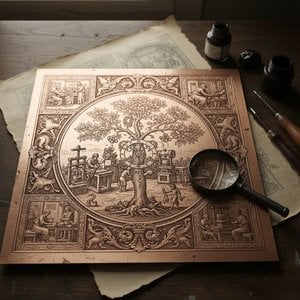
El visionario de Núremberg: La vida y el legado de Augustin Hirschvogel
En el corazón de la Alemania renacentista, donde la intrincada artesanía de Núremberg se encontraba con la floreciente curiosidad intelectual de la época, Augustin Hirschvogel emergió como un polímata cuyos talentos trascendieron los límites de una sola disciplina. Nacido en 1503 en un linaje de célebres artesanos, Hirschvogel estaba destinado a una vida impregnada de las meticulosas tradiciones de su padre, Veit Hirschvogel el viejo. De niño, respiró la atmósfera de un taller dedicado al luminoso arte de la vitralería, aprendiendo cómo la luz podía ser capturada y transformada a través del vidrio coloreado. Esta inmersión temprana en el delicado juego entre la transparencia y el pigmento le infundió una reverencia de por vida por el detalle y una mirada capaz de percibir la esencia estructural del mundo que lo rodeante.
Sin embargo, la trayectoria de la vida de Hirschvogel se vio alterada irrevocablemente por los vientos de cambio que barrían Europa. La llegada de la Reforma Protestante a Núremberg puso un fin abrupto a la era de los fastuosos y monumentales encargos de vidrieras. Si bien este periodo de agitación religiosa podría haber sofocado a un artista menor, para Hirschvogel sirvió como catalizador para una profunda reinvención. Desvió su mirada del resplandor etéreo del vidrio hacia la precisión tangible de las matemáticas y la cartografía. Esta transición de lo decorativo a lo analítico le permitió fusionar la sensibilidad estética de un pintor con la lógica rigurosa de un científico, creando una voz artística única que era, a la vez, evocadora y matemáticamente fundamentada.
El dominio de la línea: La Escuela del Danubio y los grabados de paisajes
Entre 1545 y 1549, Hirschvogel alcanzó su distinción artística más perdurable a través de una serie de treinta y cinco pequeños grabados al aguafuerte de paisajes. Estas obras lo situaron en el centro mismo de la Escuela del Danubía, un movimiento caracterizado por sus representaciones románticas y a menudo dramáticas del mundo natural. A diferencia de los paisajes más rígidos y clásicos que surgían en otras partes de Europa, los grabados de Hirschvogel capturaron el espíritu indómito y accidentado de los territorios bávaros y austriacos. Su maestría con la punta de grabado le permitió representar el denso follaje de los bosques, los escarpados precipicios de los Alpes y las imponentes siluetas de los castillos de Núremberg y Hohenzollern con un realismo casi táctil.
En estas estampas se encuentra una síntesis impresionante de observación y emoción. No se limitó a documentar la topografía; insufló vida al paisaje. Mediendo delicados tramados y variados grosores de línea, logró una sensación de profundidad atmosférica que invitaba al espectador a deambular por sus mundos en miniatura. Su capacidad para trasladar la inmensidad de la naturaleza alemana a una pequeña placa de cobre sigue siendo un testimonio de su virtuosismo técnico. Estos grabados eran más que meras reproducciones de escenarios; eran ventanas a un periodo en el que el paisaje natural estaba siendo redescubierto como un tema de profunda identidad espiritual y nacional.
Arquitecto de la identidad urbana: Cartografía y planificación de ciudades
Más allá de la escala íntima de sus grabados, el intelecto de Hirschvogel alcanzó lo monumental. Su fascinación por las matemáticas y las relaciones espaciales lo condujeron naturalmente al reino de la cartografía y el diseño urbano. Se convirtió en un pionero en el arte de la planificación urbana, notablemente a través de sus contribuciones a la identidad visual de Viena. Su trabajo en mapas intrincados, como el Mesa con Mapa Circular de la Ciudad de Viena, demostró una capacidad inigualable para organizar datos urbanos complejos en composiciones hermosas, legibles y estéticamente agradables.
Este periodo de su carrera representa la convergencia definitiva de sus diversas habilidades. Como cartógrafo, poseía la precisión requerida para un levantamiento topográfico exacto; como artista, comprendía cómo utilizar la composición para guiar el ojo a través de las laberínticas calles de una metrópolis en crecimiento. Su enfoque visionario del trazado urbano ayudó a dar forma al tejido mismo del desarrollo histórico de Viena, dejando un legado que está grabado en las piedras físicas de la propia ciudad. La vida de Hirschvogel permanece como una narrativa extraordinaria de adaptación y brillantez: un viaje desde las coloridas ventanas de un taller de Núremberg hasta los grandes planos estructurales de una de las mayores capitales imperiales de Europa.
Preguntas y respuestas
¿Puedo estudiar el uso del color de Augustin Hirschvogel en toda su obra?
El perfil cromático de la obra de Augustin Hirschvogel se puede consultar en su página de ADN de la Paleta.
¿Puedo explorar las obras de Augustin Hirschvogel por movimiento?
Puedes ver los movimientos en los que trabajó Augustin Hirschvogel en la página de Todos los movimientos del artista, donde las obras se agrupan por movimiento.
¿Puedo visitar un museo virtual con las obras de Augustin Hirschvogel?
La Galería 3D de Augustin Hirschvogel es una página que muestra las obras del artista en una galería virtual tridimensional.