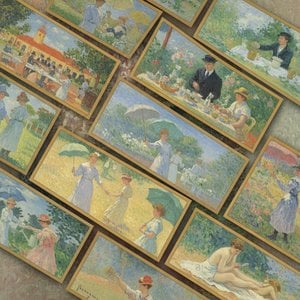
El Pintor de la Elegancia Parisina
Auguste Toulmouche (1829-1890) se erige como una figura luminosa en el tapiz del arte francés del siglo XIX, un maestro cuyo pincel capturó la esencia misma de la Belle Époque. Nacido en Nantes, hijo de Emile Toulmouche, un próspero corredor de bolsa, su infancia estuvo bañada en una atmósfera de apreciación artística, nutrida por el constante aliento de su padre. Este apoyo fundamental le permitió seguir una riguroza educación clásica, comenzando con el estudio del dibujo y la escultura bajo la tutela de Amédée Ménard. Su viaje lo llevó finalmente al corazón de París, donde buscó la guía del estimado Charles Gleyre. Bajo la enseñanza de Gleyre, Toulmouche refinó su dominio del realismo académico, desarrollando una capacidad sofisticada para trasladar las texturas de la alta sociedad al lienzo con una precisión sin igual.
El brillo del talento de Toulmouche fue reconocido casi de inmediato por el estamento artístico. A la temprana edad de diecinueve años, hizo su debut en el prestigioso Salón de París en 1848, una entrada que señaló la llegada de una nueva y formidable voz en la pintura de género francesa. Sus triunfos posteriores en los Salones de 1852 y 1861, donde fue condecorado con medallas, consolidaron su posición entre la vanguardia artística. Este periodo de creciente reconocimiento se vio elevado aún más por la forma más alta de distinción: el mecenazgo imperial. Cuando Napoleón III encargó ‘La Fille’, un retrato de Eugénie de Bourbon, esto sirvió como un profundo testimonio de la confianza del Emperador en la visión de Toulmouche y cementó el estatus del artista como uno de los pintores más elegantes y solicitados de la época.
Una Visión de Opulencia e Introspección
La obra de Toulmouche se caracteriza por una devoción asombrosa a la estética de la alta burguesía. Él no se limitó a documentar las vidas de las mujeres parisinas; creó una visión idealizada, casi onírica, del refinamiento doméstico. Sus lienzos son celebrados por su meticulosa representación de telas opulentas: el brillo reluciente de la seda, el peso denso del terciopelo y la delicada complejidad del encaje. A través de sus ojos, somos testigos de un mundo de mobiliario lujoso e interiores dorados que personifican el esplendor de la Francia del siglo XIX. Sin embargo, bajo esta superficie de esplendor material, existe una profunda profundidad psicológica.
En obras como ‘La Fiancée Hesitante’ y ‘The Reluctant Bride’, Toulmouche explora las matizadas emociones de sus sujetos. Poseía un talento singular para capturar momentos de silenciosa introspección, donde una mirada hacia un espejo ornamentado o una sutil inclinación de la cabeza sugieren una compleja vida interior. Sus pinturas a menudo invitan al espectador a contemplar temas como la identidad, la belleza y la naturaleza fugaz de la juventud. Este dominio de la luz y la sombra —el juego de suaves tonos rosados contra azules profundos y dorados cálidos— crea una atmósfera que es simultáneamente íntima y grandiosa, transportando al observador a los santuarios privados y elegantes de sus protagonistas.
El Legado del Realismo Académico
La importancia histórica de Auguste Toulmouche reside en su capacidad para tender un puente entre la estricta tradición académica y la evocadora narrativa de la pintura de género. Si bien su técnica permaneció arraigada en el realismo disciplinado enseñado por Gleyre, su temática abrazó los cambios sociales contemporáneos de su tiempo. Se convirtió en un cronista de un estrato social específico, preservando la elegancia sartorial y los rituales domésticos de una era pasada para la posteridad. Su trabajo sigue siendo una ventana vital al latido cultural de París durante un periodo de inmensa transformación.
Hoy en día, la influencia de Toulmouche persiste a través del encanto perdurable de sus composiciones. Coleccionistas y entusiastas del arte continúan cautivados por su capacidad para evocar nostalgia y asombro. Su legado se define por:
- Maestría Técnica: Una habilidad inigualable para representar texturas, luz y las cualidades táctiles de los objetos de lujo.
- Documentación Cultural: El aporte de un registro visual detallado de las jerarquías sociales y los valores estéticos de la Belle Époque.
- Resonancia Emocional: La capacidad de dotar a retratos altamente estilizados de un sentimiento humano genuino y complejidad psicológica.
Preguntas y respuestas
¿Qué tan populares son las obras de Auguste Toulmouche?
Las estadísticas sobre las obras de Auguste Toulmouche están disponibles en la página de Estadísticas del artista.
¿Cuántas obras de Auguste Toulmouche hay disponibles para explorar?
Puede explorar 22 obras obras de Auguste Toulmouche en la página Todas las obras de arte.
¿Puedo estudiar el uso del color de Auguste Toulmouche en toda su obra?
El uso del color de Auguste Toulmouche en las obras listadas en este sitio web puede estudiarse en la página ADN de la Paleta del artista.