Germaine Émilie Krebs (Alix Grès): La Escultora de la Tela
Germaine Émilie Krebs, conocida mundialmente como Alix Grès, fue una figura singular en el universo de la alta costura: una modista que trascendió la mera confección de prendas para alcanzar algo muy cercano a la escultura. Nacida en París en 1903, cultivó una vida intensamente privada, priorizando su oficio por encima de todo y dejando tras de sí escasa documentación biográfica. Sin embargo, su legado perdura a través de los impresionantes vestidos que llevan su nombre: drapeados fluidos de seda y lana que parecían desafiar la gravedad, capturando la belleza etérea de las diosas griegas y consagrando a Grès como “la maestra del vestido envuelto y drapeado” y “la reina del drapeado”. Su influencia continúa inspirando a diseñadores contemporáneos que buscan recuperar la elegancia y la innovación de una era pasada.- Primeros años y formación: Los años formativos de Krebs estuvieron marcados por una crianza impregnada de apreciación artística, fomentada por su padre, un renombrado escultor. Esta exposición, sin duda, inculcó en ella una comprensión profunda de la forma y la textura, elementos que se convertiría en el núcleo de su estética distintiva. Los detalles sobre su educación formal son escasos, lo que sugiere que perfeccionó sus habilidades, en gran medida, a través del estudio autodidacta y la experimentación constante.
- Inicios de su carrera y grandes hitos: Grès comenzó su trayectoria en la costura en la década de 1930, estableciendo su atelier en París poco después de contraer matrimonio con Jean Moulin, un destacado activista comunista. A pesar de los desafíos enfrentados durante la Segunda Guerra Mundial —incluyendo el racionamiento y las restricciones en la disponibilidad de tejidos—, ella perseveró, manteniendo su visión inquebrantable de la belleza y el arte. Su gran consagración llegó en 1947 con la creación del “Vestido Griego”, una obra maestra que cimentó instantáneamente su reputación por sus innovadoras técnicas de drapeado y consolidó su posición como una de las principales costureras de Francia.
- Técnica y estilo: El estilo distintivo de Grès giraba en torno a la manipulación del tejido para crear formas escultóricas, una técnica que ella denominó "escultura textil". Logró esta extraordinaria hazaña mediante un meticuloso proceso de capas, pliegues, doblados y torsiones de materiales como el crepé de seda y el tweed de lana Donegal. Sus diseños priorizaban el cuerpo femenino, enfatizando sus curvas naturales y celebrando su gracia. A diferencia de muchos de sus contemporáneos que se aferraban a siluetas rígidas, Grès defendió la fluidez y el movimiento, capturando el espíritu del arte clásico mientras desafiaba simultáneamente los límites de la innovación en la moda.
- Diseños notables y colaboraciones: A lo largo de una prolífica carrera que abarcó cinco décadas, Grès produjo una asombrosa variedad de vestidos icónicos, cada uno un testimonio de su habilidad inigualable y visión artística. Entre sus creaciones más celebradas se encuentran vestidos inspirados en la escultura griega antigua, reflejando su fascinación por los ideales clásicos de belleza y armonía. Colaboró extensamente con fotógrafos de renombre como Helmut Newton e Yves Saint Laurent, elevando sus diseños a la categoría de obras maestras visuales que cautivaron al público de todo el mundo.
- Legado e influencia: La influencia de Germaine Émilie Krebs en la historia de la moda es innegable. Su enfoque pionero del drapeado revolucionó la alta costura, inspirando a generaciones de diseñadores que buscaron emular su maestría en la manipulación de los tejidos. Su estética minimalista —caracterizada por líneas limpias y texturas sutiles— sigue resonando en las tendencias contemporáneas, demostrando el poder perdurable de la elegancia atemporal. La dedicación inquebrantable de Grès a su oficio y su negativa a comprometer su integridad artística sirven como inspiración para artistas y creativos en todas partes.
Grandes Logros y Reconocimientos
Grès recibió numerosos galardones a lo largo de su carrera, reconociendo su contribución al arte de la costura. Fue condecorada con la Légion d'honneur en 1987 por el presidente François Mitterrand, un testimonio del aprecio de Francia por la excelencia artística y el patrimonio cultural. Sus diseños adornaron las portadas de Vogue y Harper’s Bazaar, consolidando su estatus como icono de la moda y estableciendo su nombre junto a otras luminarias de la época. Además, fue honrada con la Ordre national des Arts et Lettres en 1986, una distinción prestigiosa que reconoce su talento excepcional y su compromiso inquebrantable con las artes.Exploración Adicional
Para profundizar en la vida y obra de Grès, explore estos recursos:- Wikipedia: https://en.wikipedia.org/wiki/Madame_Gr%C3%A8s
- The Metropolitan Museum of Art Costume Institute: https://www.metmuseum.org/art/collection/search/155723
Ejemplos de Obras Notables
- Vestido de noche en seda cambiante verde oscuro transparente: /en/art/germaine-emilie-krebs-evening-dress-in-sheer-dark-green-changeable-silk-D5DNFX-en/
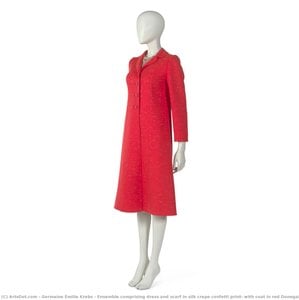
- Conjunto compuesto por vestido y pañuelo en crepé de seda con estampado confetti, con abrigo en lana Donegal roja: /en/art/germaine-emilie-krebs-ensemble-comprising-dress-and-scarf-in-silk-crepe-D5DLXH-en/
Preguntas y respuestas
¿Cómo puedo encontrar obras de Alix Grès sobre un tema específico?
Explora las obras de Alix Grès mediante palabras clave en su página de Por palabras clave. Cada palabra clave agrupa las obras relacionadas.
¿Qué tan populares son las obras de Alix Grès?
Las estadísticas sobre las obras de Alix Grès están disponibles en la página de Estadísticas del artista.
¿Dónde puedo ver la paleta cromática de la obra de Alix Grès?
El ADN de la Paleta de Alix Grès presenta el perfil cromático de su obra.