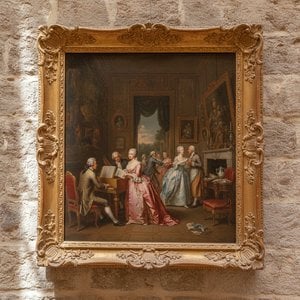
Una vida entre mundos: Las raíces cosmopolitas de Alexander Mark Rossi
La historia de Alexander Mark Rossi no comienza en el corazón de Londres, sino en las costas bañadas por el sol de Corfú, Grecia. Nacido en 1841, Rossi fue hijo de una intersección cultural única; su padre, el Dr. Mark Rossi, era un diplomático italiano que servía bajo la administración británica en las islas jónicas. Esta temprana exposición a un paisaje mediterráneo, visto a través del prisma de la influencia colonial británica, dotó al artista de una perspectiva cosmopolita que más tarde definiría la amplitud de su visión. Aunque sus raíces estaban ancladas en las islas griegas, su destino artístico estaba inextricablemente ligado a la grandeza y las complejidades sociales de la Inglaterra victoriana.
Su viaje hacia convertirse en un pilar de la escena artística británica de finales del siglo XIX estuvo marcado por importantes transiciones personales y geográficas. En 1866, una visita a Preston, Lancashire, resultó ser un momento crucial en su vida, ya que conoció y eventualmente se casó con Jane Gillow. Esta unión lo ancló firmemente al paisaje inglés. Para la década de 1870, impulsado por la atracción magnética del epicentro cultural de la época, Rossi se trasladó a Londres. Fue aquí donde verdaderamente emergió de las sombras de sus años formativos para reclamar su lugar entre los pintores de élite de su generación, estableciendo una presencia que impondría respeto en las galerías más prestigiosas de la época.
La maestría del género: Capturando la inocencia y la elegancia
La obra artística de Rossi es una exploración profunda de la pintura de género, un estilo dedicado a la evocación de la vida cotidiana. Poseía una capacidad poco común para transformar lo mundano en algo monumental, encontrando una profunda resonancia narrativa en los momentos tranquilos de la domesticidad y la infancia. Gran parte de su trabajo se centró en el retrato de niños y jóvenes, utilizando a menudo a miembros de su propia familia como modelos. Esta conexión íntima con sus sujetos otorgó una autenticidad inigualable a sus lienzos, permitiéndole capturar la esencia fugaz de la inocencia infantil con una ternura que resonó profundamente en el público victoriano.
Su enfoque técnico era una sofisticada mezcla de realismo y técnicas más fluidas y atmosféricas. Si bien su compromiso con el detalle es sorprendentemente evidente en obras como The Little Model, donde las texturas del papel tapiz floral y la luz suave crean una sensación de encanto sereno, no temía abrazar el potencial expresivo del pincel. Se puede observar una sutil inclinación hacia cualidades impresionistas a través de su uso de pinceladas sueltas y paletas de colores delicadas para evocar estados de ánimo. Además, la influencia del movimiento prerrafaelita es palpable en sus composiciones más líricas, donde la imaginería simbólica y un sentido romantizado de la belleza impregnan las escenas con una cualidad poética y cautivadora.
Legado y las sombras de la sociedad victoriana
A medida que la carrera de Rossi progresaba, alcanzó un reconocimiento institucional significativo. Entre 1871 y 1903, fue un expositor frecuente y celebrado en la Royal Academy, contribuyendo con sesenta y seis obras a sus prestigiosos salones. Su pertenencia al Hogarth Club —un círculo prestigioso de pintores dedicados al realismo y al comentario social— consolidó aún más su estatus como un artista de mérito intelectual y técnico. Su capacidad para navegar tanto las demandas sentimentales del gusto victoriano como los estándares más rigurosos del realismo académico le permitió mantener una relevancia duradera.
Quizás ninguna obra individual encapsula la profundidad emocional de su talento mejor que su obra maestra de 1897, Forbidden Books. Esta evocadora representación sirve como testimonio de su habilidad para tejer tensión y narrativa en un solo encuadre, yendo más allá del simple retrato para adentrarse en el reino de la narrativa psicológica. A través de la obra de su vida, Rossi dejó tras de sí un registro visual de una era definida por su fascinación con la virtud doméstica, la jerarquía social y la belleza idealizada de la juventud. Su legado permanece como el de un pintor que pudo tender un puente entre la calidez íntima del hogar familiar y las grandes y grandiosas narrativas de un imperio británico en transformación.
Preguntas y respuestas
¿Puedo explorar las obras de Alexander Mark Rossi por palabra clave?
Explora las obras de Alexander Mark Rossi mediante palabras clave en su página de Por palabras clave. Cada palabra clave agrupa las obras relacionadas.
¿Dónde se pueden ver las obras de Alexander Mark Rossi agrupadas por movimiento artístico?
La página Todos los movimientos agrupa las obras de Alexander Mark Rossi por movimiento artístico.
¿Puedo ordenar las obras de Alexander Mark Rossi por color?
El Índice de color de Alexander Mark Rossi organiza las obras del artista por colores.