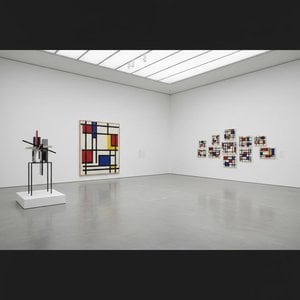
El arquitecto de la luz y la línea: El legado de Alejandro Otero Lárez
En el vibrante tapiz del modernismo latinoamericano del siglo XX, pocos hilos brillan con tanta intensidad o estructura como aquellos tejidos por Alejandro Otero Lárez. Visionario que redefinió los límites del lienzo, Otero no fue simplemente un pintor, sino un pionero de la abstracción geométrica, un escultor del espacio y un catalizador cultural para Venezuela. Nacido en el tranquilo paisaje de El Manteco, Bolívar, el 7 de marzo de 1921, su viaje desde las exuberantes texturas de su tierra natal hasta los estudios de vanguardia en París representa una profunda odisea de liberación artística. Su formación temprana en la Escuela de Artes Plásticas y Aplicadas Caracas le proporcionó una base rigurosa; sin embargo, fue su intelecto inquieto lo que lo impulsó a desmantelar las fronteras tradicionales de la representación en favor de un lenguaje de la forma puro y rítmico.
La evolución de Otero estuvo marcada por una serie de rupturas transformadoras. Tras su traslado a París en 1946, el artista experimentó una metamorfosis, dejando atrás los paisajes luministas de su juventud para emprender una indagación modernista más estructurada. Durante este periodo, se involucró profundamente con los remanentes del cubismo, encontrando una expresión profunda en naturalezas muertas que se centraban en objetos cotidianos como jarras y cafeteras. Su serie Las cafeteras, pintada entre 1946 y 1948, sirve como un puente vital en su obra; aquí, el peso tridimensional de los objetos comenzó a disolverse, reemplazado por un juego cada vez más sofisticado de línea y color sobre un plano plano. Esta transición estuvo fuertemente influenciada por los ecos espirituales y formales de Wassily Kandinsky, cuyo énfasis en el gesto espontáneo y la resonancia armónica del color proporcionó a Otero un modelo para transmitir emociones profundas a través de medios no representativos.
El ritmo de la abstracción: Los Coloritmos y más allá
A medida que la carrera de Otero maduraba, trascendió la mera disposición de formas para adentrarse en la creación de energía óptica. A mediados de la década de 1950, se anunció el nacimiento de su innovación más celebrada: la serie Coloritmos. En estas obras, Otero logró un equilibrio magistral entre la quietud y el movimiento. Al colocar colores contrastantes, claros y oscuros, en bandas verticales precisas, diseñó una sensación de vibración que parecía pulsar dentro del plano bidimensional. Esta técnica no se limitaba a representar el color; lo orquestaba, creando una experiencia inmersiva donde el ojo queda atrapado en una danza perpetua de luz y sombra. Este periodo también fue testigo de su participación en el grupo Los Disidentes, un colectivo radical de artistas venezolanos dedicados a desafiar las jerarquías establecidas y a reimaginar la esencia misma de la belleza a través de una lente moderna y geométrica.
Su exploración del espacio y la materialidad se extendió mucho más allá de la pincelada. El dominio de Otero sobre las influencias del Op Art y su trabajo con los Tablones demostraron un enfoque arquitectónico del arte, donde la presencia física del medio se volvió tan significativa como la imagen misma. Su capacidad para entablar un diálogo con cada uno de los movimientos de vanguardia más importantes de su época —desde el rigor estructurado de la abstracción geométrica hasta las texturas experimentales del informalismo— consolidó su estatus como un polímata de las artes visuales. Ya fuera a través de la claridad austera de sus monocromos o la energía cinética de sus composiciones rítmicas, la obra de Otero permaneció como un testimonio del poder de los elementos fundamentales: forma, color y composición.
Una impresión duradera en el canon moderno
La importancia histórica de Alejandro Otero Lárez es incalculable. Fue una figura central en el establecimiento de Venezuela como una potencia de la abstracción internacional, tendiendo un puente entre la identidad local y el modernismo global. Sus galardones, incluyendo el Premio Nacional de Pintura y prestigiosos reconocimientos en la Bienal de São Paulo, reflejan una carrera definida por la excelencia y la innovación. Más allá de sus lienzos personales, su papel como promotor cultural y escritor aseguró que el movimiento que ayudó a liderar dejara una huella indeleble en las generaciones futuras.
Contemplar la obra de Otero es presenciar el triunfo del espíritu abstracto. Su legado permanece preservado en las grandes instituciones del mundo, como el Museo de Arte Moderno (MoMA), donde sus contribuciones continúan inspirando asombro. Nos deja un vocabulario visual que es tanto matemáticamente preciso como emocionalmente resonante; un regalo al mundo del arte que continúa vibrando con la misma energía que capturó por primera vez en el lienzo hace décadas.
Preguntas y respuestas
¿Dónde puedo ver las obras de Alejandro Otero Lárez en una galería 3D?
La Museo 3D de Alejandro Otero Lárez es una página que muestra las obras del artista en una galería virtual tridimensional.
¿Puedo explorar las obras de Alejandro Otero Lárez por paleta de colores?
Para encontrar obras de Alejandro Otero Lárez en una paleta específica, utilice la página de Por paletas de colores del artista.
¿Existe un resumen de todos los temas que pintó Alejandro Otero Lárez?
El Atlas de temas de Alejandro Otero Lárez es una página que organiza las obras del artista según sus temas.