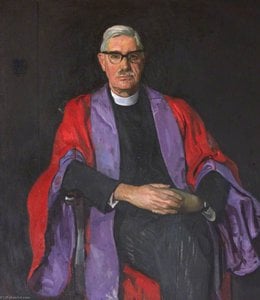
Alberto Morrocco: Bridging Impressionism and Scottish Landscape
Alberto Morrocco OBE FRSA FRSE RSW RP RGI LLD (1917 – 1998) stands as a pivotal figure in twentieth-century Scottish art, celebrated for his masterful depictions of Scotland’s dramatic landscapes alongside evocative explorations of Venetian interiors and still lifes. Born in Aberdeen to Italian immigrant parents—Domenic Antonio Marrocco and Celesta Crolla—Morrocco's artistic journey began at Gray’s School of Art under Robert Sivell, where he honed foundational skills before embarking on formative studies abroad in France, Italy, and Switzerland. These experiences profoundly shaped his aesthetic sensibilities, particularly the influence of avant-garde movements like Braque and Picasso, which instilled a lifelong commitment to experimentation and expressive brushwork. Early Influences: Morrocco’s artistic vision was undeniably rooted in the Impressionist tradition championed by Monet and Renoir. However, he swiftly embraced Cubism's geometric fragmentation and Picasso’s bold stylistic innovations, demonstrating an intellectual curiosity that propelled him beyond mere imitation. This dual inspiration—the luminous beauty of Impressionism combined with the analytical rigor of Cubism—became a hallmark of his oeuvre. He wasn’t simply replicating what he saw; he was actively reshaping it through innovative techniques and conceptual considerations. Scottish Landscapes: Morrocco's enduring legacy rests primarily on his breathtaking landscapes of Scotland—particularly the rugged coastline of Orkney and Sutherland. His canvases capture not just visual beauty but also a palpable sense of atmosphere, achieved through meticulous observation and masterful technique. Consider “John Henderson Seaforth Burleigh,” a portrait imbued with quiet dignity and rendered in subtle Impressionistic hues. The artist’s ability to convey the spirit of these locations—the wind-swept heather moorlands, the crashing waves against granite cliffs—is remarkable. He sought to capture not just what the eye perceives but also what the soul feels when confronted with Scotland's grandeur. Venetian Visions: Morrocco’s fascination with Venice extended beyond mere scenic representation; he sought to convey the city’s spirit—its grandeur, its melancholy, its shimmering light. Works like “Breakfast” exemplify this ambition, presenting a luminous interior bathed in diffused sunlight and populated by carefully positioned objects. He meticulously studied Venetian architecture and light, attempting to distill its essence onto canvas. These paintings are characterized by their delicate color palettes and precise compositions, reflecting Morrocco’s dedication to capturing the subtleties of Venetian life. Professional Life & Recognition: Morrocco's professional life centered around Dundee, where he served as Head of Painting at Duncan of Jordanstone College of Art (now part of the University of Dundee) from 1950 until his retirement. During this period, Morrocco undertook ambitious mural commissions for St. Columba’s Church in Glenrothes and Liff Hospital, cementing his reputation as a socially conscious artist dedicated to enriching public spaces. He was awarded the Order of the British Empire (OBE) for services to art and education—a testament to his unwavering commitment to fostering artistic excellence within Scotland's educational landscape. Furthermore, he received Fellowships from the Royal Society of Arts (RSA), Royal Photographic Society (RPS), Royal Scottish Watercolour Society ( RSW), Royal Geographical Institute (RGI) and Learned Societies of Dundee – honors recognizing his contributions to both scholarship and artistic practice. Legacy & Artistic Significance: Morrocco’s prolific output spanned over six decades, resulting in hundreds of paintings—a testament to his tireless pursuit of artistic excellence. His work gained international recognition, securing exhibitions across Europe and bolstering Dundee's cultural standing. He remains an inspiring figure for artists and art enthusiasts alike – a Scottish visionary who captured the essence of both landscape and interior life with unparalleled skill and sensitivity. His influence can be seen in subsequent generations of Scottish painters who embraced experimentation and sought to convey emotion through color and form, continuing Morrocco’s legacy as one of Scotland's most celebrated artistic voices.Preguntas y respuestas
¿Dónde puedo ver las obras de Alberto Morrocco en una galería 3D?
Las obras de Alberto Morrocco pueden verse en una galería 3D en la página Museo 3D del artista.
¿Existe una lista completa de las obras de Alberto Morrocco?
Todas las obras de Alberto Morrocco en este sitio web pueden explorarse desde la página de Todas las obras del artista.
¿Dónde se encuentran las obras de Alberto Morrocco agrupadas por paleta?
Las obras de Alberto Morrocco pueden explorarse por paleta de colores en la página de Por paletas de colores del artista.