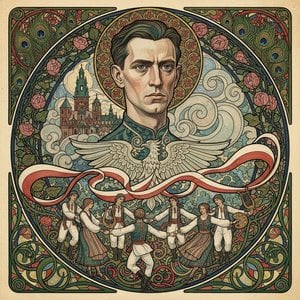
Adam Mickiewicz: The Voice of Polish Romanticism
Adam Bernard Mickiewicz (1798-1855) stands as a monumental figure in Polish literature and national identity—a poet whose verses resonated through the turbulent years of partitions, inspiring uprisings and cementing his place as Poland’s “Three Bards,” alongside Juliusz Żegędzki and Cyprian Kamil Norwid. Born in NovoGruda (modern Belarus), he descended from a noble family steeped in tradition and imbued with patriotic fervor—a formative influence that would permeate his entire artistic trajectory. His early education fostered an appreciation for classical scholarship, yet it was the clandestine Philomaths’ Society, formed alongside fellow students at Vilnius University, that ignited his passion for political activism and cemented his commitment to liberating Poland from Russian domination.
Early Life & Education: Mickiewicz's upbringing instilled in him a profound respect for Polish heritage and intellectual tradition. His studies at Vilnius University exposed him to Enlightenment ideals alongside the burgeoning Romantic movement, shaping his worldview and artistic sensibilities. He demonstrated an aptitude for languages and literature from a young age—a foundation that would prove invaluable throughout his life’s endeavors.
The Philomaths’ Society & Exile: Arrested in 1823 for subversive activities linked to the Philomaths' Society, Mickiewicz endured a harrowing exile in Russia—a period marked by intellectual engagement with Pushkin and other prominent figures of the Russian intelligentsia. Despite facing censorship and persecution, he continued to cultivate his poetic craft, producing significant works during this formative experience. This exile profoundly impacted his artistic vision, fostering introspection and deepening his commitment to defending Polish ideals abroad.
European Travels & Literary Influences: His extensive travels across Europe – Weimar, Berlin, Prague – broadened his horizons and exposed him to the artistic currents of his time. He drew inspiration from Goethe’s dramatic vision—particularly *Faust*, exploring themes of ambition, morality, and the human condition—and Voltaire's humanist philosophy, advocating for reason and tolerance as guiding principles. These encounters profoundly shaped Mickiewicz’s poetic style and thematic concerns, establishing him as a cosmopolitan artist attuned to the intellectual debates of his era.
The Poet Laureate: Romantic Drama & Epic Verse
Mickiewicz’s literary genius blossomed most spectacularly in the realm of drama. *Dziady* (*Forefather’s Eve*)—a groundbreaking reimagining of Slavic mythology and folklore—became his magnum opus, establishing him as a pioneer of Polish Romantic drama. It skillfully blended pagan rituals with historical narratives to convey a powerful critique of oppression and an ardent yearning for national liberation. The poem's evocative imagery and lyrical prose captured the spirit of Poland’s struggle for independence, solidifying Mickiewicz’s reputation as one of Europe’s foremost poets. Simultaneously, he crafted *Pan Tadeusz*, Poland's national epic poem—a sprawling chronicle of Ruthenian history and folklore that celebrated the resilience of the Polish peasantry and solidified Mickiewicz’s legacy as a master storyteller. Its meticulous detail and lyrical beauty cemented his place in literary history.
Historical Significance & Legacy: Adam Mickiewicz’s work transcended mere artistic expression; it served as a rallying cry for Poles yearning for freedom—inspiring generations to resist imperial rule and reaffirm their national identity. His poems became anthems of patriotism, fueling uprisings and shaping the collective memory of Poland. Beyond his literary achievements, Mickiewicz championed Slavic unity—believing in the transformative power of cultural exchange and artistic expression to foster understanding between nations—a conviction that resonated deeply within his contemporaries and continues to inspire dialogue about European heritage today. He remains a symbol of Polish resilience and intellectual courage—a testament to the enduring influence of art on shaping national consciousness and promoting humanist values.