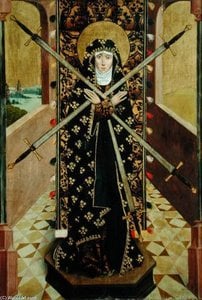
Absolon Stumme: A Master of Late Gothic Hamburg
The year is 1499. The city of Hamburg, a burgeoning center of trade and art in Northern Germany, is abuzz with creative energy. Amidst this vibrant scene emerges Absolon Stumme (died 1499), an artist whose legacy endures through the intricate altar panels and biblical scenes that bear his name. While details of his life remain somewhat shrouded in the mists of history – a common fate for many artists of the era – we can reconstruct a compelling narrative based on surviving works, historical context, and scholarly analysis.
Stumme’s artistic lineage is deeply intertwined with the city itself. He was born into a family already established as skilled artisans, specifically within the realm of religious art. His stepfather, Hinrik Bornemann, was a prominent figure in Hamburg's artistic community, working alongside Wilm Dedeke on the monumental Hamburg Cathedral altarpiece – a project that would ultimately become inextricably linked to Stumme’s own career. This familial connection provided him with invaluable training and access to established techniques, shaping his early development within the rich tradition of Northern German art.
The Language of Late Gothic Imagery
Stumme's work firmly places him within the Late Gothic movement, a period characterized by a shift away from the rigid formality of the International Gothic towards a more expressive and emotionally charged style. His paintings are deeply rooted in medieval iconography, yet he imbues them with a remarkable sense of realism and human drama. He skillfully employed techniques honed over generations – meticulous detail in drapery, vibrant color palettes derived from pigments sourced both locally and from distant lands, and a profound understanding of perspective—to create scenes that were both visually stunning and spiritually resonant.
A key element of Stumme’s style is his masterful use of light. He frequently employed dramatic chiaroscuro – the interplay of light and shadow – to heighten emotional impact and draw the viewer's eye to specific figures within the composition. This technique, particularly evident in works like “Visitation From The Dome Altar” and “Marriage Of The Virgin, From The Dome Altar,” transforms static depictions into dynamic narratives, inviting viewers to contemplate the stories they depict.
Notable Works and Artistic Development
“Visitation From The Dome Altar” and “Marriage of the Virgin, From The Dome Altar” are arguably Stumme’s most celebrated achievements. These altarpieces, commissioned for the Hamburg Cathedral, showcase his technical prowess and artistic vision. The scenes depict key moments from the Gospels – a visitation and a marriage – rendered with an astonishing level of detail and emotional depth. The figures are not merely representations; they possess palpable humanity, conveying a range of emotions through subtle gestures and expressions.
Beyond these monumental altarpieces, Stumme’s oeuvre includes numerous smaller panels and devotional images. His work demonstrates a consistent commitment to portraying biblical narratives with both accuracy and artistic sensitivity. As his career progressed, there is evidence of a growing influence from the emerging Renaissance style, particularly in his use of perspective and naturalistic detail – a subtle but significant shift that reflects the changing artistic landscape of Northern Europe.
Legacy and Historical Significance
Absolon Stumme’s contribution to the art of Hamburg and Northern Germany is considerable. He stands as a pivotal figure in the Late Gothic tradition, bridging the gap between the established conventions of his predecessors and the burgeoning innovations of the Renaissance. His work provides invaluable insights into the religious beliefs, artistic practices, and cultural dynamics of 15th-century Hamburg.
Despite the passage of centuries, Stumme’s paintings continue to captivate viewers with their beauty, emotional power, and technical skill. They serve as a testament to his artistry and a window into a fascinating period in European art history. His legacy endures not only through the surviving works themselves but also through the ongoing scholarly research that seeks to illuminate the life and career of this remarkable Hamburg painter.