Asesoría de arte gratuita

x
Encargar reproducción Encargar reproducciónComprar imagen en alta resolución Comprar imagen en alta resolución EnviarEnviar
DetallesDetalles Añadir a favoritos Añadir a favoritos DescargarDescargar SimilaresSimilares RadiografíaRadiografía Presentación de diapositivasPresentación de diapositivas

The Last Supper

Explore el arte visionario y la poesía de William Blake (1757-1827). Una figura clave del Romanticismo, conocido por la impresión iluminada, temas místicos y obras proféticas como 'El Tigre'. Descubre su legado en museos y en línea!

Giclée / Impresión de arte

Impresión giclée o en lienzo de calidad de museo con producción rápida y opciones de acabado flexibles.

P118B $10
P118H $10
P118W $10
P438Z $10
P508JH $12
P508YH $12
P805H $10
P805Z $10
P919BZ $10
P919G $10
P919XJ $10
P959ZH $10
P968JZ $12
W106C $8
W218G $10
W218JH $8
W218Y $10
W307PJ $10
W316G $10
W316PJ $8
W316Y $10
W398PJ $8
W4111J $10
W500HY $15
W500JH $15
W692G $12
W849H $8
W940BG $15
W953PJ $8

Standard
custom
CM
INCH

Elija entre nuestros tamaños predefinidos que respetan las proporciones originales de la obra.

ancho
altura

Puede introducir sus propias dimensiones para adaptarse a un marco o espacio específico. Si el tamaño seleccionado no coincide con las proporciones de la imagen original, recortaremos la obra de arte o extenderemos la imagen con un borde con efecto espejo o de color sólido. Se enviará una maqueta digital para su aprobación antes de que comience la producción.
Tenga en cuenta que la vista previa en pantalla no refleja el recorte o la extensión real. Solo la maqueta mostrará con precisión la composición final.
Aunque existen tamaños personalizados, recomendamos seleccionar una dimensión de la lista predefinida para preservar las proporciones originales.

Entrega mundial () en 2 semanas en lugar de las 4/5 semanas estándar. (7 julio)

why_choose_icon
Envío exprés gratuito a todo el mundo
why_choose_icon
Lienzo de lino de alta calidad
why_choose_icon
Seguro de envío total
why_choose_icon
Garantía de reembolso de impuestos aduaneros
why_choose_icon
Garantía de fidelidad de color
why_choose_icon
Política de devolución de 60 días (solo por defectos)
why_choose_icon
Garantía de devolución del 100% del dinero
why_choose_icon
Descuento por pedido múltiple

Precio total

-

reproduction

The Last Supper

Giclée / Impresión de arte

Tamaño de la reproducción

-

Precio total final

-

Datos clave

  • Location: Private Collection
  • Subject or theme: Religious Iconography
  • Dimensions: 38 x 55 cm
  • Artist: William Blake
  • Influences:
    • Giotto Di Bondone
    • Jaume Serra
  • Year: 1799
  • Artistic style: Symbolic Imagery

Test de arte

Solo hay una respuesta correcta para cada pregunta.

Pregunta 1:
What artistic technique is prominently used in ‘The Last Supper’ by William Blake?
Pregunta 2:
Which color dominates the background of the painting, contributing to its dramatic atmosphere?
Pregunta 3:
What is depicted at the center of the dining table in ‘The Last Supper’?
Pregunta 4:
Blake's use of gold color symbolizes what aspect of the artwork?
Pregunta 5:
‘The Last Supper’ is considered a significant work within which artistic movement?

Descripción de la obra

The Last Supper: A Study in Blake’s Visionary Symbolism

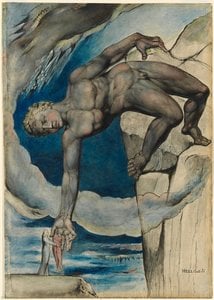
William Blake's “The Last Supper,” completed in 1799, stands as a testament to the artist’s singular ability to fuse biblical narrative with deeply personal spiritual contemplation. More than just a depiction of Jesus Christ’s final meal with his disciples, this tempera on canvas artwork is an immersive experience into Blake’s worldview—a realm where golden hues dominate and darkness serves as a catalyst for profound illumination.

  • Composition & Symbolism: The painting centers around Jesus at the table's apex, encircled by twelve figures bathed in a radiant gold starburst. This deliberate positioning underscores Blake’s belief in Christ’s divine centrality and elevates the scene beyond mere historical record. The golden yellow pigment is strategically applied to skin tones and tabletop surfaces—a bold choice reflecting Blake’s fascination with alchemy and transmutation, hinting at spiritual transformation.
  • Technique & Color Palette: Blake's masterful use of chiaroscuro – dramatic contrasts between light and dark – sculpts the figures and imbues the canvas with an atmosphere of solemn grandeur. Aquamarine blue, salmon pink, and rust red accents punctuate the clothing, adding vibrancy without disrupting the overarching mood. These colors aren’t merely decorative; they resonate with Blake's symbolic language, representing elements of nature—the sea, flesh, and earth—and mirroring his preoccupation with divine grace.
  • Historical Context & Comparison: Created during the Romantic era, “The Last Supper” aligns itself with artistic currents exploring themes of faith, morality, and visionary experience. Blake consciously engages with precedents like Giotto Di Bondone’s No. 39 Scenes from the Life of Christ: 23. Pentecost and Jaume Serra's The Last Supper. While sharing similar subject matter—the Eucharist—Blake distinguishes himself through his distinctive style and Blake’s stylistic choices diverge significantly from these contemporaries, prioritizing emotional intensity and symbolic depth over meticulous realism.
  • Emotional Impact & Artistic Style: Viewing “The Last Supper” evokes a palpable sense of reverence and contemplation. Blake's artistic style is characterized by bold colors and evocative imagery—a hallmark of Romantic art—aiming to stir the soul and convey spiritual truths. The dark background amplifies the luminosity of Jesus’s halo, creating an arresting visual paradox that encapsulates Blake’s belief in the power of darkness to reveal divine light.

Blake's “The Last Supper” transcends its biblical subject matter, becoming a conduit for exploring fundamental questions about human existence and spiritual aspiration. Its enduring appeal lies in its ability to transport viewers into a realm of imaginative grandeur—a realm where beauty and terror coexist, prompting reflection on the mysteries of faith and the transformative potential of artistic vision.


Biografía del artista

una vida marcada por un espíritu creativo

william blake, un artista, poeta e grabador visionario, dejó una marca indeleble en el mundo del arte. Nacido en Londres el 28 de noviembre de 1757 y fallecido el 12 de agosto de 1827, la vida de Blake fue un testimonio de su profundo espíritu creativo.

vida temprana e influencias

Los primeros años de Blake estuvieron marcados por una profunda conexión con las artes. Su padre, william blake sr., un hosier, y su madre, catherine wright, influyeron en sus inclinaciones espirituales y artísticas. Esto llevó a su aprendizaje bajo la tutela de francisco bartolozzi, un grabador.

evolución artística y obras notables

El viaje artístico de Blake abarcó diversos medios, incluyendo la pintura, la poesía y la grabado. Algunas de sus obras más notables incluyen:

  • the tyger (1795) - una obra maestra de la literatura romántica, que muestra la mezcla única de Blake entre lo místico y lo real.
  • the sickle (1803) - un ejemplo conmovedor de su destreza en el grabado, que refleja su profunda conexión con la naturaleza.
  • the ghost of a flea (c. 1819–1820) - un testimonio del enfoque innovador de Blake en el arte, que difumina las líneas entre la realidad y la fantasía.

museos que exhiben obras de Blake

  • blake museum, reino unido - un destino imprescindible para cualquier entusiasta de Blake, que alberga una extensa colección de sus obras de arte. [https://WahooArt.com/@/william-blake](https://WahooArt.com/@/william-blake)
  • fulham public library, reino unido - aunque no es un museo dedicado exclusivamente a Blake, presenta varias de sus obras notables, ofreciendo una perspectiva única del arte británico. [https://WahooArt.com/@@/a@d3bma9-discovering-the-artworks-of-fulham-public-library-united-kingdom](https://WahooArt.com/@@/a@d3bma9-discovering-the-artworks-of-fulham-public-library-united-kingdom)

legado e impacto

La influencia de Blake en el arte británico es innegable. Su mezcla única de lo místico, lo profético y lo imaginativo ha inspirado a generaciones de artistas. Como precursor del movimiento romántico, la obra de Blake continúa desafiando cualquier categorización fácil, convirtiéndolo en una piedra angular de la literatura y el arte británicos.

lecturas adicionales

Para más información sobre William Blake y sus obras, explore:
William Blake

William Blake

1757 - 1827 , Reino Unido

Datos clave

  • Artistas Influenciados:
    • Pre-Rafaelitas
    • Simbolismo
    • Modernismo
  • Artistas Que Influyeron:
    • Raphael
    • Miguel Ángel
  • Fecha De Muerte: 12 de agosto de 1827
  • Fecha De Nacimiento: 28 de noviembre de 1757
  • Lugar De Nacimiento: Londres, Reino Unido
  • Movimiento Artístico: Romanticismo
  • Nacionalidad: Británico
  • Nombre Completo: William Blake
  • Obras Notables:
    • El Tigre (1795)
    • La Segadora (1803)
    • El Fantasma de una Pulga
    • Canciones de Inocencia
    • Jerusalén (1804-1820)
Explore obras de arte organizadas por temas, estilos y características.