Vende tu arte
x
Cambiar a impresión Cambiar a impresiónCambiar a imagen Cambiar a imagen CompartirCompartir
Ver detallesVer detalles Añadir a favoritos Añadir a favoritos DescargarDescargar Ver similaresVer similares Presentación de diapositivasPresentación de diapositivas

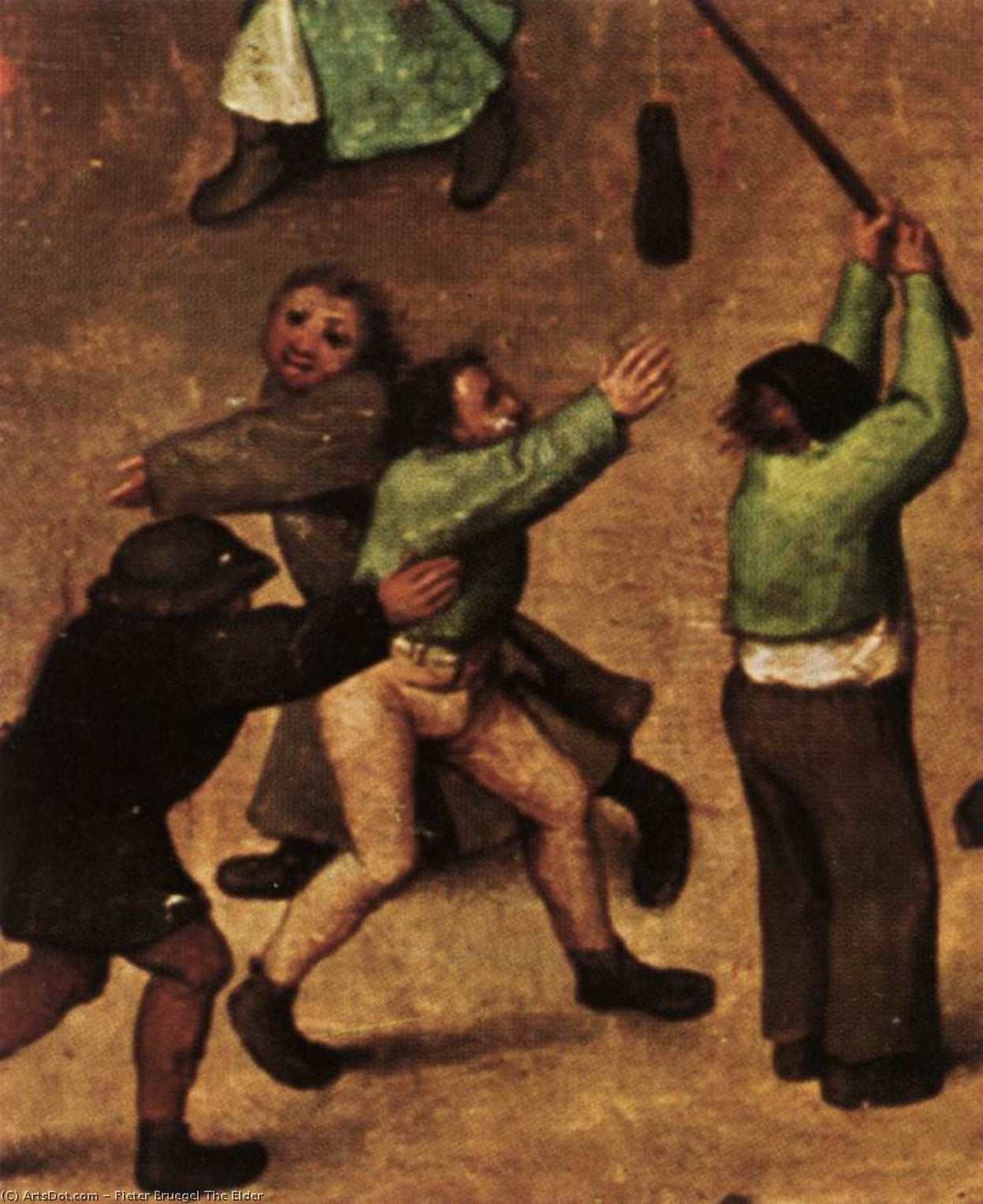
Juegos Infantiles (detalle)

Descubre la obra maestra de Pieter Bruegel 'Juegos Infantiles' (1560). Un vibrante retrato de la vida cotidiana en Flandes, lleno de juegos y escenas sorprendentes. ¡Explora este icono del arte renacentista!

Pieter Bruegel el Mayor (c. 1525-1569) fue un maestro del Renacimiento reconocido por sus vibrantes paisajes y escenas de campesinos. Explore su innovador uso del claroscuro y su influencia duradera en la pintura dorada holandesa. Descubra obras icónicas como 'Paisaje con'

Reproducción al óleo hecha a mano

Óleo sobre lienzo pintado a mano en el tamaño y marco de su elección, realizado por encargo por nuestros artistas. (Cambiar a impresión Cambiar a impresiónCambiar a imagen Cambiar a imagen)

P118B $10
P118H $10
P118W $10
P438Z $10
P508JH $12
P508YH $12
P805H $10
P805Z $10
P919BZ $10
P919G $10
P919XJ $10
P959ZH $10
P968JZ $12
W106C $8
W218G $10
W218JH $8
W218Y $10
W307PJ $10
W316G $10
W316PJ $8
W316Y $10
W398PJ $8
W4111J $10
W500HY $15
W500JH $15
W692G $12
W849H $8
W940BG $15
W953PJ $8

Standard
custom
CM
INCH

Elija entre nuestros tamaños predefinidos que respetan las proporciones originales de la obra.

ancho
altura

Puede ingresar sus propias dimensiones para adaptarse a un marco o espacio específico. Si el tamaño seleccionado no coincide con las proporciones de la imagen original, recortaremos la obra o extenderemos la pintura con elementos adicionales pintados a mano. Se le enviará una maqueta digital para su aprobación antes de comenzar la producción.
Tenga en cuenta que la vista previa en pantalla no refleja el recorte o la extensión reales. Solo la maqueta mostrará con precisión la composición final.
Si bien existen tamaños personalizados, recomendamos seleccionar una dimensión de la lista predefinida para preservar las proporciones originales.

Ejemplos de lo que se puede personalizar: Reemplace el rostro con una foto del cliente; Agregue una mascota (por ejemplo, cambie un gato por un perro); Incluya un mensaje oculto en el fondo; Cambie el paisaje o los elementos del fondo.
Tras realizar el pedido, el equipo de WahooArt.com enviará un correo electrónico al cliente para solicitar instrucciones y proporcionarle una vista previa del boceto.

Envío a todo el mundo () en 3-4 semanas en lugar de las 5 semanas estándar. (5 agosto). Sin comprometer la calidad.

why_choose_icon
Envío exprés gratuito a todo el mundo
why_choose_icon
Lienzo de lino de alta calidad
why_choose_icon
Seguro de envío completo
why_choose_icon
Garantía de reembolso de aranceles aduaneros
why_choose_icon
Garantía de fidelidad cromática exacta
why_choose_icon
Política de devolución de 60 días (solo por defectos)
why_choose_icon
Garantía de devolución del 100% del dinero
why_choose_icon
Oferta por volumen

Precio total

$ 272

reproduction

Juegos Infantiles (detalle)

Técnica de reproducción

Tamaño de la reproducción

-

Precio total

$ 272

Datos clave

  • Location: Kunsthistorisches Museum, Vienna
  • Title: Children's Games
  • Year: 1560
  • Artistic style: Genre Painting
  • Movement: Flemish Mannerism
  • Influences: David Teniers the Younger
  • Medium: Oil on Wood

Cuestionario de arte

Cada pregunta tiene una única respuesta correcta.

Pregunta 1:
What artistic movement is Pieter Bruegel the Elder primarily associated with?
Pregunta 2:
Approximately how many children are depicted in 'Children's Games'?
Pregunta 3:
What technique did Bruegel use to create depth and atmosphere in the painting?
Pregunta 4:
Who influenced Bruegel's artistic style by sharing similar themes of landscape and peasant life?
Pregunta 5:
What is the primary moral conveyed by Bruegel in 'Children's Games'?

Descripción de la obra

Children's Games (detail)

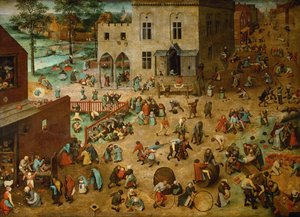
Pieter Bruegel the Elder’s “Children’s Games” stands as an unparalleled achievement in Flemish Renaissance painting, capturing not merely a snapshot of daily life but an entire panorama of childhood activities during the sixteenth century. Executed in 1560 and now housed at the Kunsthistorisches Museum in Vienna, this oil-on-panel masterpiece transcends mere representation; it’s a profound meditation on human experience and societal values.

The Artistic Genius of Pieter Bruegel the Elder

Pieter Bruegel the Elder was a pioneer in his time, distinguishing himself from contemporaries by prioritizing landscapes alongside peasant scenes as monumental canvases. He wasn't simply documenting what he saw; he actively sought to convey complex ideas about humanity’s relationship with nature and society. His innovative approach profoundly influenced Dutch Golden Age painting and reverberates through subsequent artistic movements.

Children's Games: A Detailed Depiction

The painting depicts over 90 distinct games played by children in a bustling street scene—a staggering number that reflects the vibrancy of childhood culture during Bruegel’s era. The composition is meticulously crafted, utilizing atmospheric perspective to create depth and conveying an overwhelming sense of movement. Observe how Bruegel skillfully employs chiaroscuro – dramatic contrasts between light and dark – to illuminate key figures and activities, drawing the viewer’s eye into the heart of the scene.

The central focus is on a group of children engaged in various pursuits: throwing balls, playing with sticks, and tending to animals. Two dogs are present—one positioned prominently near the center and another towards the right—adding to the dynamism of the composition. A bottle can be seen on the left side, likely belonging to one of the players, subtly hinting at social interactions.

Relevance and Influence

"Children's Games" isn’t merely a beautiful painting; it’s a cultural document that speaks volumes about the values and beliefs of its time. David Teniers the Younger, Bruegel’s protégé and fellow genre painter, recognized the immense significance of this work, dedicating his artistic endeavors to exploring similar themes and capturing the spirit of everyday life.

Furthermore, “Children’s Games” has inspired filmmakers like Lars von Trier who utilize its imagery to convey profound ideas about human existence. Its enduring appeal testifies to Bruegel’s ability to distill complex concepts into a visually arresting experience—a testament to his artistic genius and lasting legacy.

Conclusion

"Children's Games" remains an unforgettable artwork, showcasing Bruegel’s mastery in portraying the complexities of human life. For those eager to delve deeper into this masterpiece, visit https://WahooArt.com to explore high-quality reproductions and gain insights into its artistic techniques and historical context.

References:
Photo Description: The painting is a detailed depiction of children playing games in the street. There are several people in the scene, with some standing and others running around. The children appear to be engaged in various activities such as throwing balls or playing with sticks. In addition to the children, there are also two dogs present in the painting, one located near the center of the image and another towards the right side. A bottle can be seen on the left side of the scene, possibly belonging to one of the players. The overall atmosphere of the painting is lively and full of energy as the children enjoy their time outdoors. Size: Unknown Date: 1559 Photo Description: The painting is a detailed depiction of children playing games in the street. There are several people in the scene, with some standing and others running around. The children appear to be engaged in various activities such as throwing balls or playing with sticks. In addition to the children, there are also two dogs present in the painting, one located near the center of the image and another towards the right side. A bottle can be seen on the left side of the scene, possibly belonging to one of the players. The overall atmosphere of the painting is lively and full of energy as the children enjoy their time outdoors. Size: Unknown Date: 1559 ARTIST INFORMATION: ================== Artist: Pieter Bruegel the Elder Birth Year: 1525 Death Year: 1569 Birth City: Brugge Birth Country: Belgium Biography:

A Life Rooted in Renaissance Transformation

Pieter Bruegel the Elder was born sometime between 1525 and 1530, likely in Breda – though details surrounding his early life remain somewhat elusive – amidst a period of profound change, a time when the artistic landscape of Europe was shifting from the High Renaissance ideals of Italy towards the burgeoning complexities of Northern European expression. He began his artistic journey around 1545 as an apprentice to Pieter Coecke van Aelst, a respected Antwerp painter known for both his artistry and his designs for tapestries. This apprenticeship provided Bruegel with a solid grounding in the technical skills of oil painting and drawing, but perhaps more importantly, it exposed him to the humanist currents that were beginning to permeate intellectual circles. Van Aelst’s workshop was not merely a place of artis

Biografía del artista

vida temprana y formación

Pieter Brueghel el Viejo, una figura clave en la pintura renacentista, nació y creció en Breda, Bélgica, entre 1525 y 1530. Su maestro, Pieter Coecke van Aelst, era un pintor de Amberes que guió el desarrollo artístico temprano de Bruegel. Después de formarse con Coecke, Bruegel se convirtió en maestro independiente en la gremial de pintores de Amberes en 1551.

contribuciones artísticas y estilo

La obra de Bruegel es reconocida por sus innovadoras elecciones de temas, centrándose en paisajes y escenas campesinas. Sus pinturas, como Paisaje con la huida a Egipto (37 x 55 cm, galerías Courtauld de Londres), demostraron su dominio del óleo sobre tabla. El estilo de Bruegel, caracterizado por el uso del claroscuro, creó una sensación de profundidad y realismo, haciendo que sus pinturas se sintieran inmersivas.

obras notables y museos

* Paisaje de los Alpes (musée du Louvre, París), una obra ejemplar que muestra las habilidades de Bruegel en la pintura de paisajes. * Triptico (renacimiento del norte, óleo), un notable ejemplo del uso de óleo sobre tabla por parte de Bruegel. * Los Musée Royale de Beaux-Arts en Bruselas cuenta con una impresionante colección de más de 20.000 obras de arte, incluyendo obras de Bruegel.

legado e influencia

La influencia de Bruegel en la pintura dorada holandesa y los desarrollos artísticos posteriores es innegable. Su obra ha inspirado a artistas tanto en las artes literarias como en el cine, con referencias a sus pinturas que aparecen en películas como Solaris (1972) y Melancolía (2011). Explore más obras de Bruegel en WahooArt.com: [https://WahooArt.com/@/pieter-bruegel-the-elder](https://WahooArt.com/@/pieter-bruegel-the-elder)
  • Descubra las obras maestras del Musée Royale de Beaux-Arts (Bruselas, Bélgica): /es/art/show/art-d3cf2d-es/
  • Aprenda más sobre la pintura neerlandesa temprana en Wikipedia: [https://en.wikipedia.org/wiki/early_netherlandish_painting](https://en.wikipedia.org/wiki/early_netherlandish_painting)
fechas clave: * c. 1525-1530: Nacido en Breda, Bélgica * 1551: Se convirtió en maestro independiente en la gremial de pintores de Amberes * 1569: Falleció en el apogeo de su carrera

Pieter Bruegel el Viejo

Pieter Bruegel el Viejo

1525 - 1569 , Bélgica

Datos clave

  • Artistas Que Influyeron:
    • Hieronymus Bosch
    • Pieter Coecke van Aelst
  • Estilo Artístico: Renacimiento Nórdico
  • Fecha De Muerte: 1569
  • Fecha De Nacimiento: c. 1525-1530
  • Influencia Artística: Pintura dorada holandesa
  • Lugar De Nacimiento: Breda, Bélgica
  • Nacionalidad: Belga
  • Nombre Completo: Pieter Bruegel el Viejo
  • Obras Notables:
    • Paisaje con la huida a Egipto
    • El triunfo de la muerte
    • Boda campesina
    • Cazadores en la nieve
    • La torre de Babel
Explore obras de arte organizadas por temas, estilos y características.