Vende tu arte
x
Vista previaVista previa Vista previa en RAVista previa en RA Cambiar a impresión Cambiar a impresiónCambiar a imagen Cambiar a imagen CompartirCompartir
Ver detallesVer detalles Añadir a favoritos Añadir a favoritos DescargarDescargar Ver similaresVer similares RadiografíaRadiografía Presentación de diapositivasPresentación de diapositivas

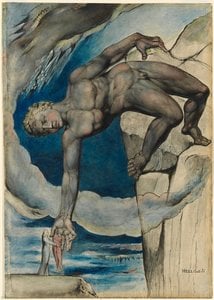
Antaeus Desencadenando a Dante y Virgilio

¿Conoce William Blake? Este pintor y poeta romántico revolucionó el arte con obras maestras como 'Antaeus Desencadenando Dante y Virgilio'. Descubre su estilo único y simbolismo profundo.

Explore el arte visionario y la poesía de William Blake (1757-1827). Una figura clave del Romanticismo, conocido por la impresión iluminada, temas místicos y obras proféticas como 'El Tigre'. Descubre su legado en museos y en línea!

Reproducción al óleo hecha a mano

Óleo sobre lienzo pintado a mano en el tamaño y marco de su elección, realizado por encargo por nuestros artistas. (Cambiar a impresión Cambiar a impresiónCambiar a imagen Cambiar a imagen)

P118B $10
P118H $10
P118W $10
P438Z $10
P508JH $12
P508YH $12
P805H $10
P805Z $10
P919BZ $10
P919G $10
P919XJ $10
P959ZH $10
P968JZ $12
W106C $8
W218G $10
W218JH $8
W218Y $10
W307PJ $10
W316G $10
W316PJ $8
W316Y $10
W398PJ $8
W4111J $10
W500HY $15
W500JH $15
W692G $12
W849H $8
W940BG $15
W953PJ $8

Standard
custom
CM
INCH

Elija entre nuestros tamaños predefinidos que respetan las proporciones originales de la obra.

ancho
altura

Puede ingresar sus propias dimensiones para adaptarse a un marco o espacio específico. Si el tamaño seleccionado no coincide con las proporciones de la imagen original, recortaremos la obra o extenderemos la pintura con elementos adicionales pintados a mano. Se le enviará una maqueta digital para su aprobación antes de comenzar la producción.
Tenga en cuenta que la vista previa en pantalla no refleja el recorte o la extensión reales. Solo la maqueta mostrará con precisión la composición final.
Si bien existen tamaños personalizados, recomendamos seleccionar una dimensión de la lista predefinida para preservar las proporciones originales.

Ejemplos de lo que se puede personalizar: Reemplace el rostro con una foto del cliente; Agregue una mascota (por ejemplo, cambie un gato por un perro); Incluya un mensaje oculto en el fondo; Cambie el paisaje o los elementos del fondo.
Tras realizar el pedido, el equipo de WahooArt.com enviará un correo electrónico al cliente para solicitar instrucciones y proporcionarle una vista previa del boceto.

Envío a todo el mundo () en 3-4 semanas en lugar de las 5 semanas estándar. (8 agosto). Sin comprometer la calidad.

why_choose_icon
Envío exprés gratuito a todo el mundo
why_choose_icon
Lienzo de lino de alta calidad
why_choose_icon
Seguro de envío completo
why_choose_icon
Garantía de reembolso de aranceles aduaneros
why_choose_icon
Garantía de fidelidad cromática exacta
why_choose_icon
Política de devolución de 60 días (solo por defectos)
why_choose_icon
Garantía de devolución del 100% del dinero
why_choose_icon
Oferta por volumen

Precio total

$ 272

reproduction

Antaeus Desencadenando a Dante y Virgilio

Técnica de reproducción

Tamaño de la reproducción

-

Precio total

$ 272

Datos clave

  • Movement: Romanticism
  • Artistic style: Mythological symbolism
  • Subject or theme: Underworld Journey; Dante & Virgil
  • Notable elements or techniques: Ship's mast; Rigid right arm
  • Artist: William Blake
  • Title: Antaeus Setting Down Dante and Vergil
  • Medium: Pen, ink and watercolour

Cuestionario de arte

Cada pregunta tiene una única respuesta correcta.

Pregunta 1:
What mythological figure is depicted in ‘Antaeus Setting Down Dante and Virgil’?
Pregunta 2:
The painting illustrates a scene from which literary work?
Pregunta 3:
Blake’s artistic style combined elements of which movements?
Pregunta 4:
What is the primary symbolic representation of Dante and Virgil in this artwork?
Pregunta 5:
The image description highlights a dramatic element – what specifically?

Descripción de la obra

Introduction to William Blake and his Artistic Style

William Blake, an English poet, painter, and printmaker, is widely regarded as one of the most influential figures in both poetry and visual arts. His unique artistic style combined elements of Romanticism, Gothic Revival, and Neoclassicism, resulting in a distinctive and highly original body of work that continues to inspire artists and scholars alike. Blake’s vision was profoundly shaped by his early experiences with religion and mysticism—visions he described as “beholding God’s face pressed against his window,” seeing angels among the haystacks, and being visited by the Old Testament prophet Ezekiel. These formative encounters instilled in him a belief that imagination was “the body of God,” or “human existence itself.” This conviction fueled his artistic endeavors, propelling him to explore themes of spirituality, mythology, and social justice with unparalleled fervor. His apprenticeship with engraver James Basire proved pivotal, providing him not only with technical mastery but also an understanding of printmaking techniques he would later utilize to create his iconic illuminated prints—a method that blended meticulous detail with vibrant color palettes. Unlike many artists of his time who favored polished surfaces and idealized representations, Blake deliberately embraced roughness and textural contrasts, mirroring the turbulent spirit of the Romantic Age. Blake’s artistic output spanned a remarkable range of mediums, from watercolors and drawings to engravings and poetry—all united by a singular preoccupation with exploring the subconscious mind and confronting societal injustices. His oeuvre encompasses celebrated works like “The Tyger,” “Songs of Innocence and Experience,” and “Jerusalem,” each brimming with symbolic imagery and profound philosophical reflections. These pieces stand as testament to Blake’s unwavering commitment to artistic innovation and his enduring legacy as a visionary artist who challenged conventional aesthetic norms.

The Painting: ‘Antaeus Setting Down Dante and Vergil

‘Antaeus Setting Down Dante and Virgil’ is a remarkable painting by William Blake, showcasing his mastery of mythological themes and spiritual symbolism. The artwork depicts the legendary giant Antaeus, who derives his strength from contact with the Earth, setting down the epic poets Dante Alighieri and Virgil after carrying them across a river in the underworld. Blake's depiction of Antaeus embodies the primal power of nature—a force both benevolent and destructive—contrasting sharply with the intellectual pursuits represented by Dante and Virgil. Dante’s journey through Hell, purgatory and paradise is portrayed as an arduous quest for moral redemption, mirroring Blake’s own exploration of spiritual transformation. The river they traverse serves as a potent metaphor for life's challenges, demanding courage and resilience from those who strive to ascend towards enlightenment. Blake skillfully employed watercolor techniques—characterized by delicate washes and luminous hues—to capture the ethereal atmosphere of the underworld scene. His meticulous attention to detail—evident in the rendering of Antaeus’s muscular physique and Virgil’s solemn expression—underscores his commitment to artistic realism while simultaneously conveying a deeper spiritual dimension. The composition itself is deliberately asymmetrical, creating a dynamic tension that reflects the turbulent emotions underlying the narrative. Blake's painting resonates with viewers on multiple levels—intellectually stimulating through its mythological references and philosophically profound through its contemplation of human morality and divine grace. It exemplifies Blake’s ability to fuse visual artistry with poetic expression, cementing his place as one of the most enduring figures in Romantic art history.

Mythology and Spirituality in ‘Antaeus Setting Down Dante and Virgil

Blake's painting is rich with mythological and spiritual references, drawing from both classical Greco-Roman mythology and Christian symbolism. Antaeus represents the raw, primal power of nature, while Dante and Virgil symbolize the human quest for knowledge and understanding in the face of the unknown. The river they cross can be interpreted as a metaphor for the journey through life, with its challenges and obstacles. Blake’s artistic vision was deeply rooted in his personal faith—a conviction that God resided within every individual and that humanity possessed an inherent capacity for moral goodness. This belief informed his artistic endeavors, prompting him to depict biblical narratives and mythological figures with uncompromising honesty and imaginative fervor. Blake's use of color—particularly the dominant hues of crimson and gold—further enhances the painting’s symbolic significance. Crimson embodies passion and sacrifice—themes central to Dante’s spiritual pilgrimage—while gold symbolizes divine illumination and transcendence—reflecting Blake’s belief in God’s transformative power. The artist’s deliberate juxtaposition of these colors underscores his desire to convey not merely visual beauty but also profound moral and spiritual truths. ## William Blake's Legacy and ‘Antaeus Setting Down Dante and Virgil As one of the most celebrated artists in history, William Blake's work continues to captivate audiences and inspire new generations of artists. ‘Antaeus Setting Down Dante and Virgil’ stands as a testament to his unparalleled artistic genius—a masterpiece that embodies the Romantic spirit's preoccupation with imagination, emotion, and social critique. Blake challenged conventional aesthetic norms by rejecting polished surfaces and idealized representations in favor of textural contrasts and expressive brushstrokes—a stylistic choice that distinguished him from many of his contemporaries. Blake’s influence extends far beyond the realm of visual arts, permeating literature, music, and philosophy. His poetic works—such as “Songs of Innocence and Experience”—remain enduringly relevant to discussions on morality, spirituality, and human consciousness. Blake's unwavering commitment to artistic innovation cemented his place as a pivotal figure in Romantic art history—a visionary artist who dared to confront societal injustices and explore the depths of the human psyche.

Experience the Mastery of William Blake through Hand-Made Oil Paintings Reproductions

At WahooArt.com, we are proud to offer a wide selection of hand-made oil paintings reproductions, including works by the esteemed artist William Blake. Our skilled artisans meticulously recreate each painting, ensuring that every detail is preserved and presented in its full glory. By acquiring one of our exquisite reproductions, you can bring the mastery of William Blake into your own home or office, creating a lasting impression and sparking meaningful conversations for years to come. William Blake, 'Antaeus Setting Down Dante and Virgil', and other masterpieces by this legendary artist are waiting for you at WahooArt.com. Explore our collection today and discover the beauty and depth of William Blake’s extraordinary artistic vision.

Biografía del artista

una vida marcada por un espíritu creativo

william blake, un artista, poeta e grabador visionario, dejó una marca indeleble en el mundo del arte. Nacido en Londres el 28 de noviembre de 1757 y fallecido el 12 de agosto de 1827, la vida de Blake fue un testimonio de su profundo espíritu creativo.

vida temprana e influencias

Los primeros años de Blake estuvieron marcados por una profunda conexión con las artes. Su padre, william blake sr., un hosier, y su madre, catherine wright, influyeron en sus inclinaciones espirituales y artísticas. Esto llevó a su aprendizaje bajo la tutela de francisco bartolozzi, un grabador.

evolución artística y obras notables

El viaje artístico de Blake abarcó diversos medios, incluyendo la pintura, la poesía y la grabado. Algunas de sus obras más notables incluyen:

  • the tyger (1795) - una obra maestra de la literatura romántica, que muestra la mezcla única de Blake entre lo místico y lo real.
  • the sickle (1803) - un ejemplo conmovedor de su destreza en el grabado, que refleja su profunda conexión con la naturaleza.
  • the ghost of a flea (c. 1819–1820) - un testimonio del enfoque innovador de Blake en el arte, que difumina las líneas entre la realidad y la fantasía.

museos que exhiben obras de Blake

  • blake museum, reino unido - un destino imprescindible para cualquier entusiasta de Blake, que alberga una extensa colección de sus obras de arte. [https://WahooArt.com/@/william-blake](https://WahooArt.com/@/william-blake)
  • fulham public library, reino unido - aunque no es un museo dedicado exclusivamente a Blake, presenta varias de sus obras notables, ofreciendo una perspectiva única del arte británico. [https://WahooArt.com/@@/a@d3bma9-discovering-the-artworks-of-fulham-public-library-united-kingdom](https://WahooArt.com/@@/a@d3bma9-discovering-the-artworks-of-fulham-public-library-united-kingdom)

legado e impacto

La influencia de Blake en el arte británico es innegable. Su mezcla única de lo místico, lo profético y lo imaginativo ha inspirado a generaciones de artistas. Como precursor del movimiento romántico, la obra de Blake continúa desafiando cualquier categorización fácil, convirtiéndolo en una piedra angular de la literatura y el arte británicos.

lecturas adicionales

Para más información sobre William Blake y sus obras, explore:
William Blake

William Blake

1757 - 1827 , Reino Unido

Datos clave

  • Artistas Influenciados:
    • Pre-Rafaelitas
    • Simbolismo
    • Modernismo
  • Artistas Que Influyeron:
    • Raphael
    • Miguel Ángel
  • Fecha De Muerte: 12 de agosto de 1827
  • Fecha De Nacimiento: 28 de noviembre de 1757
  • Lugar De Nacimiento: Londres, Reino Unido
  • Movimiento Artístico: Romanticismo
  • Nacionalidad: Británico
  • Nombre Completo: William Blake
  • Obras Notables:
    • El Tigre (1795)
    • La Segadora (1803)
    • El Fantasma de una Pulga
    • Canciones de Inocencia
    • Jerusalén (1804-1820)
Explore obras de arte organizadas por temas, estilos y características.