


 Óleo sobre tablaHigh Renaissance
 1513Renacimiento
 158.0 x 125.0 cm
 Museo del Palacio Pitti
Óleo sobre lienzo pintado a mano en el tamaño y marco de su elección, realizado por encargo por nuestros artistas. ( Comprar impresión Comprar imagen)





























Elija entre nuestros tamaños predefinidos que respetan las proporciones originales de la obra.

Puede ingresar sus propias dimensiones para adaptarse a un marco o espacio específico. Si el tamaño seleccionado no coincide con las proporciones de la imagen original, recortaremos la obra o extenderemos la pintura con elementos adicionales pintados a mano. Se le enviará una maqueta digital para su aprobación antes de comenzar la producción.
Tenga en cuenta que la vista previa en pantalla no refleja el recorte o la extensión reales. Solo la maqueta mostrará con precisión la composición final.
Si bien existen tamaños personalizados, recomendamos seleccionar una dimensión de la lista predefinida para preservar las proporciones originales.
Envío a todo el mundo () en 3-4 semanas en lugar de las 5 semanas estándar. (6 septiembre). Sin comprometer la calidad.


La Madonna dell'Impannata
Dimensiones de la reproducción
Raphael’s Madonna dell’Impannata, painted in 1513 and currently residing within the hallowed halls of the Pitti Palace Museum in Florence, is more than just a beautiful depiction of the Virgin Mary cradling her infant son; it's a profound meditation on nurturing, faith, and the very essence of Renaissance humanity. This oil-on-panel masterpiece transcends its religious subject matter to offer a glimpse into Raphael’s masterful understanding of composition, color, and the subtle language of gesture – elements that continue to resonate powerfully with viewers centuries later. The painting immediately draws the eye with its harmonious balance and gentle luminosity, inviting us into a scene brimming with quiet dignity and profound tenderness.
The composition is meticulously crafted, radiating an almost palpable sense of serenity. At the heart of the image lies Mary, positioned centrally and bathed in soft light, her expression one of serene devotion. She cradles the Christ Child with a tenderness that speaks volumes, his tiny hand reaching out to grasp her robe — a gesture both vulnerable and utterly captivating. Surrounding this central triad are three women, each contributing to the painting’s rich tapestry of symbolism. To Mary's left stands an older woman, traditionally identified as Saint Anne, Mary’s mother, offering a gesture of support and guidance. Her posture suggests a quiet strength and wisdom. Beside her is another figure, often interpreted as either St. Elizabeth or Magdalene, adding layers of spiritual significance to the scene. On the right side, a third woman, similarly draped in flowing robes, further emphasizes the theme of maternal care and protection. The inclusion of three women — mother, grandmother, and saint — creates a powerful visual representation of lineage, faith, and the continuity of divine grace.
Raphael’s technical skill is immediately apparent in the painting’s exquisite detail and masterful use of color. He employs a technique known as *sfumato*, subtly blurring lines and softening edges to create an atmosphere of ethereal beauty. The colors are muted yet luminous, dominated by warm earth tones — ochres, siennas, and reds — that evoke a sense of warmth and intimacy. Notice the delicate rendering of Mary’s robes, which cascade around her in graceful folds, and the subtle play of light on the Christ Child’s face. The artist’s attention to detail extends beyond the figures themselves; observe the three birds perched within the scene—one near the top left corner, another in the middle right, and a third at the bottom left — adding an element of natural beauty and perhaps symbolizing divine protection or messengers from heaven. The use of panel painting allows for rich color saturation and detailed rendering, contributing to the overall sense of depth and realism.
Commissioned by Bindo Altoviti around 1513, the Madonna dell’Impannata reflects the artistic and intellectual climate of Florence during the High Renaissance. It was originally intended for Altoviti's palace but later became part of Duke Cosimo I de’ Medici’s collection, undergoing a journey to Paris before its eventual return to Florence. The painting’s subject matter—the Virgin Mary cradling her infant son—was deeply resonant with contemporary religious beliefs and artistic traditions. Raphael’s work stands as a testament to the Renaissance ideal of humanism, celebrating beauty, grace, and the dignity of human life while simultaneously conveying profound spiritual meaning. Its influence can be seen in countless subsequent works of art, solidifying its place as one of the most beloved and enduring images of motherhood and faith.
WahooArt offers meticulously crafted hand-painted reproductions of Raphael’s Madonna dell’Impannata, allowing you to bring this timeless masterpiece into your home or office. Each reproduction is created by skilled artists using archival quality materials, ensuring that the beauty and detail of the original are faithfully preserved for generations to come. Explore our collection today and experience the magic of Raphael’s vision.
Photo Description: The painting is a religious scene featuring Mary holding her baby Jesus while surrounded by other women. The women in the painting appear to be nurturing and caring for the child. There are three women in total, with one on the left side of the image, another in the middle, and the third woman on the right side. The baby is being held by Mary, who is positioned towards the center of the image. The other two women are also holding babies, with one baby being held by a woman on the left side and the second baby being held by a woman on the right side. There are three birds visible in the scene. One bird is located near the top-left corner of the image, another bird can be seen towards the middle-right area, and the third bird is positioned at the bottom-left corner of the image. Size: 158 x 125 cm Date: 1513 ARTIST INFORMATION: ================== Artist: Raphael Birth Year: 1483 Death Year: 1520 Birth City: Urbino Birth Country: Italy Biography:Raffaello Sanzio da Urbino, known to the world as Raphael, emerged from a remarkably fertile cultural landscape. Born in 1483 within the walls of Urbino, a small but intellectually vibrant city-state in central Italy, his earliest years were steeped in an atmosphere that prized both artistic skill and humanist learning. His father Giovanni Santi was not merely a painter employed by Duke Federico da Montefeltro—he was a man deeply engaged with the currents of Renaissance thought, a poet who chronicled the Duke’s life and actively sought out innovative artistic ideas from across Italy and beyond. This immersion in a courtly environment, one that valued refinement and intellectual discourse, profoundly shaped the young Raphael’s sensibilities. The loss of his father at age eleven thrust responsibility upon him, but also provided an opportunity to hone his skills within the family workshop, absorbin


1483 - 1520 , Italia
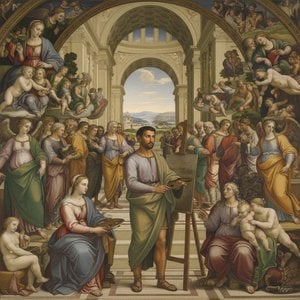
Elevate your home with the sublime harmony of Raphael’s masterpieces. Explore iconic High Renaissance works, from St. George to The School of Athens, and discover how premium, hand-painted reproductions can transform your space into a sanctuary of classical elegance and timeless beauty.
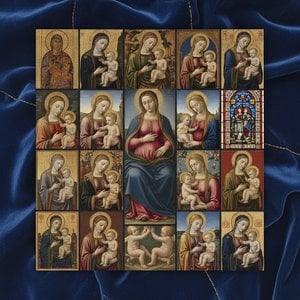
Embark on a sophisticated journey through art history with our curated guide to the most iconic Madonna and Child masterpieces. Discover the profound beauty, theological depth, and enduring legacy of these sacred Renaissance treasures.

Embark on a journey through the High Renaissance. Discover the mastery of light, form, and classical harmony through an expert exploration of the era's greatest masters, techniques, and enduring artistic legacy.

Explore the profound genius of Leonardo, Michelangelo, and Raphael. An authoritative deep dive into the High Renaissance masters, analyzing their unique techniques, humanistic vision, and enduring influence on the world of fine art collecting.

 Ver en contexto
 Enviar
 Compartir
 Detalles

 Descargar
 Similares
 Radiografía
 Presentación de diapositivas
 Ver más







 La opción de vidrio solo está disponible en tamaños inferiores a 110 cm.


