The Soul of the Brush: The Artistry of Samman Lee
In the quiet intersection where ancient tradition meets contemporary contemplation, the work of Hong Kong-based artist Samman Lee emerges as a profound meditation on form and feeling. Born in 1988, Lee has cultivated a practice that transcends mere reproduction, seeking instead to bridge the gap between the meticulous discipline of classical Chinese calligraphy and the modern necessity for mindfulness. Her artistic journey is deeply rooted in the cultural landscape of Hong Kong, a place where the echoes of historical artistry resonate through the bustle of modern life. This duality—the tension between the enduring past and the fleeting present—serves as the heartbeat of her creative output.
Lee’s fascination with calligraphy is not merely an aesthetic preference but a spiritual pursuit. She views the tradition of Chinese calligraphy, spanning millennia, as a language of profound symbolism where every stroke carries weight and every ink tone whispers a secret. Unlike Western traditions that often strive to capture the transient light of a moment, Lee embraces a medium that prioritizes the conveyance of deep-seated meaning through carefully considered characters. For her, the act of painting is an extension of mindfulness, a way to channel philosophical concepts and artistic sensibilities into a tangible, visual experience that invites the viewer to pause and breathe.
Technique as a Vessel for Serenity
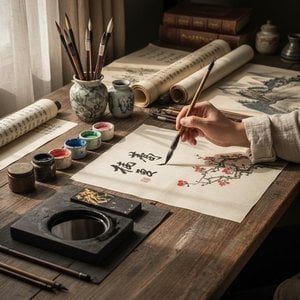
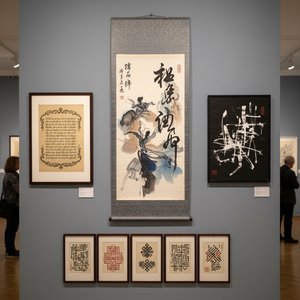
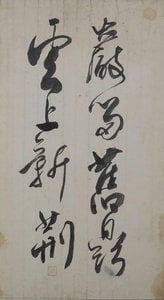
The mastery of Lee’s technique lies in her painstaking approach to hand-painting reproductions of classic calligraphic masterpieces. She specializes in the creation of exquisite folding screens, which serve as much more than decorative objects; they are vessels designed to transmit wisdom and serenity. Her process is one of intense devotion, where she meticulously recreates the nuances of original works, paying obsessive attention to the subtle gradations of ink shading and the delicate, organic grain of handmade paper. By recreating these aged textures, she honors the legacy of master calligraphers while breathing new life into their ancient scripts.
Through her work, the physical elements of art become tools for psychological exploration:
- The Fluidity of Ink: Capturing the dynamic energy and movement inherent in traditional brushwork.
- Textural Authenticity: Utilizing aged paper textures to evoke a sense of historical continuity and permanence.
- Symbolic Depth: Reinterpreting classical characters to foster a contemporary connection to meditative practices.
A Legacy of Mindfulness and Education
Beyond the visual splendor of her screens, Samman Lee’s significance lies in her broader intellectual contributions to the concept of well-being. Her research delves into the transformative power of mindfulness programs, particularly examining how these contemplative practices can impact educators and foster student resilience during turbulent times. This integration of art and social science positions her work within a larger dialogue about mental health and the role of aesthetic beauty in modern education.
In an era characterized by rapid change and digital distraction, Lee’s art offers a sanctuary. Her ability to weave together the rigorous demands of classical calligraphy with the gentle requirements of mindful awareness ensures that her work remains both historically significant and deeply relevant to the contemporary soul. She does not simply paint history; she invites us to inhabit it, finding peace within the rhythmic dance of the brush.
Questions & Answers
What are the birthplace and birth year of Samman Lee?
Samman Lee was born in Hong Kong in 1988.
Where is Samman Lee from?
Samman Lee was born in People's Republic of China.
In which historical period did Samman Lee work?
Samman Lee worked in the Contemporary period. The period situates the artist's activity in history.