

 Acrylic On CanvasWallArtColor Field Painting
 1943
1943 109.0 x 79.0 cm
The artwork displayed on this page is protected by copyright law, which means we cannot legally create or sell an identical reproduction. This protection is enforced under international agreements such as the Berne Convention and by national laws, including those outlined by the U.S. Copyright Law - Title 17.
This method fully complies with copyright regulations because it does not involve copying or duplicating the protected artwork. Instead, it is a creative reinterpretation - a new painting that is influenced by the original but not identical to it.
Museum-quality giclée or canvas print with fast production and flexible finish options. ( Buy Hand Made Painting Switch to Digital Image)





























Pick from our preset sizes that match the artwork's original proportions.

You may enter your own dimensions to fit a specific frame or space. If your selected size does not match the original image's proportions, we will either crop the artwork or extend the image with a mirrored or solid-fill edge. A digital mockup will be sent for your approval before production begins.
Please note that the on-screen preview does not reflect the actual cropping or extension. Only the mockup will accurately show the final composition.
While custom sizes are available, we recommend selecting a dimension from the predefined list to preserve the original proportions.
Worldwide Delivery () in 2 weeks instead of standard 4/5 weeks. (13 October)
Untitled
Reproduction Size
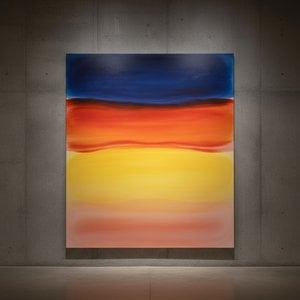
Mark Rothko's "Untitled," painted in 1943, isn’t merely a depiction of color; it’s an immersion into raw emotion, a distilled essence of human experience captured within the confines of canvas and pigment. This particular iteration – measuring 109 x 79 cm – exemplifies the artist’s signature Color Field technique, a method he developed to strip away representational imagery and focus solely on the emotive power of pure hue. The painting immediately commands attention with its dominant red background, not a vibrant scarlet but rather a deep, almost bruised shade—a color often associated with passion, sacrifice, and even mortality. This foundational tone isn’t static; subtle shifts in value create an illusion of movement, drawing the eye into the layered rectangles that dominate the composition.
Scattered across this crimson expanse are several birds – a collection of delicate forms rendered in varying shades of grey and white. These avian figures aren't presented as naturalistic representations but rather as symbolic anchors, evoking themes of freedom, fragility, and perhaps even longing. Rothko himself often resisted definitive interpretations of his work, preferring that viewers project their own emotions and experiences onto the canvas. The birds, therefore, become a mirror reflecting our own internal landscapes.
To fully appreciate “Untitled,” it’s crucial to understand the historical context in which it was created. 1943, during the height of World War II, cast a long shadow over Europe and profoundly impacted artists across the globe. Rothko's work during this period is deeply marked by anxiety, displacement, and a sense of impending doom—feelings undoubtedly shaped by his own experiences as a Latvian émigré navigating the complexities of American assimilation. Born in Dvinsk (now Daugavpils) to a Jewish family, Rothko’s early life was characterized by instability and uncertainty, themes that would resonate throughout his oeuvre. The painting can be seen as an attempt to grapple with these universal anxieties through the language of color and form.
Interestingly, Rothko's artistic journey began with more representational styles before he fully embraced Color Field painting. His early works often featured figures and landscapes, but it was in the 1940s that he developed his distinctive approach—a deliberate simplification of forms to emphasize color’s expressive potential. This shift reflects a broader movement within American art at the time, as artists sought new ways to convey complex emotions and ideas beyond traditional depictions.
The presence of clocks within the composition adds another layer of complexity and intrigue. Positioned on either side of the canvas, these objects serve as potent symbols of time—a relentless force that shapes our lives and inevitably leads to mortality. Rothko was deeply preoccupied with themes of death and spirituality, and the clocks subtly remind us of this preoccupation. The birds, in their delicate forms, might represent fleeting moments of beauty or grace within a larger, more somber narrative.
The placement of the books and chair further contributes to the painting’s layered symbolism. These everyday objects—representing knowledge, rest, and domesticity—are juxtaposed against the vast expanse of red, creating a tension between the mundane and the profound. They invite contemplation on the relationship between our earthly lives and something beyond.
"Untitled" is more than just a painting; it’s an experience. Rothko's masterful use of color and form creates a deeply immersive work that invites viewers to engage with their own emotions and memories. The painting’s enduring appeal lies in its ability to transcend specific narratives and speak directly to the human condition—to our hopes, fears, and ultimately, our mortality. WahooArt offers meticulously crafted hand-painted reproductions of this iconic piece, allowing you to bring Rothko's profound meditation into your own space and experience its emotional resonance firsthand.
"Untitled" was created by Mark Rothko, born in Latvia, within the Color Field Painting movement. The artist's origin links the work to Color Field Painting as practiced by artists from Latvia.
In the catalog, "Untitled" by Mark Rothko is filed as wall art. The category helps find similar works.
"Untitled" measures 109 x 79 cm in its original form. Original dimensions are a useful reference when choosing a reproduction size.
"Untitled" is made in acrylic on canvas, in the Color Field Painting style.
The subjects of "Untitled" are birds, time, color, abstraction, objects, rothko, composition.
A Stats page exists for "Untitled". It charts the monthly visits of the artwork and of the artist's other works, with country and language breakdowns.
Mark Rothko made "Untitled" at the age of 40. The artist was born in 1903 and the work is dated 1943.
The color analysis of "Untitled" by Mark Rothko records a gentle contrast and a softly mixed palette harmony.

1903 - 1970 , Latvia
Explore the profound emotional depth of Mark Rothko's abstract expressionism. Discover the history, techniques & lasting impact of this pivotal Color Field painter. Expert insights for collectors and art enthusiasts.

Explore 10 defining Abstract Expressionism masterpieces by Pollock, Rothko & de Kooning. Discover the stories behind these iconic paintings and find museum-quality art reproductions to elevate your home decor on .

Explore the profound history and emotional depth of Color Field painting. From Mark Rothko to Barnett Newman, discover how pure color redefined modern art through our expert-led guide for students and collectors alike.
Explore 25 iconic Mark Rothko paintings that define Abstract Expressionism. Discover the stories, colors & emotions behind these masterpieces. Find museum-quality art reproductions and curated decor ideas at WahooArt.com.

Explore the profound emotional depth of Color Field painting. Discover the history of mid-century abstraction, from Rothko to Newman, and learn how pure color transforms the viewer's experience through our expert art history guide.

 Preview
 Send
Send Share
Share
 Details
 Guide
Guide

 Download
 Similars
 X-Ray
X-Ray Diaporama
 Stats
Stats Read More









 Glass option is only available in size under 110 CM


