FREE ART CONSULTATION

x
Buy print Buy printBuy Image Buy Image SendSend
DetailsDetails Add to favorites Add to favorites DownloadDownload SimilarsSimilars X-RayX-Ray DiaporamaDiaporama

Lost

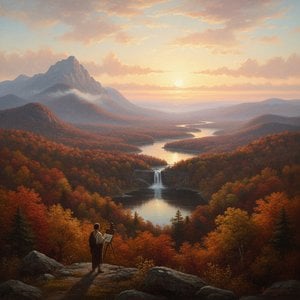
Frederick McCubbin's 'Lost' (1886) captures the haunting beauty of the Australian outback, depicting a lone child amidst nature’s vastness. A poignant symbol of vulnerability and connection to the land.

Discover Frederick McCubbin (1855-1917), a key figure of Australian Impressionism & the Heidelberg School. Explore his iconic landscapes depicting pioneering life & national identity, including 'On the Wallaby Track'.

Hand Made Oil Reproduction

Hand-painted oil on canvas in your size and frame, made to order by our artists.

P118B $10
P118H $10
P118W $10
P438Z $10
P508JH $12
P508YH $12
P805H $10
P805Z $10
P919BZ $10
P919G $10
P919XJ $10
P959ZH $10
P968JZ $12
W106C $8
W218G $10
W218JH $8
W218Y $10
W307PJ $10
W316G $10
W316PJ $8
W316Y $10
W398PJ $8
W4111J $10
W500HY $15
W500JH $15
W692G $12
W849H $8
W940BG $15
W953PJ $8

Standard
custom
CM
INCH

Pick from our preset sizes that match the artwork's original proportions.

width
height

You may enter your own dimensions to fit a specific frame or space. If your selected size does not match the original image's proportions, we will either crop the artwork or extend the painting with additional hand-painted elements. A digital mockup will be sent for your approval before production begins.
Please note that the on-screen preview does not reflect the actual cropping or extension. Only the mockup will accurately show the final composition.
While custom sizes are available, we recommend selecting a dimension from the predefined list to preserve the original proportions.

Examples of what can be changed: Replace face with customer photo; Add pet (e.g., replace cat with dog); Include hidden message in background; Change background landscape or elements.
After order, WahooArt.com team will email client for instructions and provide a mockup preview

Worldwide Delivery () in 3/4 weeks instead of standard 5 weeks. (3 July). No compromise on quality.

why_choose_icon
Free Worldwide Express Shipping
why_choose_icon
High-Quality Linen Canvas
why_choose_icon
Full Shipping Insurance
why_choose_icon
Customs Tax Refund Guarantee
why_choose_icon
True Color Matching Guarantee
why_choose_icon
60-Day Return Policy (Defects Only)
why_choose_icon
100% Money-Back Guarantee
why_choose_icon
Bulk Discount Offer

Total Price

-

reproduction

Lost

Reproduction Medium

Reproduction Size

-

Total Price

-

Quick Facts

  • Location: National Gallery of Victoria
  • Subject or theme: Outback life, pioneering
  • Notable elements: Bush landscape, child lost
  • Medium: Oil on canvas
  • Artistic style: Australian Impressionism
  • Year: 1886
  • Movement: Heidelberg School

Artwork Description

The Haunting Beauty of Frederick McCubbin’s “Lost”

Frederick McCubbin's "Lost," painted in 1886, isn’t merely a depiction of the Australian outback; it’s a profound meditation on vulnerability, isolation, and the enduring pull of the wilderness. The painting immediately arrests the viewer with its muted palette – ochre yellows, dusty browns, and slate greys dominate, creating an atmosphere thick with both heat and impending storm. At the heart of the composition stands a young girl, her posture suggesting a hesitant step forward, a tentative exploration into a landscape that simultaneously offers beauty and threatens to swallow her whole. She’s not actively lost in the traditional sense; rather, she embodies a state of being adrift, a poignant symbol of innocence confronting the vastness and indifference of nature.

McCubbin's style is firmly rooted in the Heidelberg School movement, yet “Lost” transcends simple landscape painting. He employs a loose, expressive brushstroke – a hallmark of Impressionism – to capture not just the visual appearance of the scene but also its emotional resonance. The trees, rendered with a subtle blend of greens and browns, seem to lean inwards, creating a sense of enclosure and unease. The distant horizon is deliberately blurred, emphasizing the girl’s isolation and the overwhelming scale of the Australian interior. Notice how McCubbin masterfully uses light; it's diffused and melancholic, casting long shadows that heighten the painting’s somber mood.

A Story Rooted in Tragedy and Folklore

The genesis of “Lost” is inextricably linked to a real-life tragedy: the disappearance of Clara Crosbie, a twelve-year-old girl, in the Yarra Valley in 1885. Local newspapers reported on her ordeal extensively, and McCubbin was deeply affected by the story. While the precise inspiration remains debated – some believe he directly painted from memory of the event, others suggest it sparked a broader contemplation of childhood vulnerability within the harsh Australian landscape – the painting undeniably carries the weight of this local legend. The girl’s attire—a simple dress and shawl—and her posture evoke a sense of quiet desperation, mirroring the accounts of Clara's ordeal.

Beyond the specific story, “Lost” taps into broader Australian folklore surrounding the bush – tales of lost children, dangerous wildlife, and the unforgiving nature of the land. It’s a narrative deeply embedded in the national psyche, reflecting anxieties about settlement, survival, and the relationship between humanity and the natural world. The painting speaks to a fundamental tension: the allure of the outback's beauty juxtaposed with its inherent dangers.

Symbolism and Emotional Resonance

The symbolism within “Lost” is layered and subtly powerful. The girl herself represents innocence, vulnerability, and perhaps even a lost connection to childhood. Her solitary figure against the vast landscape underscores the insignificance of human existence in the face of nature’s immensity. The trees, traditionally symbols of strength and resilience, here seem almost menacing, guarding secrets and offering no comfort. Even the distant, hazy horizon suggests an uncertain future, a sense of being perpetually adrift.

McCubbin's masterful use of color and composition contributes significantly to the painting’s emotional impact. The muted tones evoke feelings of melancholy, loneliness, and quiet contemplation. The lack of vibrant colors reinforces the sense of isolation and vulnerability. “Lost” isn’t a visually dramatic work; its power lies in its understated portrayal of human emotion within a stark and unforgiving landscape. It invites viewers to contemplate their own relationship with nature, their place in the world, and the enduring mysteries of the Australian bush.

A Timeless Masterpiece – Reproduction Considerations

Reproductions of “Lost” capture the essence of McCubbin’s original vision while retaining a remarkable level of detail. When selecting a high-quality reproduction, consider the medium—canvas prints offer the most authentic representation of the painting's texture and color palette. The scale is also important; larger reproductions allow for a more immersive experience, drawing viewers into the painting’s evocative atmosphere. “Lost” would be an exceptional addition to any interior space, serving as a poignant reminder of Australia’s rich artistic heritage and the enduring beauty—and inherent challenges—of its landscape.

Related Artworks


Artist Biography

A Life Rooted in the Australian Landscape

Frederick McCubbin, born in Melbourne on February 25th, 1855, stands as a cornerstone of Australian art, inextricably linked to the nation’s evolving identity and its unique visual language. His journey from humble beginnings – the son of bakers who instilled in him a strong work ethic – to becoming a pivotal figure in the Heidelberg School is a testament to his dedication and artistic vision. McCubbin's early life was marked by diverse experiences, working as a solicitor’s clerk and assisting in the family bakery before fully embracing his calling as a painter. These formative years, though seemingly disparate, imbued him with a deep understanding of everyday Australian life, a theme that would resonate profoundly throughout his oeuvre. He received foundational training at the National Gallery of Victoria's School of Design, studying under esteemed artists like Eugene von Guerard and George Folingsby, honing his skills in landscape painting while absorbing the prevailing artistic currents of the time. A crucial turning point arrived with his enduring friendship with Tom Roberts, a bond that would shape the course of Australian art history.

The Heidelberg School and Defining a National Aesthetic

In 1885, McCubbin and Roberts established the Box Hill Artists' Camp, a landmark event in the development of the Heidelberg School movement. This plein air collective – soon joined by Arthur Streeton and Charles Conder – sought to capture the essence of Australian life and landscapes with an unprecedented immediacy and authenticity. Rejecting the conventions of European academic painting, they ventured into the bush, embracing the raw beauty and harsh realities of the Australian environment. McCubbin’s contributions during this period were instrumental in defining a distinctly Australian aesthetic. His works from this era, such as Down on His Luck (1889), On the Wallaby Track (1896), and The Pioneer (1904), are now iconic representations of pioneering life, depicting the struggles and resilience of early settlers against the backdrop of a vast and often unforgiving landscape. These paintings weren’t merely depictions of scenery; they were narratives imbued with social commentary, exploring themes of solitude, hardship, and the complex relationship between European settlers and the Indigenous land. Heidelberg School artists aimed to paint what was uniquely Australian, moving away from imported styles and subjects.

Evolution of Style and a Continued Exploration of Identity

While deeply committed to capturing the spirit of Australia, McCubbin wasn’t immune to external influences. A pivotal journey to Europe in 1907 exposed him to the works of J.M.W. Turner and French Impressionists, prompting a subtle yet significant shift in his artistic approach. He began experimenting with freer brushwork, lighter colors, and a more abstracted style, evident in later paintings like An Interior, which many critics consider among his strongest achievements. This evolution wasn’t a rejection of his earlier themes but rather a refinement of his ability to convey emotion and atmosphere. Despite these stylistic changes, McCubbin remained steadfast in his exploration of Australian identity and the human condition. He continued to depict scenes of rural life, often focusing on the interplay between light and shadow, creating works that are both visually stunning and emotionally resonant. His later landscapes demonstrate a growing interest in atmospheric effects and a more subjective interpretation of the natural world.

Legacy and Enduring Influence

Frederick McCubbin’s impact on Australian art is undeniable. His work is held in prestigious collections, including the National Gallery of Victoria and the Art Gallery of Ballarat, ensuring his legacy endures for generations to come. He served as a mentor to countless aspiring artists, both through his teaching position at the National Gallery School and through his influence as a leading figure in the art community. He was president of the Victorian Artists’ Society and played a key role in establishing the Australian Art Association. McCubbin's contribution extends beyond his individual paintings; he helped establish a national artistic identity, fostering a sense of pride in Australia’s unique landscape and culture. He remains celebrated as one of Australia's most important and beloved painters, whose works continue to resonate with audiences today, offering poignant glimpses into the nation’s past and enduring reflections on the human spirit. His ability to capture the essence of Australian life – its beauty, hardship, and resilience – has cemented his place in art history as a true pioneer and visionary.
Frederick McCubbin

Frederick McCubbin

1855 - 1917 , Australia

Quick Facts

  • Artistic Movement Or Style: Impressionism
  • Artists Or Movements Influenced By This Artist: ['Heidelberg School']
  • Artists Who Influenced This Artist:
    • Eugene von Guerard
    • George Folingsby
  • Date Of Birth: Feb 25, 1855
  • Date Of Death: Dec 20, 1917
  • Full Name: Frederick McCubbin
  • Nationality: Australian
  • Notable Artworks:
    • On the Wallaby Track
    • Down on His Luck
    • The Pioneer
  • Place Of Birth: Melbourne, Australia
Explore artworks organized by themes, styles, and characteristics.