

 Oil On CanvasWallArtFauvism
 1906
1906 81.0 x 100.0 cm
Museum-quality giclée or canvas print with fast production and flexible finish options. ( Buy Hand Made Painting Switch to Digital Image)





























Pick from our preset sizes that match the artwork's original proportions.

Type the width and the height you need, to fit your frame or your wall. A print can only be cut, never made bigger than the picture, so a size with a different shape loses a part of the image. We send you a digital mockup to approve before we print anything. The picture shown on this page does not show the real cut — only the mockup does.
Worldwide Delivery () in 2 weeks instead of standard 4/5 weeks. (21 October)
Charing Cross Bridge
Reproduction Size
“Charing Cross Bridge” is inextricably linked to the broader context of early 20th-century art. The Fauvist movement, emerging in France around 1905, represented a radical departure from Impressionism and Post-Impressionism. Artists like Derain, Matisse, and Maurice de Wilde rejected traditional color harmonies and sought to create paintings that were purely subjective and emotionally charged. This was a time of immense social and technological change, and the Fauvist’s bold experimentation reflected a desire to break free from established conventions.
The painting's influence extends beyond its immediate aesthetic impact. It paved the way for subsequent movements like Expressionism, demonstrating the power of color to convey psychological states and subjective experiences. Derain's work is now housed in prestigious collections such as the Musée d’Orsay in Paris and the National Gallery of Art in Washington D.C., solidifying its place within art history.
Beyond its formal qualities, “Charing Cross Bridge” resonates with deeper symbolic meanings. The sunset, a recurring motif in art history, often represents the end of a cycle or the transition to a new phase. The bridge itself can be interpreted as a symbol of connection – connecting different parts of London, but also perhaps representing the connections between individuals and their environment.
Ultimately, “Charing Cross Bridge” is a painting that speaks to our primal emotions—our awe at the beauty of nature, our sense of wonder at the power of light, and our yearning for connection. It’s a testament to Derain's ability to translate these feelings into a powerfully expressive work of art.
The recommended use of a print of "Charing Cross Bridge" is harmony.
"Charing Cross Bridge" is attributed to André Derain.
Regarding copyright, "Charing Cross Bridge" is in the public domain - its copyright has expired.


1880 - 1954 , France
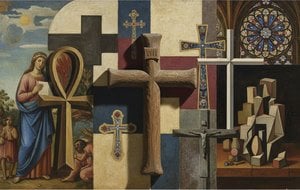
Delve into the profound symbolism of cross imagery in fine art history. From Renaissance masterpieces to sacred iconography, explore how religious motifs shape Western art through our expert cultural analysis and curated collection of museum-quality reproductions.

Explore the vibrant revolution of Fauvism. Discover how masters like Matisse liberated color to redefine modern art. Dive into an expert-led journey through the 'Wild Beasts' movement and learn how to bring this bold, expressive energy into your personal collection.

Embark on a visual journey through the golden hour. Discover how master painters capture the ethereal glow of sunsets, from Monet's Impressionism to the Hudson River School. Explore timeless techniques and bring the magic of twilight into your home with exquisite fine art reproductions.

Explore the vibrant world of Fauvism with our expert guide. Discover how Matisse and Derain revolutionized art through bold colors and expressive strokes. Perfect for classic art enthusiasts seeking to deepen their passion for modern masterpieces.

 Preview
 Send
Send Share
Share
 Details
 Guide
Guide

 Download
 Similars
 X-Ray
X-Ray Diaporama
 Stats
Stats Read More









 Glass option is only available in size under 110 CM


