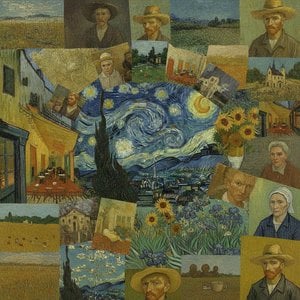
Vincent Galloway: A Master of Victorian Portraiture
Vincent Galloway, born in Hull in 1894 and passing away in 1977, remains a quietly significant figure within the landscape of late 19th and early 20th-century British portraiture. Often overshadowed by his more flamboyant contemporaries, Galloway’s work possesses a remarkable depth and psychological acuity, capturing not merely likeness but also the very essence of his subjects – a subtle blend of realism and evocative atmosphere that continues to resonate with viewers today. His career spanned nearly seven decades, marked by dedication to his craft and a consistent pursuit of portraying the complexities of human character through meticulously rendered detail. Galloway’s artistic journey began with formal training at the Hull School of Art, an institution known for its emphasis on traditional techniques and realistic representation. This foundation proved invaluable as he later spent formative years studying in Holland, immersing himself in the vibrant art scene and absorbing the influence of Dutch masters renowned for their ability to capture light and shadow with unparalleled skill. These early experiences shaped his approach to painting, instilling a deep appreciation for observation and a commitment to faithfully recreating the world before him. Following his return to England, he secured a pivotal role as Curator and later Director of the Ferens Art Gallery in Hull from 1929 until 1960 – a position that not only provided him with invaluable experience in managing and interpreting art collections but also afforded him opportunities to study and analyze works by some of Britain’s most celebrated artists.A Portraiture Defined by Character
Galloway's primary focus lay within the realm of portraiture, a genre he approached with both technical mastery and profound sensitivity. He wasn't simply interested in replicating physical appearances; instead, he sought to unveil the inner lives of his subjects, revealing their personalities, aspirations, and vulnerabilities through subtle shifts in expression, posture, and gaze. His portraits are characterized by an intimate quality, inviting viewers into a private moment with the individual depicted. Consider, for example, his captivating depictions of Sir Frank Finn and Alderman Isaac Robinson – works that transcend mere likenesses to become profound studies of character. The careful placement of hands, the slight tilt of the head, the fleeting expression in the eyes—each element contributes to a richly layered portrayal of the subject’s inner world.Technique and Influences
Galloway's technical skill was considerable, honed through years of dedicated practice and informed by his exposure to various artistic traditions. He employed a meticulous approach to painting, building up layers of color with painstaking detail and utilizing a rich, textured brushstroke that added depth and luminosity to his canvases. While rooted in traditional techniques, Galloway’s work also reveals subtle influences from the Impressionists and Post-Impressionists, particularly in his use of light and shadow—a hallmark of Dutch masters he had studied during his time in Holland. His ability to capture the nuances of light, creating a sense of atmosphere and mood within each portrait, is truly remarkable.Notable Works and Legacy
Among Galloway’s most celebrated works are his portraits of Sir Frank Finn, Alderman Isaac Robinson, and numerous other prominent figures from British society. These paintings offer invaluable insights into the social and cultural landscape of the Victorian era, providing a glimpse into the lives and personalities of those who shaped it. His painting “Beverley, East Riding of Yorkshire” exemplifies this style, capturing a nostalgic English cottage scene in oil paint with impressionistic brushwork and warm tones evoking rural tranquility. Furthermore, his work "Initial thoughts: deciphering signatures on paintings" demonstrates an interest in the history behind art, and how to interpret it. Despite not achieving widespread fame during his lifetime, Vincent Galloway’s legacy as a skilled portraitist and insightful observer of human nature endures. His portraits offer a poignant reminder of the power of art to capture not just appearances but also the enduring spirit of individuals who have left their mark on history. His work continues to be exhibited and studied, ensuring that his contribution to British art will be appreciated for generations to come.Further Research
- AskART: Vincent Galloway
- Art UK: Vincent Galloway
- Wikipedia: Vincent J. Polistina (related to his early life)
- WahooArt: Vincent Galloway
Ερωτήσεις και Απαντήσεις
Πώς μπορώ να παρακολουθήσω το έργο του/της Vincent Galloway χρονολογικά;
Η σελίδα Χρονολόγιο Έργων του καλλιτέχνη παρουσιάζει τα έργα του Vincent Galloway ταξινομημένα ανά ημερομηνία, έτος προς έτος.
Μπορώ να εξερευνήσω τα έργα του/της Vincent Galloway ανά θέμα;
Το Ατλάς Θεμάτων του Vincent Galloway είναι μια σελίδα που ομαδοποιεί τα έργα του καλλιτέχνη ανάλογα με τα θέματά τους.
Σε ποιες καλλιτεχνικές καμπάνιες συμμετείχε ο/η Vincent Galloway;
Η σελίδα Όλα τα Ρευmatά ομαδοποιεί τα έργα του/της Vincent Galloway ανά καλλιτεχνικό κίνημα.