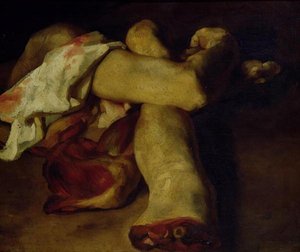
Ζαν-Λουί-Τεοντόρ Ζερικώ, 1791 – 1824

The 100 Most Famous Paintings by Ζαν-Λουί-Τεοντόρ Ζερικώ

The painting that made Ζαν-Λουί-Τεοντόρ Ζερικώ famous is Η Βαρκάδα της Μεδουσας (1818); it hangs in the Μουσείο του Λούβρου, Παρίσι. Nymph and Satyr (Jupiter and Antiope) (1820) and The Oath of Brutus after the Death of Lucretia (1815) follow it in the hearts of collectors and museum visitors. Of the 183 works by Ζαν-Λουί-Τεοντόρ Ζερικώ in our catalogue, these 100 are the most admired, each presented with its date, its museum and what sets it apart.

Καταταγίζονται με βάση το σκορ δημοφιλίας μας, το οποίο συνδυάζει τις αναζητήσεις, τις επισκέψεις και τις παραγγελίες για κάθε έργο. Ενημερώθηκε Οκτώβριος 2026. Every masterpiece on this page can be ordered as a museum-quality, hand-painted oil reproduction or a fine art print, at the size you choose.

Πορτρέτο του Ζαν-Λουί-Τεοντόρ Ζερικώ
Ζαν-Λουί-Τεοντόρ Ζερικώ · 1791 – 1824
Γεννημένος · πεθνημένος
1791 – 1824, Ρουέν
Κίνηση
Romantic painting
Έργα στον κατάλογό μας
183
Τα πιο διάσημα
Η Βαρκάδα της Μεδουσας (1818)
Πολλές εργασίες στο
Μουσείο του Λούβρου

Ζαν-Λουί-Τεοντόρ Ζερικώ: the ten masterpieces

Η Βαρκάδα της Μεδουσας (1818) του Ζαν-Λουί-Τεοντόρ Ζερικώ
1

Η Βαρκάδα της Μεδουσας

1818 · Άνθρακα και λάδι σε καμβά · Μουσείο του Λούβρου, Παρίσι

Το μεγαλειώδες αριστούργημα του Jean-Louis André Théodore Géricault είναι κάτι παραπάνω από μια απλή απεικόνιση μιας ναυτικής καταστροφής· αποτελεί μια εμβαθύς εξερεύνηση της ανθρώπινης απελπισίας, ενός πολιτικού σκάνδαλου και της υψίστης δύναμης της φύσης. Ολοκληρωμένος το 1819, αυτός ο καμβάς υπερμεγέθους (491 x 716 εκ.) αθανάστευσε τα συγκλονιστικά συνreper consequências του ναυαγίου της γαλλικής φρεγάτας Méduse το 1816, μια τραγωδία που γεννήθηκε από την ανικανότητα και τη διαφθορά και προκάλεσε…

Nymph and Satyr (Jupiter and Antiope) (1820) του Ζαν-Λουί-Τεοντόρ Ζερικώ
2

Nymph and Satyr (Jupiter and Antiope)

1820 · Acrylic On Canvas · Musée des Beaux-Arts et de la Céramique, Ρουάν

The Allure of the Divine Encounter: Géricault’s *Nymph and Satyr* Jean-Louis André Théodore Géricault's *Nymph and Satyr*, painted in 1819, isn’t merely a depiction of a mythological scene; it’s a profound exploration of desire, transgression, and the inherent tension between innocence and primal instinct. Born amidst the tumultuous backdrop of post-revolutionary France, Géricault, already recognized for his dramatic intensity, sought to capture not just a narrative but an emotional truth—a…

Lions in a Mountainous Landscape (1818) του Ζαν-Λουί-Τεοντόρ Ζερικώ
4

Lions in a Mountainous Landscape

1818 · Acrylic On Canvas · Μετροπολιτικό Μουσείο Τέχνης, Νέα Υόρκη

This vigorous painting of six lions in a remote, spectrally illuminated lair—possibly intended to evoke the Atlas Mountains of Morocco—is an extraordinary example of Gericault’s spontaneous handling of paint. Rather than applying finishing touches to make a polished cabinet picture, the artist left the painting in a state known as an esquisse, or sketch, a work prized by fellow artists for its strength of directly capturing a subject or effect.…

The Kiss (1822) του Ζαν-Λουί-Τεοντόρ Ζερικώ
5

The Kiss

1822 · Acrylic On Canvas · Μουσείο Θυσσεν-Βορνημισάζα, Μαδρίτη

Théodore Géricault's "The Kiss," painted in 1816, isn’t merely a depiction of lovers entwined; it’s a visceral embodiment of the burgeoning Romantic movement’s fascination with raw emotion, dramatic intensity, and the sublime. This arresting work, housed within the Thyssen-Bornemisza Museum in Madrid, transcends simple representation to become a profound meditation on passion, vulnerability, and the very essence of human connection. Géricault, already a figure known for his unflinching portrayals of…

Wounded Soldiers Retrating from Russia (1814) του Ζαν-Λουί-Τεοντόρ Ζερικώ
6

Wounded Soldiers Retrating from Russia

1814 · Acrylic On Canvas · Musée des Beaux-Arts, Ρουάν

A Symphony of Suffering: Géricault’s “Wounded Soldiers Retrating from Russia” Jean-Louis André Théodore Géricault's "Wounded Soldiers Retrating from Russia" is not merely a painting; it’s a visceral embodiment of the horrors and human cost of war, rendered with an unprecedented level of realism and emotional intensity for its time. Completed in 1814, this monumental canvas—measuring a commanding 250 x 206 cm—captures a pivotal moment during Napoleon's disastrous invasion of Russia,…

Study of Feet and Hands (1818) του Ζαν-Λουί-Τεοντόρ Ζερικώ
7

Study of Feet and Hands

1818 · Oil On Canvas · Musée Fabre, Μονπελιέ

Jean-Louis André Théodore Géricault's "Study of Feet and Hands," painted in 1818, isn’t a grand statement of Romantic drama like his monumental “The Raft of the Medusa.” Instead, it offers a profoundly intimate glimpse into the artist’s meticulous process and a poignant meditation on the human form. This unassuming oil painting—measuring a modest 52 x 64 cm—is far more than just a preparatory sketch; it's a concentrated distillation of Géricault’s…

The Raft of the Medusa (detail) (1818) του Ζαν-Λουί-Τεοντόρ Ζερικώ
8

The Raft of the Medusa (detail)

1818 · Oil On Canvas · Μουσείο του Λούβρου, Παρίσι

Jean-Louis André Théodore Géricault's "The Raft of the Medusa," a monumental detail from his 1818 painting, isn’t merely a depiction of shipwreck; it’s a visceral plunge into the depths of human suffering and political indictment. The scene, rendered with a dramatic intensity characteristic of Romanticism, captures the harrowing aftermath of the French frigate *Medusa*'s wreck off the coast of Mauritania in 1816. This disaster, largely attributed to the incompetence and…

The Wreck (1821) του Ζαν-Λουί-Τεοντόρ Ζερικώ
10

The Wreck

1821 · Oil On Canvas · Μουσείο του Λούβρου, Παρίσι

Théodore Géricault's "The Wreck," painted in 1821, isn’t merely a seascape; it’s a visceral confrontation with the sublime—a raw depiction of humanity’s vulnerability against the overwhelming force of nature. Born amidst the turbulent currents of post-revolutionary France, Géricault, a figure both lauded and controversial within the burgeoning Romantic movement, channeled his own anxieties and the era's fascination with dramatic events into this monumental canvas. The painting immediately commands attention not…

More Ζαν-Λουί-Τεοντόρ Ζερικώ masterpieces, 11 to 100

The Horse Race (1816) του Ζαν-Λουί-Τεοντόρ Ζερικώ
#11

The Horse Race

1816 · Μουσείο Θυσσεν-Βορνημισάζα

Jean-Louis André Théodore Géricault's "The Horse Race," painted in 1816, isn’t merely a depiction of a sporting event; it’s a visceral embodiment of Romanticism’s core tenets – passion,…

Bring it home →
Swiss Guard and Wounded Veteran (1819) του Ζαν-Λουί-Τεοντόρ Ζερικώ
#12

Swiss Guard and Wounded Veteran

1819 · Μουσείο του Λούβρου

Jean-Louis André Théodore Géricault's "Swiss Guard and Wounded Veteran," painted in 1819, is not merely a historical depiction; it’s a profound meditation on duty, sacrifice, and the lingering…

Order a reproduction →
Mazeppa (1823) του Ζαν-Λουί-Τεοντόρ Ζερικώ
#13

Mazeppa

1823 · Κάστρο Σαντιλιά

Théodore Géricault's "Mazeppa," painted in 1823, isn’t merely a depiction of a dramatic legend; it’s a visceral embodiment of Romantic turmoil—a raw exploration of suffering, resilience, and the…

Bring it home →
Two Horses (1809) του Ζαν-Λουί-Τεοντόρ Ζερικώ
#14

Two Horses

1809 · The Phillips Collection

Jean-Louis André Théodore Géricault's "Two Horses," painted in 1808-1809, isn’t merely a depiction of two magnificent animals; it’s a visceral exploration of movement, power, and the fleeting nature…

Bring it home →
A Turk (Mustapha) (1820) του Ζαν-Λουί-Τεοντόρ Ζερικώ
#15

A Turk (Mustapha)

1820 · Μουσείο του Λούβρου

Jean-Louis André Théodore Géricault's "A Turk (Mustapha)," painted in 1820, is not merely a portrait; it’s a carefully constructed tableau of exoticism, melancholy, and the burgeoning Romantic sensibility…

Order a reproduction →
A Carabinier with his Horse (1814) του Ζαν-Λουί-Τεοντόρ Ζερικώ
#16

A Carabinier with his Horse

1814 · Musée des Beaux-Arts

In the quiet intensity of Jean-Louis André Théodore Géricault’s 1814 masterpiece, "A Carabinier with His Horse," we encounter more than a mere military portrait; we witness a profound…

Order a reproduction →
Riderless Horse Races (detail) (1817) του Ζαν-Λουί-Τεοντόρ Ζερικώ
#17

Riderless Horse Races (detail)

1817 · Μουσείο του Λούβρου

A Moment Frozen in Time: Géricault’s “Riderless Horse Races” Jean-Louis André Théodore Géricault's "Riderless Horse Races (detail)" is not merely a depiction of a sporting event; it’s a…

Bring it home →
Boxers (1818) του Ζαν-Λουί-Τεοντόρ Ζερικώ
#18

Boxers

1818 · Κάστρο Σαντιλιά

A Tempestuous Vision: Géricault’s “Boxers” Jean-Louis André Théodore Géricault's "Boxers," completed in 1818, isn’t merely a depiction of a boxing match; it’s a visceral embodiment of Romanticism’s fascination…

Order a reproduction →
The Epsom Derby (1821) του Ζαν-Λουί-Τεοντόρ Ζερικώ
#20

The Epsom Derby

1821 · Μουσείο του Λούβρου

Jean-Louis André Théodore Géricault's "The Epsom Derby," painted in 1821, isn’t merely a depiction of horse racing; it’s a visceral embodiment of Romanticism’s fascination with drama, movement, and…

Bring it home →
Three Lovers (1817) του Ζαν-Λουί-Τεοντόρ Ζερικώ
#22

Three Lovers

1817 · Μουσείο J. Paul Getty

Théodore Géricault captured a private, feverish moment in Three Lovers. This small oil sketch, created about 1817–1820, offers a rare glimpse into the artist's more intimate preoccupations. It…

Order a reproduction →
Lion devouring a horse του Ζαν-Λουί-Τεοντόρ Ζερικώ
#26

Lion devouring a horse

Κάστρο Σαντιλιά

Théodore Géricault's "Lion Devouring a Horse," painted in 1819, isn’t merely a depiction of predatory action; it’s a visceral exploration of power, mortality, and the primal instincts that…

Bring it home →
Untitled (ARJCHM) του Ζαν-Λουί-Τεοντόρ Ζερικώ
#28

Untitled (ARJCHM)

Μουσείο του Λούβρου

In the annals of art history, few works command the room with such visceral intensity as Théodore Géricault’s The Raft of the Medusa. This monumental oil on canvas…

Bring it home →
Portrait of a Young Man (1818) του Ζαν-Λουί-Τεοντόρ Ζερικώ
#32

Portrait of a Young Man

1818 · Minneapolis Institute of Art

A young man emerges from a deep, indistinct darkness, his presence felt through the sudden, sharp clarity of light hitting his features. He sits in a quiet, intimate…

Order a reproduction →
A study for a nude. (1801) του Ζαν-Λουί-Τεοντόρ Ζερικώ
#33

A study for a nude.

1801 · Εθνικό Μουσείο Βαρσοβίας

A study for a nude. emerges from the shadows as a powerful presence by Théodore Géricault. Created about 1801, this oil on canvas captures a singular moment of…

Bring it home →
Study of a Model (1818) του Ζαν-Λουί-Τεοντόρ Ζερικώ
#34

Study of a Model

1818 · Μουσείο J. Paul Getty

This oil on canvas portrait study presents a close-up, three-quarter view of a Black man's head and shoulders. The subject is positioned slightly off-center, looking toward the viewer…

Commission a hand-painted copy →
The Martyrdom of Saint Peter (1814) του Ζαν-Λουί-Τεοντόρ Ζερικώ
#35

The Martyrdom of Saint Peter

1814 · Kunstmuseum Basel

The Martyrdom of Saint Peter is an oil on canvas by Théodore Géricault. Created about 1814, the work captures a moment of profound tension. The physical presence of…

Bring it home →
The Wreck (1824) του Ζαν-Λουί-Τεοντόρ Ζερικώ
#36

The Wreck

1824 · Μουσείο του Λούβρου

In the annals of French Romanticism, few works command the visceral attention of Théodore Géricault’s The Wreck as profoundly as this haunting seascape. Painted in 1824, a year…

Commission a hand-painted copy →
Mater dolorosa, Copy after Ribera (1811) του Ζαν-Λουί-Τεοντόρ Ζερικώ
#38

Mater dolorosa, Copy after Ribera

1811 · Kunstmuseum Basel

Mater dolorosa, Copy after Ribera is a religious oil painting by the French artist Théodore Géricault. Created about 1811–1815, the work reflects the artist's engagement with the traditions…

Bring it home →
Lion in Repose του Ζαν-Λουί-Τεοντόρ Ζερικώ
#39

Lion in Repose

Walters Art Museum

Jean-Louis André Théodore Géricault’s “Lion in Repose,” painted circa 1820-1823, isn’t merely a depiction of an animal; it’s a profound meditation on power, vulnerability, and the very nature…

Order a reproduction →
Portrait of a Negro (1800) του Ζαν-Λουί-Τεοντόρ Ζερικώ
#71

Portrait of a Negro

1800 · Εθνικό Παλάτι της Ajuda

Dating from 1800, Jean-Louis André Théodore Géricault’s “Portrait of a Negro” is more than just a depiction of an individual; it’s a poignant statement born from the turbulent…

Bring it home →
Portrait d'homme (1825) του Ζαν-Λουί-Τεοντόρ Ζερικώ
#73

Portrait d'homme

1825 · Musée Fabre

Portrait d'homme is an oil on canvas work attributed to the French Romantic painter Théodore Géricault. While historically categorized under various titles, including a mistaken identification as a…

Commission a hand-painted copy →
Horses of the Auvergne (1822) του Ζαν-Λουί-Τεοντόρ Ζερικώ
#76

Horses of the Auvergne

1822 · University of Michigan Museum of Art

In the quiet, monochromatic depths of Théodore Géricault’s 1822 lithograph, Horses of the Auvergne, we are transported to a rugged, mist-shrouded corner of France. This evocative work serves…

Commission a hand-painted copy →
A Prancing Grey Horse (1812) του Ζαν-Λουί-Τεοντόρ Ζερικώ
#77

A Prancing Grey Horse

1812 · Burrell Collection

A single light grey horse occupies the center of this oil painting, captured in a rearing pose. The animal's body is angled vertically, its muscular flanks and neck…

Bring it home →
Sheet of Figure Studies (1818) του Ζαν-Λουί-Τεοντόρ Ζερικώ
#78

Sheet of Figure Studies

1818 · Γκαλερί Κουάρτλουντ

To gaze upon Jean-Louis André Théodore Géricault’s "Sheet of Figure Studies" is not merely to look at painted forms; it is to witness the very act of human…

Bring it home →
Portrait of an Artist in His Studio (1820) του Ζαν-Λουί-Τεοντόρ Ζερικώ
#79

Portrait of an Artist in His Studio

1820 · Μουσείο του Λούβρου

Jean-Louis André Théodore Géricault's “Portrait of an Artist in His Studio,” completed in 1820, is more than a simple depiction of a young man seated before his easel;…

Bring it home →
Study of a nude man του Ζαν-Λουί-Τεοντόρ Ζερικώ
#81

Study of a nude man

Εθνικό Μουσείο Βαρσοβίας

The oil on canvas known as Study of a nude man emerges from the shadows, a powerful presence that commands the viewer's immediate attention. This work, created by…

Commission a hand-painted copy →
The Plaster Kiln (1823) του Ζαν-Λουί-Τεοντόρ Ζερικώ
#82

The Plaster Kiln

1823 · Μουσείο του Λούβρου

In the quiet, brooding landscapes of nineteenth-century France, few works capture the raw, unvarnished essence of pastoral life as poignantly as Théodore Géricault’s “The Plaster Kiln.” Completed in…

Order a reproduction →

Ζαν-Λουί-Τεοντόρ Ζερικώ's paintings by period

The subjects Ζαν-Λουί-Τεοντόρ Ζερικώ painted most

The four subjects that return most often among these masterpieces, with the finest example of each.

Where to see Ζαν-Λουί-Τεοντόρ Ζερικώ's paintings

Τα 8 μουσεία που φιλοξενούν το μεγαλύτερο μέρος των έργων σε αυτήν τη σελίδα.

Μουσεία Πόλη Έργα του Ζαν-Λουί-Τεοντόρ Ζερικώ Πάτρια από αυτή τη λίστα
Μουσείο του Λούβρου, ΠαρίσιΜουσείο του Λούβρου Παρίσι 20 Η Βαρκάδα της Μεδουσας, The Raft of the Medusa (detail), Leda and the Swan
Κάστρο Σαντιλιά, ΣαντικήΚάστρο Σαντιλιά Σαντική 6 Mazeppa, Boxers, Lion devouring a horse
Μουσείο J. Paul Getty, Λος ΆντζελεςΜουσείο J. Paul Getty Λος Άντζελες 3 Three Lovers, Study of a Model, The Race of the Riderless Horses
Εθνικό Μουσείο Βαρσοβίας, ΒαρσοβίαΕθνικό Μουσείο Βαρσοβίας Βαρσοβία 3 Equestrian portrait of Wincenty Krasiński., A study for a nude., Study of a nude man
Burrell Collection, ΓλασκώβBurrell Collection Γλασκώβ 8 The Trumpeter of the Lancers of the Guard, A Prancing Grey Horse
Musée Fabre, ΜονπελιέMusée Fabre Μονπελιέ 4 Study of Feet and Hands, Portrait d'homme
Petit Palais, ΠαρίσιPetit Palais Παρίσι 3 The Scotsman, Italian Landscape with Tomb
Μουσείο Θυσσεν-Βορνημισάζα, ΜαδρίτηΜουσείο Θυσσεν-Βορνημισάζα Μαδρίτη 2 The Kiss, The Horse Race

Ζαν-Λουί-Τεοντόρ Ζερικώ, decade by decade: the defining painting of each

  1. 1800s
    Two Horses (1809) του Ζαν-Λουί-Τεοντόρ Ζερικώ
    Rank 14 / 100

    Two Horses

    Ηλικία 9 – 18 · The Phillips Collection

    Jean-Louis André Théodore Géricault's "Two Horses," painted in 1808-1809, isn’t merely a depiction of two magnificent animals; it’s a visceral exploration of movement, power, and the fleeting nature…

  2. 1810s
    Η Βαρκάδα της Μεδουσας (1818) του Ζαν-Λουί-Τεοντόρ Ζερικώ
    No. 1 of 100

    Η Βαρκάδα της Μεδουσας

    Ηλικία 19 – 28 · Μουσείο του Λούβρου

    Το μεγαλειώδες αριστούργημα του Jean-Louis André Théodore Géricault είναι κάτι παραπάνω από μια απλή απεικόνιση μιας ναυτικής καταστροφής· αποτελεί μια εμβαθύς εξερεύνηση της ανθρώπινης απελπισίας, ενός πολιτικού σκάνδαλου…

  3. 1820s
    Nymph and Satyr (Jupiter and Antiope) (1820) του Ζαν-Λουί-Τεοντόρ Ζερικώ
    #2 of 100

    Nymph and Satyr (Jupiter and Antiope)

    Ηλικία 29 – 33 · Musée des Beaux-Arts et de la Céramique

    The Allure of the Divine Encounter: Géricault’s *Nymph and Satyr* Jean-Louis André Théodore Géricault's *Nymph and Satyr*, painted in 1819, isn’t merely a depiction of a mythological scene;…

Ζαν-Λουί-Τεοντόρ Ζερικώ's masterpieces: questions and answers

Which painting is Ζαν-Λουί-Τεοντόρ Ζερικώ best known for?Show the answer

Η Βαρκάδα της Μεδουσας (1818), Μουσείο του Λούβρου, Παρίσι. Next come Nymph and Satyr (Jupiter and Antiope) (1820) and The Oath of Brutus after the Death of Lucretia (1815).

How old was Ζαν-Λουί-Τεοντόρ Ζερικώ when painting Η Βαρκάδα της Μεδουσας?Show the answer

27 years old: Η Βαρκάδα της Μεδουσας dates from 1818 and Ζαν-Λουί-Τεοντόρ Ζερικώ was born in 1791.

What are Ζαν-Λουί-Τεοντόρ Ζερικώ's ten greatest paintings?Show the answer

Η Βαρκάδα της Μεδουσας, Nymph and Satyr (Jupiter and Antiope), The Oath of Brutus after the Death of Lucretia, Lions in a Mountainous Landscape, The Kiss, Wounded Soldiers Retrating from Russia, Study of Feet and Hands, The Raft of the Medusa (detail), Leda and the Swan και The Wreck. The ranking above gives the year and the museum of each.

How many works did Ζαν-Λουί-Τεοντόρ Ζερικώ paint?Show the answer

Our catalogue lists 183 works by Ζαν-Λουί-Τεοντόρ Ζερικώ, dated from 1800 to 1824.

In which museums can I see Ζαν-Λουί-Τεοντόρ Ζερικώ's masterpieces?Show the answer

Most of them are in Μουσείο του Λούβρου (Παρίσι), Κάστρο Σαντιλιά (Σαντική) και Μουσείο J. Paul Getty (Λος Άντζελες). The table above lists the museums one by one.

When did Ζαν-Λουί-Τεοντόρ Ζερικώ paint the masterpieces?Show the answer

In 1810s: 67 of the 100 works on this page date from then, among them Η Βαρκάδα της Μεδουσας.

What are the first and last famous paintings of Ζαν-Λουί-Τεοντόρ Ζερικώ?Show the answer

The earliest on this page is Portrait of a Negro (1800), the latest The Wreck (1824).

What were Ζαν-Λουί-Τεοντόρ Ζερικώ's favourite subjects?Show the answer

Man (12), Portrait (9) και Horse (8), among the 100 works on this page.

Which technique did Ζαν-Λουί-Τεοντόρ Ζερικώ favour?Show the answer

Oil On Canvas: 25 of the 100 works on this page.

What art movement is Ζαν-Λουί-Τεοντόρ Ζερικώ part of?Show the answer

Romantic painting, as the paintings on this page show.

Which masterpieces by Ζαν-Λουί-Τεοντόρ Ζερικώ hang at the Μουσείο του Λούβρου?Show the answer

Η Βαρκάδα της Μεδουσας, The Raft of the Medusa (detail) και Leda and the Swan are among the 14 works on this page held by the Μουσείο του Λούβρου, Παρίσι.

Can I own a reproduction of a Ζαν-Λουί-Τεοντόρ Ζερικώ masterpiece?Show the answer

Yes. Every painting on this page can be ordered as a museum-quality, hand-painted oil reproduction or a fine art print, in the size you choose, from the painting's own page.

The life of Ζαν-Λουί-Τεοντόρ Ζερικώ

Jean-Louis André Théodore Géricault: Ένας Καλλιτέχνης της Τραγωδίας και του Ρομαντισμού

Ο Ζαν-λουί Αντρέ Θεόδωρος Γερικαούτ, ένα όνομα που αντηχεί με την αναβύθωση του γαλλικού ρομαντισμού, γεννήθηκε σε έναν κόσμο έτοιμου να βιώσει δραματικές αλλαγές. Άφιξη στην Ρουάν, στη Γαλλία, το 1791, σηματοδότησε την έναρξη μιας ζωής γεμάτης ανατροπές και τις σκιές της επανάστασης και του Ναπολεόντη. Παρόλο που κληρονόμησε μια άνετη ύπαρξη μέσω των επιχειρήσεων νομικών και εμπορικών της οικογένειάς του – συμπεριλαμβανομένης μιας εταιρείας τσιγάρων – ο Γερικαούτ δεν βρήκε την έκφρασή του στη νομοθεσία ή το εμπόριο, αλλά στην τέχνη. Η αρχική του εκπαίδευση υπό τον Καρλ Βέρνετ, έναν καλλιτέχνη ειδικό σε αθλητικές σκηνές της Αγγλίας, τον εξοπλισε με μια λεπτή ματιά για την ανατομία και την κίνηση, ιδιαίτερα εμφανής στις απεικονίσεις του ιππομένων. Ωστόσο, οι μεταγενέστερες σπουδές του με τον Πιερ-Ναρσίς Γουεριν που παρείχαν μια βάση στην κλασική σύνθεση, αν και ο ελεύθερος πνεύμα του Γερικαούτ τον οδήγησε να αναζητήσει γνώσεις ανεξάρτητα μέσα στις αγιογραφικές αίθουσες του Λούβρου.

Το Λούβρο ως Ακαδημία: Διάλογος με τους Μάστερς

Από το 1810 έως το 1815, το Λούβρο έγινε η πραγματική ακαδημία για τον Γερικαούτ. Βυθίστηκε στις εργασίες των Μεγάλων Μαέστρων – Ρούμπενς, Τιτσιάνο, Βελάζες και Ρενώ – όχι μόνο αντιγράφοντας τις τεχνικές τους, αλλά εμπλέκοντας σε μια βαθιά διάλογο με τις καλλιτεχνικές φιλοσοφίες τους. Αυτή η περίοδος ήταν κρίσιμη για τον σχηματισμό του μοναδικού του στυλ, που χαρακτηρίζεται από δραματικό χάρακα, δυναμικές συνθέσεις και έντονη συναισθηματική φόρτιση που τον ξεχώριζε από τους συνομήλικους του. Δεν απλά αναπαράγαγε, αλλά απορροφούσε την ουσία αυτών των τεχνών, εσωτερικεύοντας τις προσεγγίσεις τους στο φως, τη σκιά και το ανθρώπινο σχήμα. Αυτή η αυτοδίδακτη εκπαίδευση καλλιεργούσε μια μοναδική καλλιτεχνική φωνή, που σύντομα θα αμφισβητούσε τις κυρίαρχες νεοκλασικές συμβάσεις. Τα πρώτα του έργα, όπως το *Χρέος του Χασέουρ* (1812), ήδη έδειχναν αυτή την αναδυόμενη ευαισθησία, παρουσιάζοντας μια τόλμη στην εκτέλεση και ένα πάθος για κίνηση που θυμίζει τις ενέργειες των Ρούμπενς. Συνέχισε να εξερευνά θέματα ιππομένων, τελειοποιώντας τις δεξιότητές του στην απεικόνιση της δύναμης και της χάρης των αλόγων – ένα θέμα που θα παραμείνει μια επαναλαμβανόμενη θεματολογία σε όλη του την καριέρα.

Η Σκηνή της Μεδούσας: Έργο Τραγωδίας και Κοινωνικού Κριτικισμού

Το όνομα του Γερικαούτ συνδέεται άρρηκτα με το *Η Σκηνή της Μεδούσας* (1818-1819), ένα τεράστιο έργο που υπερβαίνει την απλή ιστορική απεικόνιση και γίνεται μια τραυματική καταγραφή του ανθρώπινου πόνου και της αδικίας. Εμπνευσμένο από το συγκλονιστικό πραγματικό περιστατικό του ναυαίσθηματος του γαλλικού πολεμικού πλοίου *Μέδουσα* το 1816, όπου η αμέλεια και η κακή διαχείριση οδήγησαν σε απερίγραπτη ταλαιπωρία για τους επιβάτες του, το έργο είναι μια ζωντανή απεικόνιση της απελπισίας, της ελπίδας και της απόγνωσης. Ο Γερικαούτ έκανε διεξοδική έρευνα, συνεντεύχοντας επιζώντες, μελετώντας νεκρούς σε νοσοκομεία και ακόμη και κατασκεύασαν ένα μικρομοντέλο του πλέγματος για να εξασφαλίσει ακρίβεια. Το αποτέλεσμα δεν είναι απλώς μια απεικόνιση της τραγωδίας, αλλά μια καθηλωτική εμπειρία που αντιμετωπίζει τους θεατές με την άγρια πραγματικότητα του ανθρώπινου πόνου. Η σύνθεση, χτισμένη γύρω από δύο πυραμιδικές δομές – η μία που αντιπροσωπεύει την απελπισία και τον θάνατο, η άλλη τη σωτηρία και την πιθανή διάσωση – δημιουργεί μια δυναμική ένταση που τραβά το βλέμμα σε όλη την επιφάνεια του έργου. Το *Η Σκηνή της Μεδούσας* ήταν αντιπεριστολική κατά την έκθεσή του στο Σαλόν του 1819, προκαλώντας πολιτικές συζητήσεις και εδραιώνοντας τη φήμη του Γερικαούτ ως καλλιτέχνη που τολμούσε να αντιμετωπίσει δύσκολα αλήθεια και να ενσαρκώσει την έντονη συναισθηματική του φόρτιση. Η επίδραση του έργου ξεπέρασε τον κόσμο της τέχνης, καθιερώθηκε ως σύμβολο κυβερνητικής αναποτελεσματικότητας και ανθρώπινης ανθεκτικότητας απέναντι στην απερίγραπτη ταλαιπωρία.

Πέρα από την Τραγωδία: Στρατιωτικά Θέματα και Κληρονομιά

Παρά το γεγονός ότι το *Η Σκηνή της Μεδούσας* παραμένει το πιο διάσημο έργο του, η καλλιτεχνική παραγωγή του Γερικαούτ εκτεινόταν πέρα από αυτό το μοναδικό μνημείο. Συνεχώς επέστρεφε σε στρατιωτικά θέματα, όπως φαίνεται στα *Χασέουρ* (1814) και *Η Σκηνή του Επιδρομικού* (1821), επιδεικνύοντας ένα πάθος για δράμα και εκφραστική δύναμη. Αυτά τα έργα αποκαλύπτουν τη συνεχή του εξερεύνηση της ανθρώπινης συναισθηματικής κατάστασης υπό πίεση, συχνά εστιάζοντας στην σωματική και ψυχική επιβάρυνση του πολέμου. Επέλεξε επίσης να πειραματιστεί με την πορτρέτα και τη γραφιστική, επεκτείνοντας περαιτέρω το καλλιτεχνικό του ρεπερτόριο. Δυστυχώς, η ζωή του Γερικαούτ τερμάτισε πρόωρα από ασθένεια στα 32 του χρόνια, μετά από χρόνια πάθους από ατυχήματα ιπποδρομίας και χρόνια χρόνιης φυματίωσης. Ο πρόωρος θάνατός του στερεί από τον κόσμο της τέχνης ένα ταλαντούχο μυαλό, αλλά η επιρροή του στους επόμενους γενιές καλλιτεχνών ήταν βαθιά. Είναι αναμφισβήτητα ένας πρωτοπόρος του ρομαντισμού, ένας καλλιτέχνης που τολμά να αντιμετωπίσει δύσκολες αλήθειες και να ενσαρκώσει την έντονη συναισθη

Όλα τα 183 έργα του Ζαν-Λουί-Τεοντόρ Ζερικώ →