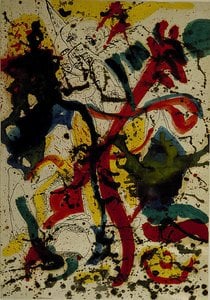
Τζάκσον Πόλοκ, 1912 – 1956

Τζάκσον Πόλοκ: The 100 Most Famous Paintings

Αύξηση Ρυθμού Χρώματος Νο. 30, 1950 is the most famous painting by Τζάκσον Πόλοκ. Αριθμός 1, 1949 (1950) and Συγκέντρωση are the next two works the world knows best. From the 186 works of Τζάκσον Πόλοκ in our catalogue, here are the 100 that collectors and museum visitors look at most, with the year, the museum and the story of each.

Καταταγίζονται με βάση το σκορ δημοφιλίας μας, το οποίο συνδυάζει τις αναζητήσεις, τις επισκέψεις και τις παραγγελίες για κάθε έργο. Ενημερώθηκε Οκτώβριος 2026. Every masterpiece on this page can be ordered as a museum-quality, hand-painted oil reproduction or a fine art print, at the size you choose.

Πορτρέτο του Τζάκσον Πόλοκ
Τζάκσον Πόλοκ · 1912 – 1956
Γεννημένος · πεθνημένος
1912 – 1956, Κόντυ
Κίνηση
Abstract expressionism
Έργα στον κατάλογό μας
186
Τα πιο διάσημα
Αύξηση Ρυθμού Χρώματος Νο. 30, 1950
Πολλές εργασίες στο
MoMA - Museum of Modern Art

Top 10: Τζάκσον Πόλοκ's best-known paintings

Αύξηση Ρυθμού Χρώματος Νο. 30, 1950 του Τζάκσον Πόλοκ
1

Αύξηση Ρυθμού Χρώματος Νο. 30, 1950

Άνθρακα και λάδι σε καμβά

Το έργο “Autumn Rhythm. Number 30, 1950” υ stands ως ένα κομβικό δημιούργημα εντός της πρωτοποριακής συνεισφοράς του Jackson Pollock στον Αφηρημένο Εντύπωμα. Αυτή η καμβά μεγάλου μεγέθους δεν αποτελεί απλώς μια ζωγραφιά, αλλά μια καθηλωτική εμπειρία – ένα οπτικό καταγεγραμμένο της ενέργειας, της κίνησης και της βαθιά προσωπικής εμπλοκής του καλλιτέχνη με τη δημιουργική διαδικασία.

Αριθμός 1, 1949 (1950) του Τζάκσον Πόλοκ
2

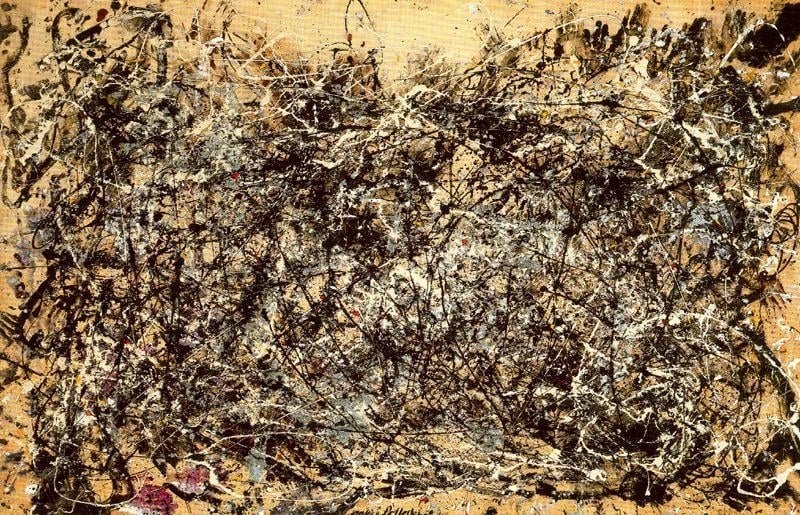
Αριθμός 1, 1949

1950 · Άνθρακα και λάδι σε καμβά · Private collection, Νέα Υόρκη

Δημιουργημένο το 1950, αυτό το σαγηνευτικό έργο ενσαρκώνει το επαναστατικό πνεύμα του Αφηρημένου Εκφρατισμού και αποτελεί ένα χαρακτηριστικό παράδειγμα της εμβληματικής τεχνικής “στάλαξης” του Jackson Pollock. Με εντυπωσιακές διαστάσεις 240 x 120 εκ., δεν τραβάει την προσοχή μόνο λόγω των διαστάσεών του, αλλά και λόγω της ακατάστατης ενέργειας που ακτινοβολεί από την περίπλοκη επιφάνειά του. Είναι ένα έργο που απαιτεί να το βλέπει κανείς, να το νιώθει, να το βιώνει…

Συγκέντρωση του Τζάκσον Πόλοκ
3

Συγκέντρωση

Άνθρακα και λάδι σε καμβά

Η “Συγχώνευση” του Jackson Pollock δεν είναι απλά ένα έργο τέχνης, αλλά μια βαθιά εμπειρία – μια μεγαλειώδης μαρτυρία για τη δύναμη της αφηρημένης έκφρασης και ένα καθοριστικό έργο της μεταπολεμικής αμερικανικής τέχνης. Δημιουργήθηκε σε μια κρίσιμη στιγμή στην ιστορία της τέχνης, αυτό το έργο ενσαρκώνει την καινοτομία, προκαλώντας τις παραδοσιακές αντιλήψεις για την αναπαράσταση και προσκαλώντας τους θεατές σε έναν δυναμικό κόσμο χρωμάτων και ενέργειας. Από την αρχή, η…

Αριθμός 1Α του Τζάκσον Πόλοκ
4

Αριθμός 1Α

Άνθρακα και λάδι σε καμβά

Η Εσσία του Αφηρημένου Εκφρασιονισμού Το έργο "Number 1A" του Jackson Pollock αποτελεί ένα από τα πιο χαρακτηριστικά παραδείγματα του Αφηρημένου Εκφρασιονισμού, μιας κίνησης που επαναπροσδιορίστηκε την αμερικανική τέχνη στα μέσα του 20ού αιώνα. Αυτό το μαγευτικό αριστούργημα ενσαρκώνει την ωμή ενέργεια και την αυθόρμητη έκφραση για τις οποίες ο Pollock είναι παγκοσμίως γνωστός, καθιστώντας το ένα απαραίτητο στοιχείο για κάθε συλλογή σύγχρονης τέχνης ή για κάθε μοντέρνο εσωτερικό χώρο.…

Λευκό Φως (1954) του Τζάκσον Πόλοκ
5

Λευκό Φως

1954 · Άνθρακα και λάδι σε καμβά · MoMA - Museum of Modern Art, Νέα Υόρκη

Το έργο “White Light” δεν είναι απλώς μια ζωγραφική, αλλά μια εισβολή σε έναν κόσμο όπου η ενέργεια και η συναισθηματική ένταση κυριαρχούν. Αποτελεί μια εκπληκτική απόδειξη της ικανότητας του καλλιτέχνη να μεταφέρει περίπλοκες εσωτερικές καταστάσεις μέσα από μια έκρηξη χρωμάτων, υφών και γεμάτων κινήσεων γραμμών. Η πυκνή, χαοτική σύνθεση είναι ένα μαρτυρία της δεξιοτεχνίας του καλλιτέχνη στην απεικόνιση των πιο βαθιών συναισθημάτων, δημιουργώντας μια ατμόσφαιρα έντονου δραματισμού και ζωντάνιας.…

One. Number 31, 1950 του Τζάκσον Πόλοκ
6

One. Number 31, 1950

Painting

In the pantheon of modern art, few works command the room with such raw, unbridled intensity as Paul Jackson Pollock’s “One: Number 31, 1950.” To stand before this canvas is to witness a moment of pure, unfiltered creation captured in time. As a cornerstone of the Abstract Expressionist movement, this painting transcends the boundaries of traditional composition, offering instead a dense, rhythmic web of energy that seems to pulse with…

Number 5 (1948) του Τζάκσον Πόλοκ
7

Number 5

1948 · Oil On Canvas

A Universe Unfurled: Decoding Jackson Pollock’s No. 5, 1948 Jackson Pollock’s *No. 5, 1948* isn't simply a painting; it is an event frozen in time – a visual record of energy, gesture, and the very act of creation. This monumental work stands as perhaps the most iconic example of Abstract Expressionism, captivating viewers for decades with its complex layering and seemingly chaotic beauty. It’s a piece that demands attention, sparking…

Mural (1943) του Τζάκσον Πόλοκ
8

Mural

1943 · Acrylic On Canvas

Jackson Pollock's "Mural," completed in 1943, isn't merely a painting; it’s an immersive experience, a visceral embodiment of the burgeoning abstract expressionist movement. Commissioned by Peggy Guggenheim as a centerpiece for her Manhattan townhouse, this monumental work – measuring a commanding 247 x 605 cm – immediately announces Pollock’s arrival as a revolutionary force in the art world. The sheer scale invites contemplation, drawing the viewer into a swirling vortex…

Number 5 (1948) του Τζάκσον Πόλοκ
9

Number 5

1948 · Oil On Canvas

Jackson Pollock’s *No. 5*, created in 1948, stands as an emblem of Abstract Expressionism—a movement that irrevocably altered the landscape of modern art. More than just a painting; it's a visceral embodiment of emotion, intellect, and revolutionary technique, captivating viewers with its mesmerizing complexity and enduring legacy. This monumental canvas, measuring eight by four feet on fiberboard, transcends mere visual representation, inviting contemplation about the very nature of artistic expression…

Alchemy (1947) του Τζάκσον Πόλοκ
10

Alchemy

1947 · Acrylic On Canvas

A Dance of Chaos and Transformation: Exploring Jackson Pollock’s Alchemy The Genesis of Spontaneity Decoding the Drip Technique Historical Resonance and Symbolic Weight A Legacy of Innovation Jackson Pollock’s *Alchemy*, a monumental work from 1947, isn't merely a painting; it’s an immersive experience, a visceral embodiment of the burgeoning Abstract Expressionist movement. Created during a pivotal moment in American art history, this piece captures the raw energy and revolutionary spirit…

The rest of the Τζάκσον Πόλοκ ranking, 11 to 100

Number 6 (1949) του Τζάκσον Πόλοκ
#12

Number 6

1949

Number 6 stands as a pivotal work within Jackson Pollock's oeuvre and the broader movement of Abstract Expressionism. Emerging in post-World War II America, this style rejected traditional…

Commission a hand-painted copy →
Number 23, 1951 του Τζάκσον Πόλοκ
#13

Number 23, 1951

Chrysler Museum of Art

Paul Jackson Pollock's "Number 23, 1951" isn’t merely a painting; it’s an immersion. Created during a pivotal period of his artistic evolution – the “black pourings” – this…

Bring it home →
Number 1 (1948) του Τζάκσον Πόλοκ
#14

Number 1

1948 · MoMA - Museum of Modern Art

Jackson Pollock's "Number 1, 1948," housed within the hallowed halls of the Museum of Modern Art in New York, isn’t merely a painting; it’s an immersion. It’s a…

Bring it home →
There Were Seven in Eight (1945) του Τζάκσον Πόλοκ
#15

There Were Seven in Eight

1945 · MoMA - Museum of Modern Art

A Descent Into Chaotic Beauty The canvas of Jackson Pollock’s 1945 masterpiece, "There Were Seven in Eight," serves as a visceral gateway into the turbulent heart of Abstract…

Bring it home →
Saint του Τζάκσον Πόλοκ
#16

Saint

Jackson Pollock is widely regarded as one of the most influential artists of the 20th century, and his painting Saint is a quintessential example of his unique style.…

Order a reproduction →
The She Wolf (1943) του Τζάκσον Πόλοκ
#17

The She Wolf

1943

Jackson Pollock's “The She Wolf,” completed in 1943, is more than just an abstract canvas; it’s a visceral plunge into the heart of early Abstract Expressionism and a…

Bring it home →
Composition with Pouring II (1943) του Τζάκσον Πόλοκ
#18

Composition with Pouring II

1943

Created in 1943, "Composition with Pouring II" stands as a pivotal work in Jackson Pollock's career and the broader development of Abstract Expressionism. While often considered an early…

Bring it home →
Blue poles (Number 11) (1952) του Τζάκσον Πόλοκ
#19

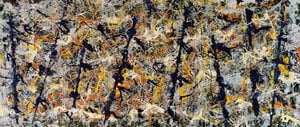
Blue poles (Number 11)

1952

Jackson Pollock’s “Blue Poles (Number 11),” completed in 1952, isn’t merely a painting; it’s an explosion of controlled chaos, a visceral embodiment of the abstract expressionist movement. Measuring…

Commission a hand-painted copy →
Yellow Islands του Τζάκσον Πόλοκ
#21

Yellow Islands

A Symphony of Chaos: Exploring Jackson Pollock’s ‘Yellow Islands’ Jackson Pollock's ‘Yellow Islands’, painted in 1952, stands as a pivotal work within the Abstract Expressionist movement – a…

Bring it home →
The Flame (1938) του Τζάκσον Πόλοκ
#23

The Flame

1938

The painting The Flame consists of oil on fiberboard, measuring 51 x 76 cm. The surface features a central motif of an incandescent blaze that moves through an…

Commission a hand-painted copy →
Portrait and a Dream του Τζάκσον Πόλοκ
#24

Portrait and a Dream

Jackson Pollock’s Portrait and a Dream (1953) isn’t merely a painting; it’s an immersion into the very heart of Abstract Expressionism, a visceral embodiment of the artist’s process…

Order a reproduction →
Number 3 (1948) του Τζάκσον Πόλοκ
#25

Number 3

1948

Jackson Pollock: A Revolutionary in Abstract Expressionism Jackson Pollock (1912-1956) stands as a monumental figure within the abstract expressionist movement, forever altering the trajectory of modern art. His…

Commission a hand-painted copy →
Ocean Greyness του Τζάκσον Πόλοκ
#26

Ocean Greyness

Ocean Greyness is an oil painting created by Jackson Pollock in 1953. This work measures 229 x 146.7 cm and is currently held in the Solomon R. Guggenheim…

Bring it home →
Lucifer (1947) του Τζάκσον Πόλοκ
#28

Lucifer

1947

Jackson Pollock’s “Lucifer,” painted in 1947, isn’t merely a painting; it’s an immersion. Measuring a substantial 268 x 104 cm, this work embodies the raw energy and profound…

Commission a hand-painted copy →
Woman του Τζάκσον Πόλοκ
#29

Woman

Jackson Pollock's “Woman,” completed in 1945 and currently residing within the hallowed halls of the Museum of Modern Art in New York City, isn’t merely a painting; it’s…

Commission a hand-painted copy →
Untitled (Naked Man) του Τζάκσον Πόλοκ
#30

Untitled (Naked Man)

A Figure Forged in Turmoil: Exploring Pollock’s ‘Untitled (Naked Man)’ This powerful painting by Jackson Pollock plunges the viewer into a vortex of emotion and raw energy. Depicting…

Order a reproduction →
Lavender Mist_Number 1 του Τζάκσον Πόλοκ
#31

Lavender Mist_Number 1

Jackson Pollock’s “Lavender Mist_Number 1” isn't merely a painting; it’s an immersion, a visceral experience captured on canvas. This seminal work from the late 1940s embodies the revolutionary…

Order a reproduction →
Birth του Τζάκσον Πόλοκ
#32

Birth

A Tempestuous Birth: Decoding Pollock’s Abstract Vision Jackson Pollock's *Birth* (1948-51) is a pivotal work within his mature “drip” period and a cornerstone of Abstract Expressionism. More than…

Bring it home →
Blue (Moby Dick) του Τζάκσον Πόλοκ
#33

Blue (Moby Dick)

Jackson Pollock's “Blue (Moby Dick),” painted in 1943, isn’t merely a canvas splashed with color; it’s an immersive experience, a visual embodiment of the anxieties and primal forces…

Bring it home →
The key (1946) του Τζάκσον Πόλοκ
#34

The key

1946 · Art Institute of Chicago

A Dance Across Canvas: Exploring Jackson Pollock’s ‘The Key’ Subject Matter & Composition The artwork depicts a group of individuals engaged in various postures—seated on chairs, standing upright,…

Commission a hand-painted copy →
Untitled II του Τζάκσον Πόλοκ
#35

Untitled II

To stand before an Untitled II by Paul Jackson Pollock is not merely to observe paint on canvas; it is to witness an event. It is a raw,…

Order a reproduction →
Cathedral του Τζάκσον Πόλοκ
#36

Cathedral

Introduction to Jackson Pollock and Abstract Expressionism Paul Jackson Pollock, known professionally as Jackson Pollock, was an American painter and a major figure in the abstract expressionist movement.…

Bring it home →
Number 27, 1950 του Τζάκσον Πόλοκ
#38

Number 27, 1950

Jackson Pollock’s ‘Number 27, 1950’: A Symphony of Controlled Chaos Number 27, 1950 is a landmark achievement in the history of Abstract Expressionism, embodying the movement's radical departure…

Commission a hand-painted copy →
Circumcision January (1946) του Τζάκσον Πόλοκ
#40

Circumcision January

1946

Jackson Pollock, a titan of 20th-century art, remains synonymous with abstract expressionism. His painting, Circumcision January, exemplifies his groundbreaking approach and continues to captivate viewers with its dynamic…

Bring it home →
Sheet of Studies (1941) του Τζάκσον Πόλοκ
#41

Sheet of Studies

1941

A Window into Pollock’s Subconscious: “Sheet of Studies” (1941) This intensely energetic work on paper, created in 1941, offers a fascinating glimpse into the formative period of Jackson…

Bring it home →
Number 12, 1949 του Τζάκσον Πόλοκ
#42

Number 12, 1949

A Universe Within: Decoding Jackson Pollock’s “Number 12, 1949” Jackson Pollock's "Number 12, 1949" isn't simply a painting; it’s an event frozen in time – a visual record…

Order a reproduction →
War του Τζάκσον Πόλοκ
#43

War

War: A Descent into Chaos – Jackson Pollock’s Post-Traumatic Masterpiece Jackson Pollock's *War*, painted in 1947, isn’t merely a canvas splashed with color; it’s a visceral embodiment of…

Bring it home →
Marrón y plata του Τζάκσον Πόλοκ
#44

Marrón y plata

A Symphony of Shadow and Silver: Exploring Jackson Pollock’s “Marrón y plata” Jackson Pollock's "Marrón y plata" ("Brown and Silver") stands as a pivotal work within his celebrated…

Bring it home →
Number 10 (1949) του Τζάκσον Πόλοκ
#46

Number 10

1949

A Tempestuous Vision: Exploring Jackson Pollock’s ‘Number 10’ Number 10, created in 1949, stands as a monumental example of Jackson Pollock's revolutionary drip painting technique and the apex…

Commission a hand-painted copy →
Untitled 28 του Τζάκσον Πόλοκ
#47

Untitled 28

A Visceral Encounter: Decoding Jackson Pollock’s “Untitled 28” This intensely compelling work by Jackson Pollock, known simply as “Untitled 28,” offers a raw and unsettling glimpse into the…

Order a reproduction →
Number 25 (1950) του Τζάκσον Πόλοκ
#48

Number 25

1950

To stand before Number 25 is to confront pure, unmediated action. This canvas does not merely depict an image; it records an event—a moment of intense physical and…

Untitled (1939) του Τζάκσον Πόλοκ
#49

Untitled

1939 · Art Institute of Chicago

The canvas known as Untitled emerges from 1939, a moment when Jackson Pollock begins to navigate the turbulent currents of his own creative impulses. This abstract expressionist work…

Commission a hand-painted copy →
Untitled 6 του Τζάκσον Πόλοκ
#50

Untitled 6

A Tempest of Emotion: Exploring Jackson Pollock’s Untitled 6 This captivating work by Jackson Pollock plunges viewers into a dynamic world of abstract expressionism. *Untitled 6* is not…

Order a reproduction →
Full Fathom Five του Τζάκσον Πόλοκ
#51

Full Fathom Five

In the annals of American art history, few works capture the raw, unbridled energy of a movement quite like Paul Jackson Pollock’s Full Fathom Five. Painted in 1947,…

Bring it home →
Figures in a Landscape (1937) του Τζάκσον Πόλοκ
#52

Figures in a Landscape

1937

To encounter Jackson Pollock’s "Figures in a Landscape" is to step into a realm where the boundaries between reality and the subconscious begin to dissolve. Created in 1937,…

Bring it home →
Cut out του Τζάκσον Πόλοκ
#54

Cut out

Jackson Pollock, born on January 28, 1912, was an American painter who played a significant role in the abstract expressionist movement. He is renowned for his unique style…

Commission a hand-painted copy →
Masked Image του Τζάκσον Πόλοκ
#55

Masked Image

The canvas breathes with a restless energy, presenting a singular, stylized visage that seems to emerge from a thicket of overlapping shapes. This is not a portrait in…

Order a reproduction →
Untitled του Τζάκσον Πόλοκ
#56

Untitled

A Glimpse into Pollock’s Preparatory Process: An Early Study in Motion This captivating work on paper offers a rare look into Jackson Pollock's artistic development *before* his iconic…

Order a reproduction →
Portrait of H.M του Τζάκσον Πόλοκ
#57

Portrait of H.M

Paul Jackson Pollock's “Portrait of H.M.”, a work shrouded in mystery and brimming with raw energy, isn’t merely a painting; it’s an immersive experience. Created during a turbulent…

Commission a hand-painted copy →
Summertime: Number 9A (1948) του Τζάκσον Πόλοκ
#58

Summertime: Number 9A

1948 · Tate Modern

Jackson Pollock’s “Summertime: Number 9A,” painted in 1948, isn't merely a canvas splashed with color; it’s an immersive experience, a visceral representation of the artist’s state of mind…

Order a reproduction →
Untitled (1941) του Τζάκσον Πόλοκ
#59

Untitled

1941

A Moment Suspended: Exploring Jackson Pollock’s 1941 Untitled Work This striking work by Jackson Pollock, created in 1941, offers a fascinating glimpse into the artist's formative years –…

Order a reproduction →
Untitled (Silkscreen I) του Τζάκσον Πόλοκ
#60

Untitled (Silkscreen I)

In the realm of Abstract Expressionism, few works capture the raw, unbridled tension of human struggle as poignantly as Paul Jackson Pollock’s “Untitled (Silkscreen I).” This striking black…

Bring it home →
Grayed Rainbow του Τζάκσον Πόλοκ
#61

Grayed Rainbow

Art Institute of Chicago

Jackson Pollock was a revolutionary figure in the abstract expressionist movement, reshaping artistic perception and challenging conventional notions of painting. His groundbreaking drip technique—characterized by pouring and splattering…

Commission a hand-painted copy →
The Water Bull (1946) του Τζάκσον Πόλοκ
#62

The Water Bull

1946 · Stedelijk Museum

Subject and Composition This captivating abstract masterpiece immerses viewers in a whirlwind of vibrant colors and dynamic forms. While its subject remains open to interpretation, the energetic interplay…

Bring it home →
Totem Lesson 2 (1945) του Τζάκσον Πόλοκ
#63

Totem Lesson 2

1945

Totem Lesson 2: An Exploration of Abstract Expressionism’s Chaotic Harmony Paul Jackson Pollock's "Totem Lesson 2," painted in 1945, stands as a cornerstone of Abstract Expressionism—a movement that…

Bring it home →
Figure του Τζάκσον Πόλοκ
#64

Figure

Jackson Pollock, a name synonymous with Abstract Expressionism and the revolutionary ‘drip’ technique, also harbored a period of intensely focused figuration that often goes unacknowledged. The work simply…

Bring it home →
Untitled 9 του Τζάκσον Πόλοκ
#65

Untitled 9

A Tempest of Emotion: Decoding Jackson Pollock’s “Untitled 9” This intensely evocative work by Jackson Pollock, designated “Untitled 9,” plunges the viewer into a swirling vortex of color…

Commission a hand-painted copy →
Stenographic Figure (1942) του Τζάκσον Πόλοκ
#66

Stenographic Figure

1942

Jackson Pollock's 'Stenographic Figure,' painted in 1942, isn’t merely a depiction of a horse and rider; it’s a visceral embodiment of the anxieties and burgeoning freedom defining Abstract…

Order a reproduction →
Number 3 (1949) του Τζάκσον Πόλοκ
#67

Number 3

1949

A Revolution in Paint: Exploring Jackson Pollock’s ‘Number 3’ Jackson Pollock's 'Number 3', created in 1949, stands as a monumental achievement within the Abstract Expressionist movement. Measuring 157…

Bring it home →
Untitled 8 του Τζάκσον Πόλοκ
#68

Untitled 8

The air feels heavy with the restless energy of Jackson Pollock as he confronts the vastness of "Untitled 8." This monumental painting emerges from a period of profound…

Order a reproduction →
Number 8 του Τζάκσον Πόλοκ
#69

Number 8

Jackson Pollock's "Number 8," created in 1949, stands as a pivotal work within the Abstract Expressionist movement. This piece exemplifies Pollock’s revolutionary “drip technique,” where paint was poured…

Bring it home →
Head του Τζάκσον Πόλοκ
#70

Head

A Visceral Exploration of the Human Condition Jackson Pollock’s *Head*, a work shrouded in some mystery due to its lack of definitive dating and detailed documentation, presents a…

Commission a hand-painted copy →
Circle (1941) του Τζάκσον Πόλοκ
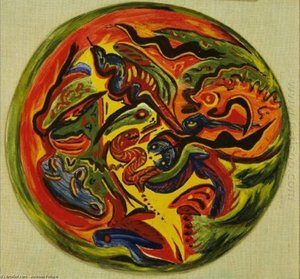
#72

Circle

1941

Jackson Pollock’s Circle: A Dance of Color and Chaos Jackson Pollock's “Circle,” painted in 1941, isn’t merely a depiction of a circle; it’s an embodiment of the burgeoning…

Order a reproduction →
Untitled 23 του Τζάκσον Πόλοκ
#73

Untitled 23

A Chaotic Symphony in Black and White: Deconstructing Pollock’s “Untitled 23” Jackson Pollock's "Untitled 23" isn’t merely an ink drawing; it’s a visceral exploration of energy, anxiety, and…

Commission a hand-painted copy →
Easter and the Totem (1953) του Τζάκσον Πόλοκ
#74

Easter and the Totem

1953

Unveiling Jackson Pollock’s “Easter and the Totem” A Masterpiece of Abstract Expressionism: Jackson Pollock's 1953 painting, Easter and the Totem, stands as a pivotal work within the Abstract…

Bring it home →
Untitled (Composition with Pouring I) του Τζάκσον Πόλοκ
#75

Untitled (Composition with Pouring I)

A Revolution in Paint: Exploring Jackson Pollock’s “Untitled (Composition with Pouring I)” This captivating work embodies the raw energy and groundbreaking innovation that defined Jackson Pollock's contribution to…

Bring it home →
Untitled 13 του Τζάκσον Πόλοκ
#76

Untitled 13

In the pantheon of twentieth-century art, few names command as much visceral respect and intrigue as Jackson Pollock. His work Untitled 13 serves as a profound testament to…

Order a reproduction →
Male and Female (1942) του Τζάκσον Πόλοκ
#78

Male and Female

1942

Jackson Pollock: A Pioneer of Abstract Expressionism Jackson Pollock (1912–1956) stands as one of the most transformative figures in 20th-century art, irrevocably altering perceptions of painting and establishing…

Commission a hand-painted copy →
Miners του Τζάκσον Πόλοκ
#79

Miners

Paul Jackson Pollock: A Pioneer of Abstract Expressionism Paul Jackson Pollock (1912-1956) stands as one of the most influential figures in 20th-century art, irrevocably shaping the trajectory of…

Bring it home →
GREETINGS του Τζάκσον Πόλοκ
#80

GREETINGS

Paul Jackson Pollock's “Greetings” stands as a testament to the radical spirit of Abstract Expressionism, encapsulating the movement’s core tenets within a deceptively simple composition. This artwork, created…

Bring it home →
Number 23 (1948) του Τζάκσον Πόλοκ
#82

Number 23

1948

Jackson Pollock’s “Number 23,” completed in 1948, stands as an undeniable cornerstone of Abstract Expressionism—a movement that fundamentally challenged artistic conventions and prioritized emotional expression over representational accuracy.…

Bring it home →
Untitled (Silkcreen no. VI) του Τζάκσον Πόλοκ
#83

Untitled (Silkcreen no. VI)

A Dance of Chaos and Connection: Exploring Jackson Pollock’s “Untitled (Silkcreen no. VI)” Paul Jackson Pollock's "Untitled (Silkcreen no. VI)" stands as an emblem of Abstract Expressionism, a…

Order a reproduction →
Untitled 27 του Τζάκσον Πόλοκ
#84

Untitled 27

Jackson Pollock's “Untitled 27,” a monumental drip painting from 1950, stands as an emblem of Abstract Expressionism—a movement that irrevocably altered the course of twentieth-century art. More than…

Order a reproduction →
Silver and Black I του Τζάκσον Πόλοκ
#85

Silver and Black I

A Symphony of Chaos: Exploring Jackson Pollock’s “Silver and Black I” “Silver and Black I” is a powerful example of Jackson Pollock's revolutionary contribution to Abstract Expressionism, created…

Commission a hand-painted copy →
Untitled 4 του Τζάκσον Πόλοκ
#86

Untitled 4

In the realm of Abstract Expressionism, few works capture the raw, unbridled energy of the human psyche quite like Paul Jackson Pollock’s Untitled 4. This mesmerizing monochrome composition…

Bring it home →
Shimmering Substance (1946) του Τζάκσον Πόλοκ
#87

Shimmering Substance

1946

Shimmering Substance: A Dance of Chaos and Control Jackson Pollock’s “Shimmering Substance,” completed in 1946, stands as a cornerstone of Abstract Expressionism—a movement that irrevocably altered the landscape…

Order a reproduction →
Composition του Τζάκσον Πόλοκ
#88

Composition

Jackson Pollock executed the painting titled Composition in 1949. This work emerged during a period when the artist was developing a specific approach to the canvas, moving away…

Order a reproduction →
Gothic του Τζάκσον Πόλοκ
#89

Gothic

The canvas known as Gothic emerges from the creative mind of Paul Jackson Pollock. Created in 1944, this work exists within the permanent collection of The Museum of…

Order a reproduction →
Untitled (Cut-out) του Τζάκσον Πόλοκ
#91

Untitled (Cut-out)

In the pantheon of Abstract Expressionism, few works capture the raw, visceral energy of the mid-century avant-garde quite like Paul Jackson Pollock’s "Untitled (Cut-out)." Created in 1954, a…

Bring it home →
Going West (1935) του Τζάκσον Πόλοκ
#92

Going West

1935

Jackson Pollock's "Going West," painted in 1935, isn’t merely a depiction of a winter landscape; it’s a deeply personal narrative woven into the fabric of American pioneering spirit.…

Order a reproduction →
Number 2 (1951) του Τζάκσον Πόλοκ
#93

Number 2

1951

A Symphony of Chaos and Color: Decoding Jackson Pollock’s “Number 2” Jackson Pollock's "Number 2," completed in 1951, stands as a cornerstone of Abstract Expressionism—a movement that irrevocably…

Commission a hand-painted copy →
Number 3, 1950 του Τζάκσον Πόλοκ
#94

Number 3, 1950

A Universe of Color: Exploring Jackson Pollock’s Number 3, 1950 Jackson Pollock's *Number 3, 1950* is arguably one of the most iconic and significant works of Abstract Expressionism.…

Bring it home →
Untitled 1 του Τζάκσον Πόλοκ
#95

Untitled 1

Paul Jackson Pollock (1912-1956), a titan of Abstract Expressionism, remains one of the most enigmatic figures in twentieth-century art. His monumental canvases—like “Untitled 1”—are not merely splashes of…

Commission a hand-painted copy →
Echo του Τζάκσον Πόλοκ
#96

Echo

Jackson Pollock’s “Echo,” Number 25, 1951, stands as a testament to the fervor of Abstract Expressionism—a movement that sought to liberate art from representational constraints and delve into…

Order a reproduction →
Composition with Woman του Τζάκσον Πόλοκ
#97

Composition with Woman

A Vortex of Emotion: Decoding Jackson Pollock’s Abstract Expressionism This captivating painting embodies the raw energy and emotional intensity that define Jackson Pollock's revolutionary contribution to 20th-century art.…

Commission a hand-painted copy →
Untitled (1941) του Τζάκσον Πόλοκ
#98

Untitled

1941

Jackson Pollock's "Untitled," painted in 1941, stands as a cornerstone of Abstract Expressionism—a movement that fundamentally challenged artistic conventions and prioritized spontaneous gesture over meticulous representation. This monumental…

Order a reproduction →
Κεφάλι σε πορτοκαλί του Τζάκσον Πόλοκ
#99

Κεφάλι σε πορτοκαλί

Το "Orange Head" του Jackson Pollock, ένα έργο που ξεφεύγει από τις καθιερωμένες ομορφιές και αγκάλιασε την ένταση της συναισθηματικής έκφρασης, σηματοδότησε μια ριζική αλλαγή στην ιστορία της…

Bring it home →
Untitled (13) (1943) του Τζάκσον Πόλοκ
#100

Untitled (13)

1943

Jackson Pollock: A Pioneer of Abstract Expressionism Jackson Pollock (1912-1956) stands as one of the most influential figures in 20th-century art, irrevocably altering the landscape of painting and…

Bring it home →

Τζάκσον Πόλοκ's paintings by period

Drip Period

1948 · 3 έργα σε αυτή τη λίστα

Late Period

3 έργα σε αυτή τη λίστα

The subjects Τζάκσον Πόλοκ painted most

The four subjects that return most often among these masterpieces, with the finest example of each.

Where to see Τζάκσον Πόλοκ's paintings

Τα 6 μουσεία που φιλοξενούν το μεγαλύτερο μέρος των έργων σε αυτήν τη σελίδα.

Μουσεία Πόλη Έργα του Τζάκσον Πόλοκ Πάτρια από αυτή τη λίστα
MoMA - Museum of Modern Art, Νέα ΥόρκηMoMA - Museum of Modern Art Νέα Υόρκη 4 Λευκό Φως, Number 1, There Were Seven in Eight
Art Institute of Chicago, ΣικάγκοArt Institute of Chicago Σικάγκο 3 The key, Untitled, Grayed Rainbow
Private collection, Νέα ΥόρκηPrivate collection Νέα Υόρκη 1 Αριθμός 1, 1949
Chrysler Museum of Art, ΝόρφολκChrysler Museum of Art Νόρφολκ 1 Number 23, 1951
Tate Modern, ΛονδίνοTate Modern Λονδίνο 1 Summertime: Number 9A
Stedelijk Museum, ΆμστερνταμStedelijk Museum Άμστερνταμ 1 The Water Bull

Τζάκσον Πόλοκ through the decades: one masterpiece for each

  1. 1930s
    The Flame (1938) του Τζάκσον Πόλοκ
    No. 23 of 100

    The Flame

    Ηλικία 18 – 27

    The painting The Flame consists of oil on fiberboard, measuring 51 x 76 cm. The surface features a central motif of an incandescent blaze that moves through an…

  2. 1940s
    Number 5 (1948) του Τζάκσον Πόλοκ
    No. 7 of 100

    Number 5

    Ηλικία 28 – 37

    A Universe Unfurled: Decoding Jackson Pollock’s No. 5, 1948 Jackson Pollock’s *No. 5, 1948* isn't simply a painting; it is an event frozen in time – a visual…

  3. 1950s
    Αριθμός 1, 1949 (1950) του Τζάκσον Πόλοκ
    No. 2 of 100

    Αριθμός 1, 1949

    Ηλικία 38 – 44 · Private collection

    Δημιουργημένο το 1950, αυτό το σαγηνευτικό έργο ενσαρκώνει το επαναστατικό πνεύμα του Αφηρημένου Εκφρατισμού και αποτελεί ένα χαρακτηριστικό παράδειγμα της εμβληματικής τεχνικής “στάλαξης” του Jackson Pollock. Με εντυπωσιακές…

Τζάκσον Πόλοκ's paintings: frequently asked questions

What is the most famous Τζάκσον Πόλοκ painting?Show the answer

Αύξηση Ρυθμού Χρώματος Νο. 30, 1950. Next come Αριθμός 1, 1949 (1950) and Συγκέντρωση.

Which are the 10 most famous Τζάκσον Πόλοκ paintings?Show the answer

Αύξηση Ρυθμού Χρώματος Νο. 30, 1950, Αριθμός 1, 1949, Συγκέντρωση, Αριθμός 1Α, Λευκό Φως, One. Number 31, 1950, Number 5, Mural, Number 5 και Alchemy. The ranking above gives the year and the museum of each.

How many paintings by Τζάκσον Πόλοκ are there?Show the answer

Our catalogue lists 186 works by Τζάκσον Πόλοκ, dated from 1935 to 1954.

Where can I see the most famous Τζάκσον Πόλοκ paintings?Show the answer

Most of them are in MoMA - Museum of Modern Art (Νέα Υόρκη), Art Institute of Chicago (Σικάγκο) και Private collection (Νέα Υόρκη). The table above lists the museums one by one.

In which period did Τζάκσον Πόλοκ paint the best-known works?Show the answer

In 1940s: 29 of the 100 works on this page date from then, among them Number 5.

What is the earliest famous Τζάκσον Πόλοκ painting, and the latest?Show the answer

The earliest on this page is Going West (1935), the latest Λευκό Φως (1954).

What subjects did Τζάκσον Πόλοκ paint?Show the answer

Drip painting (44), Color field (31) και Pollock (28), among the 100 works on this page.

What did Τζάκσον Πόλοκ paint on, and with what?Show the answer

Acrylic On Canvas: 39 of the 100 works on this page.

Which movement does Τζάκσον Πόλοκ's art belong to?Show the answer

Abstract expressionism, as the paintings on this page show.

What Τζάκσον Πόλοκ paintings does the MoMA - Museum of Modern Art hold?Show the answer

Λευκό Φως, Number 1 και There Were Seven in Eight are among the 3 works on this page held by the MoMA - Museum of Modern Art, Νέα Υόρκη.

Where can I buy a Τζάκσον Πόλοκ reproduction?Show the answer

Yes. Every painting on this page can be ordered as a museum-quality, hand-painted oil reproduction or a fine art print, in the size you choose, from the painting's own page.

Τζάκσον Πόλοκ: biography

Early Life, Family and Training

The story of Paul Jackson Pollock begins in the rugged landscape of Cody, Wyoming, where he was born on January 28, 1912. He was the youngest of five brothers, born to Stella May McClure and LeRoy Pollock. His father worked as a land surveyor, a profession that required constant movement across the vast American West. This nomadic existence meant that the young boy's early years were defined by frequent relocations, a restlessness that seemed to mirror the shifting horizons of his father's work. These early travels through the West provided him with a direct, unmediated encounter with the natural world and the spiritual resonance of Native American art, impressions that would quietly settle into his subconscious long before he ever held a brush.

As he grew, the search for a sense of place led him toward the urban energy of the coast. He enrolled at Manual Arts High School in Los Angeles, seeking a formal structure for his burgeoning impulses. However, the true shaping of his hand occurred much later, when he moved to New York City. It was there, at the Art Students League, that he began a long and transformative period of study. From 1929 to 1942, he labored under the guidance of Thomas Hart Benton. While Benton emphasized rhythmic compositions and the narrative weight of American life, the young student was already beginning to drift toward his own, more abstract, internal truths.

The Development of a Unique Technique

By 1947, a profound shift had taken hold in the way he approached the canvas. He moved away from the traditional easel, choosing instead to lay his canvases directly upon the floor. This change allowed him to stand over his work, becoming part of the creative act itself. He did not merely apply paint; he dripped, splashed, and flung it from above, letting the liquid fall in unpredictable patterns. This method turned the act of painting into a physical performance, where gravity and gesture dictated the final form.

His tools were as unconventional as his methods. He reached for sticks, knives, and even syringes to manipulate the fluid medium. Sometimes he used trowels or dripping fluid paint to achieve specific textures. He would often scratch into the surface or use strange objects to build up a thick crust of paint, adding a tactile, sculptural quality to the work. This process was less about controlled brushwork and more about a rhythmic, almost primal release of energy onto the surface.

Key Works and Artistic Expressions

As he moved away from the constraints of the easel, his canvases began to reflect a more visceral engagement with the medium. In 1943, he produced Mural, a massive work measuring 8-by-20-foot (2.4 by 6.1 m), which demonstrated his ability to command a vast surface. During this period, his explorations into the subconscious and the act of painting itself led to works like Eyes in the Heat, created about 1946. These pieces were not merely images but records of a physical presence, where the movement of his whole body dictated the placement of every splatter and pool of color.

The years that followed saw him perfecting the rhythmic, all-over compositions that would define his reputation. He sought to create a sense of boundless space, where no single point held dominance over the rest. This approach is evident in Number 1, 1949, a work that captures a raw outpouring of energy, and in Lavender Mist, Number 1, 1950, which remains a significant piece of his output. In these works, the interplay between control and chance creates a delicate balance, as if the paint were released rather than applied.

His later experiments continued to push the boundaries of how paint could be manipulated on a horizontal surface. He often used sticks, knives, or even the cans themselves to fling pigment, resulting in complex networks of lines. This method is clearly seen in Blue Poles, Number 11, 1952 and in the energetic Convergence. Through these works, he achieved a state where the painting seemed to possess a life of its own, emerging from a deep immersion in his own imagination.

Patrons, Workshop and Commissions

The path of his career was shaped by both public necessity and the generosity of a few vital supporters. Between 1938 and 1942, he found steady work as a painter for the WPA Federal Art Project, a period that provided a necessary rhythm to his developing practice. This stability gave way to a more personal and transformative alliance when Peggy Guggenheim offered him a gallery contract in July 1943. Her support proved to be more than professional; in 1945, she provided a $2,000 down payment to help him secure a home, a gesture that deeply intertwined his personal life with his artistic survival.

His creative life eventually found its center in East Hampton, New York. There, within the Pollock-Krasner House and Studio, he lived and worked alongside his wife, Lee Krasner. The studio was a place of intense physical movement, where the boundaries between the artist and the canvas dissolved. He often moved away from the traditional easel, preferring to lay his canvases upon the floor to engage with the paint from all sides. This workspace was not merely a room for production but a site of profound, restless energy where his most radical experiments took place.

Later Years and Death

The personal life of the artist was deeply intertwined with his creative struggles. In 1945, he married the artist Lee Krasner, a union that provided a significant presence in his life during his most transformative years. Yet, beneath the surface of his professional ascent, a persistent shadow remained. He struggled with an alcohol addiction throughout his entire life, a battle that often complicated his existence and his ability to navigate the pressures of his growing fame.

This internal and external turbulence reached a tragic end in East Hampton, New York, USA. On August 11, 1956, at the age of 44, his life was cut short in a sudden, violent accident. While driving, he was involved in a single-car collision caused by alcohol. The crash proved fatal, leaving behind a legacy that was as tumultuous as the paint he flung across his canvases.

Legacy and Influence on Modern Art

The ripples of his radical methods reached far beyond the studio walls of East Hampton. By breaking the traditional bond between the brush and the easel, he became a central figure in the Abstract Expressionist movement, a shift that fundamentally altered the trajectory of American creativity. His presence helped solidify New York City's position as a global center for modern art, moving the heart of the avant-garde away from European dominance. He was among the first American painters to be recognized as a peer of the great 20th-century European masters, proving that a new, visceral language could emerge from the soil of the United States.

His influence acted as a catalyst for many subsequent art movements that followed in his wake. The way he engaged with the canvas—treating it as an arena for physical action rather than a mere surface for representation—opened doors for many who sought to express the subconscious through gesture. This emphasis on the process of creation itself left a permanent mark on the history of modern art, ensuring that the spontaneous and the unplanned would forever hold a place in the artist's toolkit.

Where to See the Works Today

To witness the physical traces of his movement, one must travel to the great institutions that preserved his radical energy. In New York City, the Museum of Modern Art holds several of his canvases, allowing viewers to stand before the sprawling, uncentered compositions that defined his era. The National Gallery of Art in Washington D.C. also maintains his works, offering a space to observe the intricate networks of color he achieved through his unique methods. Across the Atlantic, the Tate Gallery in London keeps his presence alive within its collections, ensuring his influence reaches far beyond American shores.

For those seeking a more intimate connection to his process, the Pollock-Krasner House and Studio in East Hampton offers a profound sense of place. This site, a National Historic Landmark, was the space where he and his wife, Lee Krasner, lived and worked. The property remains a vital link to his life, preserving the environment that nurtured his transition from traditional forms to the spontaneous, floor-based methods that changed the course of modern painting. Walking through these spaces provides a sense of the scale and the physical reality of his creative struggle.

Όλα τα 186 έργα του Τζάκσον Πόλοκ →