

Το έργο Saint Louis Forgiving Pierre de Bretagne (1817) είναι το πιο διάσημο πίνακα του Georges Rouget, το οποίο βρίσκεται στο Musée des Beaux-Arts de Quimper στην Quimper. Οι Sketch for the church Saint Gervais "Ecce Homo" (1819) και Jean-Nicolas Houchard (1835) είναι τα επόμενα δύο έργα που ο κόσμος γνωρίζει καλύτερα. Από τα 39 έργα του Georges Rouget στον κατάλογό μας, ακολουθούν τα 39 που προσεγγίζουν περισσότερο οι συλλέκτες και οι επισκέπτες των μουσείων, μαζί με την χρονολογία, το μουσείο και την ιστορία του καθενός.
Καταταγίζονται με βάση το σκορ δημοφιλίας μας, το οποίο συνδυάζει τις αναζητήσεις, τις επισκέψεις και τις παραγγελίες για κάθε έργο. Ενημερώθηκε Οκτώβριος 2026. Κάθε αριστούργημα σε αυτήν τη σελίδα μπορεί να παραγγελθεί ως μια χειροποίητη αναπαραγωγή σε λάδι υψηλής ποιότητας μουσείου ή ως ένα εκτύπωμα fine art, στο μέγεθος που επιλέξετε.


A middle-aged man sits in a moment of profound stillness, his gaze drifting toward the upper right as if caught by a sudden, unspoken thought. He is draped in the heavy, dark navy blue of a jacket that absorbs the light, contrasting sharply against the crisp, creamy white of his cravat. The light strikes the left side of his face with a deliberate intensity, sculpting the sharp lines of his…


The canvas before you presents not merely a likeness, but an embodiment of the 19th century’s fascination with portraiture – a meticulously rendered study in dignity and quiet authority. Painted by Georges Rouget between 1803 and 1857, this depiction of Jean Pierre Thenot is more than just a representation; it's a window into a specific moment in French history, imbued with the formal elegance and restrained emotion characteristic of his…


Georges Rouget's "Mesdemoiselles Mollien," painted in 1811, is more than just a portrait; it’s a window into the refined world of early 19th-century French society and a testament…
Παραγγελία αναπαραγωγής →
Η παρούσα έργο τέχνης είναι μια πορτρέτο του Γεώργιου Ρούγετ και της Φράνσις Κασσελούπ Λαουμπάτ, ενός γενικού στρατού που ζωγράφισε ο Γεώργιος Ρούγετ. Παρουσιάζει μια επίσημη και μεγαλειώδη…
Παραγγείλτε μια χειροποίητη αντιγραφή →
This striking portrait depicts Emmanuel de Grouchy, Colonel du 2e Dragon in 1792. Painted by Georges Rouget, a neoclassical French painter known for his historical scenes and association…
Παραγγελία αναπαραγωγής →Τα τέσσερα θέματα που εμφανίζονται πιο συχνά σε αυτά τα αριστούργημα, με το κορυφαίο παράδειγμα για το καθένα.
Τα 8 μουσεία που φιλοξενούν το μεγαλύτερο μέρος των έργων σε αυτήν τη σελίδα.
| Μουσεία | Πόλη | Έργα του Georges Rouget | Πάτρια από αυτή τη λίστα |
|---|---|---|---|
 Opera House |
Versailles | 6 | Achille Alexandre Alphonse, Viscount de Cailleux (1788-1876), Director of the Musées royaux, ALEXANDRE FRANCOIS MARIE, VICOMTE DE BEAUHARNAIS, GENERAL EN CHEF DE L'ARMEE DU RHIN (1760 1794), VICTOR GUY BARON DUPERRE, MATELOT EN 1792 (1775 1846) |
 Μουσείο του Λούβρου |
Παρίσι | 2 | JEAN PIERRE THENOT (1803 1857), MESDEMOISELLES MOLLIEN |
 Musée des Beaux-Arts de Quimper |
Quimper | 1 | Saint Louis Forgiving Pierre de Bretagne |
 Petit Palais |
Παρίσι | 1 | Sketch for the church Saint Gervais "Ecce Homo" |
 Μουσείο του Στρατού |
Πάρις | 1 | Jean-Nicolas Houchard |
 Bavarian State Painting Collections |
Μόναχο | 1 | Jacques-Louis David |
 Musée Fesch |
Ακ-εν-Προβेंस | 1 | The King of Rome in the Tuileries Garden |
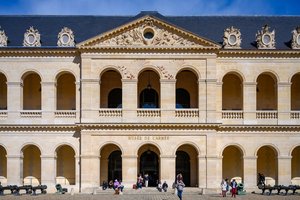 Ministère de la Défense Nationale |
Πάρις | 1 | ΓΕΩΡΓΙΟΣ ΡΟΥΓΈΤΣ ΚΑΙ ΦΡΑΝΚΟΪΣ ΤΣΑΣΕΛΟΥΠ ΛΑΟΥΒΆΤ ΓΕΝΉΡΙΚΟΣ ΔΙΆΣΗΜΩΝ |


Saint Louis Forgiving Pierre de Bretagne (1817), Musée des Beaux-Arts de Quimper, Quimper. Ακολουθούν το Sketch for the church Saint Gervais "Ecce Homo" (1819) και το Jean-Nicolas Houchard (1835).
34 ετών: το έργο Saint Louis Forgiving Pierre de Bretagne χρονολογείται από το 1817 και ο/η Georges Rouget γεννήθηκε το 1783.
Saint Louis Forgiving Pierre de Bretagne, Sketch for the church Saint Gervais "Ecce Homo", Jean-Nicolas Houchard, Jacques-Louis David, Achille Alexandre Alphonse, Viscount de Cailleux (1788-1876), Director of the Musées royaux, The King of Rome in the Tuileries Garden, JEAN PIERRE THENOT (1803 1857), DEBARQUEMENT DE SAINT LOUIS EN EGYPTE.4 JUIN 1249, ALEXANDRE FRANCOIS MARIE, VICOMTE DE BEAUHARNAIS, GENERAL EN CHEF DE L'ARMEE DU RHIN (1760 1794) και FRANCOIS CHRISTOPHE KELLERMAN, GENERAL EN CHEF DE L'ARMEE DE LA MOSELLE EN 1792 (1735 1820). Η παραπάνω κατάταξη αναγράφει το έτος και το μουσείο για το καθένα.
Ο κατάλογός μας περιλαμβάνει 39 έργα του Georges Rouget, με ημερομηνίες από 1817 έως 1850.
Τα περισσότερα βρίσκονται στα Opera House (Versailles), Μουσείο του Λούβρου (Παρίσι) και Musée des Beaux-Arts de Quimper (Quimper). Ο παραπάνω πίνακας περιγράφει τα μουσεία ένα προς ένα.
Κατά την περίοδο 1810s: 2 από τα 39 έργα σε αυτήν τη σελίδα χρονολογούνται τότε, ανάμεσα σε αυτά και Saint Louis Forgiving Pierre de Bretagne.
Το παλαιότερο σε αυτήν τη σελίδα είναι το Saint Louis Forgiving Pierre de Bretagne (1817), το νεότερο το The King of Rome in the Tuileries Garden (1850).
Portrait (4), Dignified (3) και Formal (2), από τα 39 έργα σε αυτήν τη σελίδα.
Oil On Canvas: 3 από τα 39 έργα σε αυτήν τη σελίδα.
Neoclassicism, όπως τα έργα σε αυτήν τη σελίδα δείχνουν.
Τα Achille Alexandre Alphonse, Viscount de Cailleux (1788-1876), Director of the Musées royaux, ALEXANDRE FRANCOIS MARIE, VICOMTE DE BEAUHARNAIS, GENERAL EN CHEF DE L'ARMEE DU RHIN (1760 1794) και VICTOR GUY BARON DUPERRE, MATELOT EN 1792 (1775 1846) περιλαμβάνονται στα 6 έργα σε αυτήν τη σελίδα που βρίσκονται στο Opera House, Versailles.
Ναι. Κάθε έργο σε αυτήν τη σελίδα μπορεί να παραγγελθεί ως μια χειροποίητη αναπαραγωγή ελαιογραφίας επιπέδου μουσείου ή ως μια εκτύπωση fine art, στο μέγεθος που επιλέξετε, από την αντίστοιχη σελίδα του έργου.

