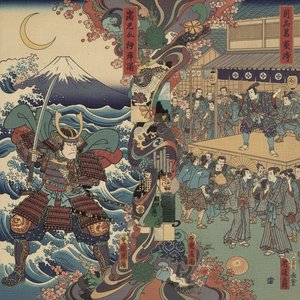
Toho Hirose: A Master of Tranquil Landscapes
Toho Hirose (1875-1930) stands as a pivotal figure in early 20th-century Japanese art, particularly renowned for his exquisite scroll paintings that embody the spirit of Zen Buddhism and capture the serene beauty of the natural world. Born in Osaka, Japan, Hirose’s artistic journey began modestly but swiftly ascended to prominence thanks to his unwavering dedication to traditional techniques and a profound sensitivity to atmospheric conditions—a characteristic that would define his oeuvre throughout his career.
- Early Life & Training: Hirose received his initial artistic education from his father, who was himself a painter specializing in landscape art. This formative influence instilled within him a deep appreciation for observation and meticulous rendering of nature’s subtleties.
- Influence of Zen Buddhism: Hirose's artistic philosophy was profoundly shaped by Zen Buddhist principles—specifically the concept of “muji,” or “no mind.” He sought to transcend intellectual contemplation and achieve direct experience of reality through his art, striving to convey a sense of stillness and harmony that mirrored the meditative state.
- Technique & Style: Hirose’s distinctive style is characterized by its masterful use of watercolor—a medium he embraced with exceptional skill. He meticulously layered washes of pigment onto rice paper, capturing subtle gradations of color and texture to evoke the ethereal quality of misty mountains and tranquil ponds. His compositions are often asymmetrical, reflecting the natural irregularity of landscapes.
Hirose’s artistic output spanned several decades, during which he produced a substantial body of work—primarily scroll paintings—that explore themes of solitude, contemplation, and communion with nature. He frequently depicted scenes from Japanese gardens and mountainous vistas, employing delicate brushstrokes and luminous colors to convey an atmosphere of profound peace. His landscapes are not merely representations of scenery; they are expressions of inner harmony and spiritual insight.
- Notable Works: Among his most celebrated paintings include “Cranes with Pine Trees, Bamboo and Plums,” a breathtaking depiction of a Zen garden featuring cranes symbolizing longevity and pine trees representing resilience—a visual testament to Hirose’s artistic vision.
- Critical Recognition: Hirose's work garnered considerable acclaim during his lifetime from prominent art critics and collectors who recognized its exceptional beauty and spiritual depth. His paintings continue to inspire admiration for their understated elegance and evocative power.
Hirose’s legacy extends beyond the individual artworks themselves; he established a tradition of landscape painting that prioritized perceptual experience over formal convention—a cornerstone of Japanese aesthetic thought. He remains an influential artist whose work embodies the enduring values of simplicity, contemplation, and reverence for the natural world. His contribution to Zen art is undeniable, cementing his place as one of Japan’s most revered painters of the early 20th century.