A Life Etched in Light: The Photographic Journey of Todd Webb
Charles Clayton “Todd” Webb III, a name perhaps less instantly recognizable than some of his contemporaries, nevertheless occupies a vital and compelling space within the history of American photography. Born in Detroit in 1905, Webb’s life was one of remarkable adaptability and artistic evolution, spanning nearly a century and encompassing diverse experiences that profoundly shaped his unique photographic vision. His journey wasn't a direct ascent to artistic acclaim; rather, it was a winding path marked by financial hardship, wartime service, and an unwavering dedication to capturing the essence of everyday life with clarity and depth. Before he ever lifted a camera with serious intent, Webb navigated the turbulent waters of the 1920s stock market crash, finding himself prospecting for gold in California and serving as a fire ranger – experiences that instilled within him a resilience and keen observation of the American landscape and its people. It was during this period of self-discovery that photography began to emerge not merely as a hobby, but as a calling.
Forging a Vision: Mentorship and Early Work
The 1930s witnessed Webb’s burgeoning interest in the art form solidify, initially overshadowing his aspirations as a writer. A pivotal moment arrived with his membership in the Detroit Camera Club, where he encountered the influential photographer Harry Callahan, who became a crucial mentor. This connection led to a formative workshop with Ansel Adams in 1940, further refining Webb’s technical skills and solidifying his commitment to “straight photography” – an approach emphasizing unmanipulated images focused on sharp detail and honest representation. World War II interrupted this artistic development, but also provided invaluable experience as a photographer for the United States Navy in the South Pacific. This service honed his abilities under pressure and exposed him to a world far removed from the landscapes of his youth, broadening his perspective and deepening his understanding of human resilience. Upon returning home, Webb’s path was set: he would document the world around him with an unwavering eye for detail and a profound respect for his subjects.
New York, Paris, and the Historian's Gaze
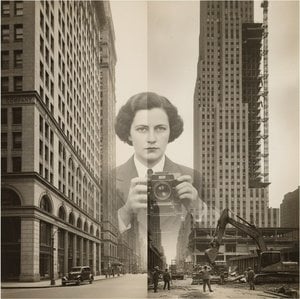
The post-war years marked a significant turning point in Webb’s career. Relocating to New York City in 1945, he immersed himself in the vibrant artistic circles of the time, forging friendships with luminaries such as Alfred Stieglitz, Georgia O’Keeffe, Beaumont Newhall, Berenice Abbott, and Minor White. This intellectual ferment fueled his ambitious project of photographing the streets of New York City, a sprawling urban tapestry teeming with life and energy. Armed with a large-format camera and tripod – tools that demanded patience and precision – Webb captured candid moments and architectural details, revealing beauty in the ordinary and earning him critical acclaim. His work for Fortune magazine under Roy Stryker further demonstrated his versatility, documenting oil industry operations with the same meticulous attention to detail he brought to his street photography. A solo show at the Museum of the City of New York in 1946 and inclusion in Edward Steichen’s landmark “The Family of Man” exhibition at MoMA in 1955 cemented his growing reputation. His subsequent sojourn to Paris with his wife Lucille from 1949-1953 resulted in a "vivid record" of the city, capturing its post-war reconstruction and the impact of the Marshall Plan.
Documenting America: Trails, Landscapes, and Legacy
Webb’s artistic exploration extended beyond urban centers. He received two successive John Simon Guggenheim fellowships in 1955 and 1956, enabling him to embark on a remarkable journey documenting the pioneer trails across America. He meticulously traced these early settler routes on foot and by various modes of transportation, capturing the vastness and beauty of the American West while simultaneously acknowledging the hardships and sacrifices of those who came before. Later assignments for the United Nations in Mexico and Africa broadened his geographical scope, further enriching his understanding of diverse cultures and landscapes. Throughout his career, Webb maintained close relationships with fellow artists, notably Georgia O’Keeffe, whose portraits revealed a nuanced perspective on the artist's quiet strength and their enduring friendship. He earned the moniker "historian with a camera" for his ability to document everyday life with clarity and depth, leaving behind a body of work that continues to resonate today. His commitment to straight photography contributed significantly to the evolution of documentary practice, influencing generations of photographers who followed in his footsteps. Today, Webb’s photographs are held in prestigious museum collections worldwide, solidifying his place as a master of 20th-century American photography – a subtle observer whose images reveal layers of complexity and beauty upon closer examination.