Sin Hak-Gwon: A Korean Master of Mountain Landscapes
Born in South Korea during the late Joseon Dynasty (1785-1866), Sin Hak-gwon, also known as Doam, stands as a pivotal figure in Korean landscape painting. His work transcends mere representation; it’s imbued with a profound sense of longing for the majestic Diamond Mountains (Geumgangsan) and reflects the cultural values deeply rooted within Joseon society – a harmonious blend of nature, spirituality, and artistic tradition. While his life remains somewhat shrouded in historical detail, his art speaks volumes about his era and his enduring connection to Korea’s most iconic mountain range.
Sin's artistic journey was profoundly shaped by the prevailing aesthetic principles of the Joseon Dynasty. The emphasis on balance, harmony, and simplicity, hallmarks of this period’s art movement, are clearly evident in his paintings. Unlike the Western tradition that often prioritized individual expression, Korean art during this time valued a connection to nature and a reflection of Confucian ideals – emphasizing respect for ancestors, social order, and the beauty of everyday life. Sin's work is particularly influenced by Jeong Seon (1676–1759), a celebrated Geumgang artist whom he deeply admired. He meticulously studied Jeong’s techniques, striving to capture not just the visual appearance of the mountains but also the emotional resonance they evoked.
The Art of the Diamond Mountains
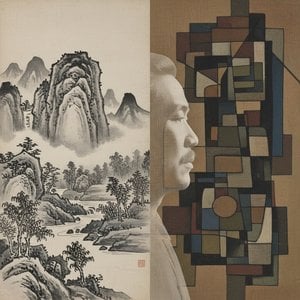
Sin Hak-gwon's most renowned works depict the Diamond Mountains – a range revered for their breathtaking beauty and spiritual significance. These paintings are far more than simple landscapes; they’re imbued with a sense of mystery, almost dreamlike quality. His signature style involves using rapid, double outlines to define the jagged peaks, creating an ethereal effect that suggests both grandeur and vulnerability. He masterfully employed ink wash techniques, layering delicate washes of color to capture the subtle nuances of light and shadow on the mountainsides.
Notably, Sin’s paintings often include small human figures traversing the mountain paths – a detail rarely found in traditional Korean landscape art. These figures, rendered with minimal detail, serve as a poignant reminder of humanity's connection to nature and the desire to experience its wonders. One particularly striking example is “General View of Inner Geumgang” (1861), which showcases his skill in capturing the vastness and complexity of the mountain range. The painting’s meticulous attention to detail, from the winding streams to the distant temples, reveals a deep understanding of Korean geography and culture.
Notable Works & Artistic Techniques
Beyond “General View of Inner Geumgang,” Sin Hak-gwon produced several other significant works, including "Mount Geumgang" (1866). “Mount Geumgang” exemplifies his ability to convey the serenity and majesty of the natural world through a simplified yet evocative composition. The painting’s use of horizontal brushstrokes creates a sense of spaciousness and tranquility, while the subtle variations in ink wash color capture the changing light conditions on the mountain slopes.
A fascinating aspect of Sin's work is his deliberate imitation of Jeong Seon’s style. He didn’t simply copy Jeong’s techniques; he sought to understand and internalize the artist’s philosophy, striving to capture the same sense of reverence for nature. The inclusion of human figures in his landscapes – a departure from traditional conventions – further demonstrates his desire to imbue his work with a personal touch and a deeper emotional resonance.
Legacy & Historical Significance
Sin Hak-gwon’s paintings represent a significant contribution to Korean art history. His works are not merely beautiful depictions of the Diamond Mountains; they embody the cultural values and artistic sensibilities of the Joseon Dynasty. His meticulous attention to detail, his masterful use of ink wash techniques, and his subtle yet profound exploration of human connection to nature have earned him a place among Korea’s most celebrated landscape artists.
Today, Sin Hak-gwon's paintings are housed in prestigious museums and collections around the world, including the National Museum of Korea. His work continues to inspire artists and art lovers alike, serving as a testament to the enduring beauty and spiritual significance of the Diamond Mountains – and to the artistic genius of Sin Hak-gwon.