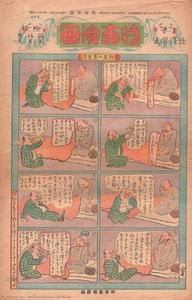
The Genesis of Manga: Kitazawa Rakuten’s Pioneering Vision
Kitazawa Rakuten (1876-1955), a name synonymous with the birth of modern manga, stands as an undeniable figure in Japanese artistic history. Born in Tokyo amidst the burgeoning industrialization and cultural dynamism of the late Meiji era, Rakuten’s journey from humble beginnings to international acclaim exemplifies unwavering dedication to his craft and a profound understanding of visual storytelling—a skillset that would irrevocably reshape Japan's artistic landscape. He wasn’t merely an artist; he was arguably the first professional cartoonist in Japan, establishing himself as a visionary who championed innovation and challenged conventional artistic boundaries.
- Early Life & Artistic Training:
- The Founding Father of Manga:
- Notable Works: Jiji Manga & Beyond:
- Influence on Subsequent Artists:
- Legacy and Historical Significance:
Early Life & Artistic Training
Rakuten’s formative years were steeped in traditional Nihonga painting, the Japanese style emphasizing subtle tonal gradations and expressive brushwork. Trained under renowned masters like Hiroshi Yoshida, he absorbed the principles of capturing atmospheric landscapes and conveying emotion through nuanced visual cues—skills that would later inform his distinctive approach to comic illustration. This grounding in classical aesthetics provided him with a foundational understanding of composition, color theory, and artistic technique – elements crucial for communicating narratives effectively.
The Founding Father of Manga
Rakuten’s contribution to art history transcends mere stylistic innovation; he fundamentally redefined what constituted “art.” In 1908, he established ‘Jiji Manga,’ a satirical comic strip published in the Tokyo Puck magazine—a groundbreaking endeavor that cemented his place as the inaugural professional cartoonist in Japan. More importantly, he coined the term 'manga' itself – originally referring to "pictures" or "drawings," Rakuten skillfully adapted it into its current form, encapsulating the essence of serialized visual storytelling and establishing a genre that would dominate Japanese popular culture for decades to come. He recognized the potential of combining narrative with illustration, anticipating the future direction of artistic expression.
Notable Works: Jiji Manga & Beyond
‘Jiji Manga’ remains Rakuten's most celebrated achievement, lauded for its witty commentary on social issues and its masterful execution of ukiyo-e techniques. The series tackled subjects ranging from political corruption to urban life, utilizing humor and caricature to provoke thought and engage audiences. However, Rakuten’s artistic output extended far beyond this single project. He continued to produce editorial cartoons throughout the tumultuous years of World War I and the interwar period, consistently demonstrating his ability to capture the zeitgeist of his time while maintaining a steadfast commitment to artistic excellence. His work appeared in publications like ‘Jiji Manga Series,’ showcasing his versatility and enduring appeal.
Influence on Subsequent Artists
Rakuten’s pioneering spirit ignited the imaginations of countless younger artists who would come to define the trajectory of manga as we know it today. He championed a style characterized by bold lines, vibrant colors, and dynamic compositions—elements that became hallmarks of the genre's aesthetic language. His insistence on storytelling alongside visual artistry served as an inspiration for generations of creators, shaping the very DNA of anime and manga production.
Legacy and Historical Significance
Kitazawa Rakuten’s legacy extends beyond his artistic accomplishments; he represents a pivotal moment in Japanese cultural history—the genesis of a global phenomenon. He irrevocably altered perceptions of art and storytelling, establishing manga as a powerful medium for social commentary and entertainment. His influence continues to resonate within the contemporary anime and manga industry, securing his place as an icon among artists and cementing his status as ‘The Father of Manga,’ a title justly earned through unwavering dedication to innovation and artistic vision.