John Randall Bratby: The Unsettling Vision of Kitchen Sink Realism
Born in Wimbledon, Surrey, in 1928, John Randall Bratby emerged as a pivotal figure in mid-20th century British art, largely through his pioneering role in the development of “Kitchen Sink Realism.” This movement, emerging from the post-war austerity and social anxieties of Britain, sought to depict the often-uncomfortable realities of everyday life – the drabness of working-class existence, domestic tensions, and a pervasive sense of disillusionment. Bratby’s work wasn't merely observational; it was intensely personal, deeply rooted in his own family life and imbued with a distinctive, unsettling emotional quality.
His early artistic training at Kingston College of Art and the Royal College of Art provided him with technical skills, but it was his encounter with Italy – a bursary-funded trip that ultimately proved unproductive – which fundamentally shaped his approach. Disillusioned by the idealized beauty he encountered, Bratby returned to England determined to capture the starkness and honesty of British life as he saw it. This rejection of romanticism fueled his commitment to portraying the mundane with unflinching detail and a deliberately unvarnished aesthetic.
The Birth of Kitchen Sink Realism
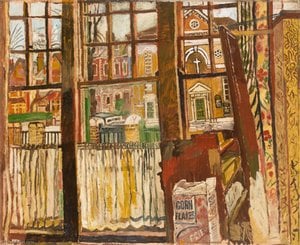
Bratby is widely considered the founder of Kitchen Sink Realism, though the movement’s roots were shared with other artists like Derrick Greaves, Edward Middleditch, and Jack Smith. This style distinguished itself by its deliberate rejection of traditional artistic conventions. Instead of idealized landscapes or heroic figures, Bratby focused on seemingly insignificant subjects – overflowing bins, stained bathrooms, worn furniture, and portraits of his family—transforming them into powerful statements about the realities of post-war Britain. The use of thick impasto, bold colors, and a deliberately rough technique further emphasized the physicality and immediacy of his work.
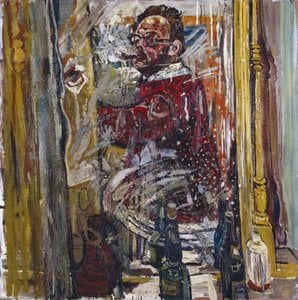
Crucially, Bratby’s subjects weren't presented with romanticism or pity. His family portraits, for example, often depicted individuals with weary faces, strained expressions, and a palpable sense of unease. He wasn’t interested in celebrating domestic bliss; rather, he aimed to expose the underlying tensions and anxieties that simmered beneath the surface of middle-class life. This unflinching honesty contributed significantly to the movement's provocative nature.
A Career Bridging Art and Popular Culture
Bratby’s artistic career was remarkably diverse, encompassing painting, sculpture, set design, and writing. He gained significant recognition through his work for Alec Guinness’s 1958 film *The Horse's Mouth*, creating a series of paintings that were prominently featured on the cover of Mark Knopfler’s album *Kill to Get Crimson* in 2007. This exposure brought him wider public attention, though it also contributed to a degree of misinterpretation – Bratby was often associated with the film’s fictional artist, Gulley Jimson, rather than his own distinct style.
Beyond his visual art, Bratby was a prolific writer, producing novels such as *Breakdown* and *Breakfast and Elevenses*, which explored themes of domestic conflict and psychological distress. His writing reflected the same raw honesty and emotional intensity that characterized his paintings. He also served as editor in chief for Art Quarterly from 1987-1992.
Personal Life and Complex Relationships
Bratby’s personal life was marked by both artistic passion and considerable turmoil. His marriage to Jean Cooke, a fellow artist, began with promise but deteriorated into a fraught relationship characterized by jealousy, control, and ultimately, violence. He famously locked her in their bedroom during the courtship, reflecting a controlling nature that would continue throughout their marriage. Despite this difficult dynamic, Bratby remained deeply devoted to his family, producing numerous portraits of his wife and children.
His later remarriage to Patti Prime brought a period of relative stability, but the scars of his previous relationships undoubtedly influenced his artistic vision. The complexities of his personal life—his struggles with intimacy, his anxieties about recognition, and his deep-seated emotional vulnerabilities—are powerfully reflected in his art, adding layers of meaning to his depictions of family and domesticity.
Legacy and Historical Significance
Despite initial critical indifference, Bratby’s work gradually gained recognition as a significant contribution to British art history. His unflinching portrayal of everyday life, coupled with his distinctive visual style, cemented his place as a key figure in the Kitchen Sink movement. While often overshadowed by more commercially successful artists of the era, Bratby's influence can be seen in the works of subsequent generations of British painters and filmmakers who sought to capture the complexities and contradictions of post-war society.
Today, John Randall Bratby’s paintings are valued for their raw emotional power, their unflinching honesty, and their unique contribution to the visual language of Kitchen Sink Realism. His legacy continues to resonate with audiences who appreciate art that dares to confront uncomfortable truths about the human condition.