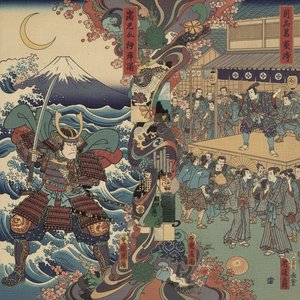
Sesshū Tōyō: A Pioneer of Japanese Landscape Painting
Sesshū Tōyō (1420 – August 26, 1506) stands as one of Japan’s most revered artists, celebrated for his mastery of sumi-e—the monochrome ink wash painting technique—and profoundly influencing the aesthetic sensibilities of Edo period Japan. Born into a noble samurai family in Bitchu Province, Sesshū's early life was marked by rigorous Buddhist training and exposure to influential Zen masters who instilled within him a deep appreciation for simplicity, contemplation, and capturing the essence of nature. This formative experience would become the cornerstone of his artistic vision—a vision that continues to inspire artists today.
- Early Life & Training: Sesshū’s upbringing fostered a disciplined mind and an unwavering devotion to Zen Buddhism. He began his monastic life at a young age, studying under renowned masters like Tensho Shubun and Taikō Shojetsu, absorbing their teachings on meditation and perceiving the world through a lens of profound spiritual insight.
- Journey to China (1482-1493): Recognizing the importance of artistic inspiration, Sesshū embarked on an ambitious pilgrimage to China—a pivotal moment that irrevocably shaped his artistic trajectory. During this trip, he encountered and studied alongside prominent Chinese landscape painters, absorbing their techniques and stylistic approaches. This exposure ignited a passion for capturing the grandeur and subtlety of the natural world in ink wash paintings.
- Return to Japan & Artistic Flourishing: Upon returning from China, Sesshū established his studio in Oita Prefecture and served as a trusted advisor to the Otomo clan—a position that afforded him considerable patronage and allowed him to dedicate himself fully to artistic pursuits. He continued to refine his skills, experimenting with innovative compositions and exploring new expressive possibilities within sumi-e.
The Essence of Sesshū’s Style: Sumi-e and Landscape Representation
Sesshū's distinctive style—characterized by its austere beauty and profound spiritual depth—centered around the masterful application of sumi-e ink wash painting. Unlike Western art traditions that prioritize color and detail, Sesshū sought to convey not merely what he saw but what he *felt*. He achieved this remarkable feat through a deceptively simple technique: utilizing black ink alone—often combined with mineral pigments—to depict landscapes imbued with atmospheric perspective and subtle tonal variations. This approach wasn’t about literal representation; it was about distilling the spirit of nature into its purest form.
- Minimalist Composition: Sesshū favored sparse compositions, employing minimal brushstrokes to suggest vast expanses of mountains, rivers, and trees. He skillfully manipulated ink density and texture—creating areas of intense darkness juxtaposed with luminous highlights—to evoke a sense of depth and dynamism.
- Atmospheric Perspective: Sesshū’s landscapes were imbued with an uncanny ability to capture the elusive qualities of air and light. Through careful layering of ink washes, he created a convincing illusion of distance, conveying the grandeur of mountainous vistas and the serenity of tranquil waters.
- Expressive Brushwork: Sesshū's brushstrokes—often bold and decisive—were imbued with emotion and intention. He employed varied strokes to depict textures ranging from rough rock formations to smooth water surfaces, demonstrating an unparalleled command of ink wash technique.
Influences & Legacy
Sesshū’s artistic vision drew inspiration from both Zen Buddhism and Chinese landscape painting traditions—influences that profoundly shaped his aesthetic sensibilities and stylistic innovations. The Zen emphasis on emptiness and contemplation permeated his art, prompting him to seek beauty in simplicity and to convey a sense of spiritual harmony. Simultaneously, he absorbed the techniques and compositional principles of prominent Chinese masters like Xingxiu Yuanqi and Wang Meng—artists who championed similar approaches to landscape representation.
- Zen Buddhism: Sesshū’s Buddhist beliefs instilled within him a reverence for nature as a manifestation of enlightenment—a conviction that fueled his artistic exploration of stillness, contemplation, and the sublime beauty of the natural world.
- Chinese Landscape Painting Tradition: Sesshū's journey to China exposed him to groundbreaking techniques and stylistic ideas—influences that solidified his commitment to capturing the essence of nature through minimalist compositions and atmospheric perspective.
- Impact on Edo Period Art: Sesshū’s artistic legacy extended far beyond his lifetime, establishing him as a foundational figure in Edo period art—a movement characterized by its refined aesthetic sensibilities and unwavering devotion to traditional Japanese aesthetics. His work continues to inspire artists today, serving as a testament to the enduring power of simplicity, contemplation, and capturing the spirit of nature.
Major Achievements & Recognition
Sesshū Tōyō achieved unparalleled renown during his lifetime—recognized as one of Japan’s greatest painters and revered for his mastery of sumi-e. His landscapes—particularly those depicting Mount Fuji—became iconic symbols of Japanese artistic excellence, embodying the ideals of tranquility, harmony, and spiritual contemplation. Furthermore, Sesshū's influence extended beyond painting itself—inspiring subsequent generations of artists to explore similar stylistic approaches and thematic concerns. He is remembered not merely as a skilled craftsman but as a visionary artist who profoundly shaped the cultural landscape of Edo Japan and whose work continues to resonate with audiences worldwide.