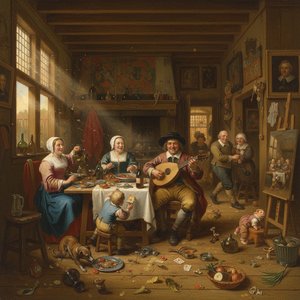
Adriaen Jansz van Ostade: A Pioneer of Dutch Genre Painting
Adriaen Jansz van Ostade (1610 – 1685) stands as a cornerstone figure in the history of Dutch Golden Age art, celebrated primarily for his masterful depictions of everyday life—specifically scenes portraying rural communities and domestic interiors. Unlike many of his contemporaries who focused on grand portraits or mythological subjects, Ostade dedicated himself to capturing the nuances of ordinary existence with remarkable realism and psychological insight.
- Early Life & Training: Born in Haarlem, Ostade’s artistic lineage traced back to Jan Hendricx van Eyndhoven, a tapestry weaver. His formative years were spent under the tutelage of Frans Hals and Isaack Jansz van Ostade, both influential painters who championed a looser brushstroke style—a stylistic departure from prevailing academic conventions.
- Distinctive Style: Ostade’s artistic signature is characterized by meticulous detail combined with subtle chiaroscuro (light and shadow), creating an atmosphere of palpable authenticity. He possessed an unparalleled ability to render textures – clothing, furniture, landscapes – conveying a profound sense of materiality. His palette favored muted tones—often dominated by browns and grays—reflecting the subdued lighting prevalent in his genre scenes.
- Subject Matter & Themes: Ostade’s oeuvre revolved around themes central to Dutch society during his time: tavern gatherings, village fairs, peasant families engaged in domestic activities. He skillfully conveyed emotion through facial expressions and gestures, capturing the complexities of human relationships with sensitivity and nuance. Recurring motifs included musical instruments—particularly pipes—symbolizing merriment and social interaction.
- Influences & Legacy: Ostade’s artistic vision was profoundly shaped by Frans Hals's expressive portraiture and Isaack Jansz van Ostade’s exploration of rural landscapes. However, he diverged from his brother’s style, prioritizing psychological realism over stylistic imitation. His influence extended beyond his immediate peers; he paved the way for subsequent artists like David Teniers the Younger who embraced similar genre conventions.
- Major Works & Recognition: Among Ostade's most celebrated paintings are *Saying Grace*, a poignant portrayal of religious devotion imbued with understated beauty, and *A Laughing Peasant*, which exemplifies his ability to convey humor and emotion through facial expression. His prolific output—spanning over 50 etchings—further solidified his reputation as a virtuoso printmaker.
Ostade’s contribution to art history transcends mere stylistic innovation; he championed an artistic approach rooted in observation and empathy, capturing the spirit of his era with enduring power. His legacy continues to inspire artists today who strive for authenticity and psychological depth—a testament to his enduring influence on the trajectory of Dutch genre painting.