Expressionism Explained: A Professional Guide to Bold Colors and Emotional Depth for Interior Designers
Master the use of Expressionism in hospitality design. Learn how bold colors and distorted forms create emotional impact in hotel interiors through expert guidance on sourcing high-quality, hand-painted reproductions and large-format custom commissions for professional decorators.
The Subjective Lens: Defining Expressionism and the Rejection of Naturalism Expressionism Expressionism is a modernist movement, initially in poetry and painting, originating in Northern Europe around the beginning of the 20th century. Its typical tr...
To understand the profound impact of Expressionism on modern interior landscapes, one must first recognize it as a radical departure from the ocularcentrism of previous eras. While the Impressionists sought to capture the fleeting dance of light upon a surface and the Realists aimed for an unvarnished depiction of social truth, the Expressionists turned their gaze inward. Emerging primarily in Northern Europe at the dawn of the 20th century, this movement was not merely a stylistic choice but a psychological necessity. It functioned as a rejection of positivism—the belief that reality could be measured and understood through external observation alone. Instead, these artists embraced a subjective perspective, where the world was distorted, stretched, and recolored to mirror the turbulent currents of the human psyche.
This era was marked by a profound sense of transition, as rapid industrialization and the looming shadow of global conflict fractured the traditional certainties of European life. The Expressionist artist did not wish to paint what they saw, but rather how that sight resonated within the soul. By abandoning the constraints of anatomical accuracy and atmospheric perspective, they created a visual language capable of articulating anxiety, alienation, and ecstasy. It was an art of the inner landscape, where the boundaries between the observer and the observed dissolved, leaving behind only the raw, unmediated essence of emotional experience. For the modern designer, this movement offers a toolkit for creating spaces that do not just house guests, but engage them on a visceral level.
The Visual Language of Tension: Analyzing Distorted Forms and Non-Naturalistic Color
The Genesis of Color Understanding: From Newton to Goethe Wikipedia: Color theory Color theory, or more specifically traditional color theory, is a historical body of knowledge describing the behavior of colors — namely in color mixing, color contras...
The aesthetic power of Expressionism lies in its ability to use visual dissonance as a tool for communication. In Expressionist painting, colors often appear intense and non-naturalistic, serving as direct conduits for emotion rather than descriptors of light. This use of chromatic harmony and discord allows a designer to manipulate the mood of a room with surgical precision. When we observe the works of masters like Ernst Ludwig Kirchner or Emil Nolde, we see vibrant, often jarring hues that reflect a period of intense spiritual yearning. These colors do not merely decorate; they provoke.
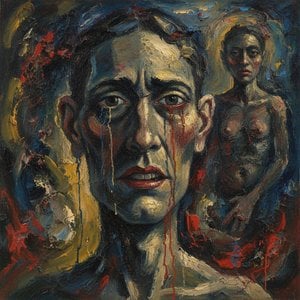
Complementing this palette is the use of exaggerated and distorted forms. The movement rejected the rigid, cold geometry of traditionalism in favor of organic, flowing, or even fractured lines. This distortion serves to externalize internal turmoil, making the canvas a site of intense personal expression. In a professional design context, integrating these elements means moving beyond mere decoration toward architectural storytelling. By utilizing pieces that feature thick, visible brushstrokes and an impasto texture, a designer can introduce a sense of movement and energy that breaks the monotony of static, contemporary environments. The physical depth of a hand-painted oil reproduction, with its tactile ridges and shadows, provides a sensory richness that flat prints simply cannot replicate.
Expressionist Architecture and Design: Integrating Organic Lines into Modern Interiors
Expressionist architecture was an architectural movement in Europe during the first decades of the 20th century in parallel with the expressionist visual and performing arts that especially developed and dominated in Germany. Brick Expressionism is a...
The influence of Expressionism extends far beyond the canvas, permeating the very structures we inhabit. Expressionist architecture emerged as a parallel movement in Europe, characterized by an early-modernist adoption of novel materials and formal innovation. This style often utilized unusual massing and biomorphic forms, sometimes inspired by the new technical possibilities offered by the mass production of brick, steel, and glass. A prime example can be found in Brick Expressionism, a variant prevalent in Northern Germany and the Netherlands, where undulating surfaces and textured facades create a sense of rhythmic movement.
For the hotel designer, this architectural legacy offers profound inspiration for creating "living" spaces. The Böttcherstraße Museums in Bremen serve as a masterclass in this regard; here, the architecture does not simply house art but participates in it. By incorporating elements that echo these organic, flowing lines—such as textured wall treatments or curved structural motifs—designers can evoke the raw, emotional energy of the movement. This approach moves away from the sterile and toward the experiential, allowing a lobby or lounge to feel like a curated masterpiece where every surface tells a story of artistic rebellion and structural soul.
Strategic Implementation: Using Expressionist Masterpieces for High-Impact Hospitality Spaces
Introduction To gaze upon these ten canvases is to step into a world ablaze with inner turmoil, raw emotion, and a defiant rejection of conventional beauty. These are not paintings that merely represent reality; they become it – fractured, distorted,...
In the competitive landscape of hospitality design, the ability to create an unforgettable atmosphere is paramount. Expressionism provides the perfect vehicle for high-impact, large-scale installations that define a brand's identity. Because Expressionist works are inherently provocative and deeply moving, they serve as excellent focal points in grand lobbies, corridors, or dining halls. The strategic use of multi-panel group sets—splitting a single, powerful image across three, four, or five panels—can transform a wide, daunting wall into a cohesive narrative of color and form.
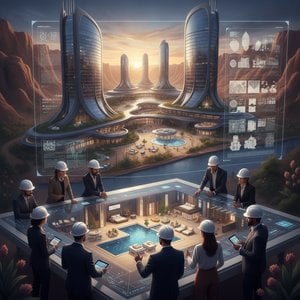
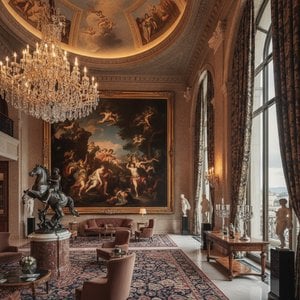
Implementing these works requires a balance between intensity and cohesion. A designer might choose to pair the jarring colors of an Expressionist painting with more muted, neutral architectural finishes to allow the artwork to breathe, or conversely, lean into the movement by using custom murals and frescoes that wrap around entire ceilings. The goal is to use the art as a catalyst for conversation and emotional connection. Whether it is through a single, commanding portrait that offers psychological depth or a series of abstract landscapes that evoke an otherworldly atmosphere, Expressionism allows a designer to move beyond the superficial and create spaces that resonate with the human condition.
Curating the Collection: Sourcing Large-Format Reproductions and Custom Commissions
Paul Klee, a Swiss-born German painter (1879-1940), was celebrated for his unique blend of expressionism, cubism, and surrealism. A master draftsman with a profound understanding of color theory, Klee's impact on modern art is evidenced by his theore...
For procurement managers and designers tasked with furnishing large-scale projects, the challenge lies in finding art that is both impactful and logistically viable. The modern designer requires a reliable partner who can provide museum-quality reproductions that meet strict budgetary and timeline constraints. This is where the distinction between a simple print and a hand-painted oil reproduction becomes critical. A true reproduction, painted by hand on 100% cotton canvas, offers the depth of tone, visible brushwork, and physical texture necessary to command attention in a professional setting.
When executing complex design visions, the ability to customize is an invaluable asset. The capacity to "remix" art history—such as requesting a contemporary photograph be reimagined in the impasto style of a master—allows for unparalleled creative freedom. Furthermore, for large-scale architectural projects, sourcing large-format murals that can be installed similarly to high-end wallpaper ensures that even the most ambitious visions are achievable. By working with specialized services that offer professional digital mockups and project coordination, designers can ensure that every piece of art is perfectly scaled, color-matched, and delivered with the operational reliability required for global hospitality standards.
***
*This article was prepared by the editorial team at WahooArt.com, a global leader in providing authentic, hand-painted art reproductions and custom commissions for professionals and collectors worldwide.*
Από την επιβλεπόμενη ομάδα της WahooArt.com
Μάρκος Ρόθκο
b. 1903 · Δαυγαβπύλς, Λατινική Ευρώπη
Ανακαλύψτε τον Μάρκο Ρόθκο και την εκθαμβωτική δύναμη των έργων του Color Field! Ένας πρωτοποριακός καλλιτέχνης που επηρεάζει τη σύγχρονη τέχνη με βαθιά συναισθηματική αφήγηση.
Ο Φρανς Μάρκ (1880-1916): Ένας πρωτοποριακός Γερμανός ζωγράφος του εξπρεσιονισμού, γνωστός για τα ζώα του με έντονες χρωματικές αποχρώσεις και πνευματικό νόημα. Ανακαλύψτε το έργο του!
Optimize your large-scale hospitality projects with high-impact, vibrant color artworks. Our professional guide for hotel designers covers bulk procurement of hand-painted oil reproductions, custom multi-panel layouts, and seamless global logistics for commercial art installations.
Master large-scale art procurement with our guide for hotel designers. Learn to leverage digital illustration, custom mockups, and efficient bulk ordering to scale high-quality, hand-painted reproductions across global hospitality projects with precision and cost-efficiency.
Elevate commercial interiors with premium Mexican Muralism reproductions. Our guide for hotel designers covers large-scale Diego Rivera-style murals, custom sizing, and bulk procurement solutions for high-impact hospitality spaces. Reliable global shipping and professional art consultation.
Elevate your hotel design with expertly crafted art reproductions & bespoke commissions. Discover how strategic artwork selection enhances guest experience, brand identity & ROI. Expert guidance from WahooArt.
A professional guide for hotel designers and procurement managers on sourcing dramatic Baroque masterpieces. Discover how large-scale, hand-painted oil reproductions can transform hospitality interiors with scale, texture, and timeless luxury.
Γεια σας! Μπορώ να σας βοηθήσω στην επιλογή ενός έργου τέχνης, στην παρακολούθηση μιας παραγγελίας ή στην απάντηση ερωτήσεων σχετικά με την εγγύηση. Πώς μπορώ να σας φανώ χρήσιμος;



 Beyond the Surface: The Raw Emotion and Subjective Truth of Expressionist Portraiture
 Chromatic Harmonies & Discord: A History of Color Theory in Art
 Expressionist architecture
 Expressionist Painting: 10 Masterpieces That Defined a Movement | WahooArt
 Park of idols