Πώληση
x
Δείτε σε πραγματικό χώροΔείτε σε πραγματικό χώρο Προεπισκόπηση σε ARΠροεπισκόπηση σε AR Αγορά εκτύπωσης Αγορά εκτύπωσηςΑγορά ψηφιακής εικόνας Αγορά ψηφιακής εικόνας ΑποστολήΑποστολή
ΛεπτομέρειεςΛεπτομέρειες Προσθήκη στα αγαπημένα Προσθήκη στα αγαπημένα ΛήψηΛήψη Παρόμοια αντικείμενα συλλογήςΠαρόμοια αντικείμενα συλλογής ΑκτινογραφίαΑκτινογραφία ΠαρουσίασηΠαρουσίαση

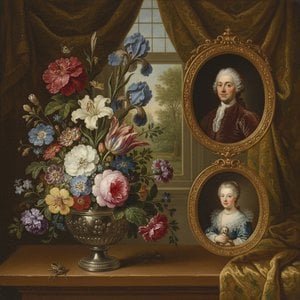
A Vase of Flowers

Explore Jan van Kessel’s ‘A Vase of Flowers,’ a stunning Dutch Golden Age still life brimming with vibrant blooms & intricate detail. Admire its dramatic lighting & symbolic depth.

Explore Jan van Kessel the Elder’s exquisite floral still lifes & insect studies! A Brueghel descendant, he captured 17th-century nature with scientific precision.

Χειροποίητη Αναπαραγωγή σε Έλαιο

Χειροποίητη oil painting σε καμβά στο δικό σας μέγεθος και πλαίσιο, κατά παραγγελία από τους καλλιτέχνες μας. (Αγορά εκτύπωσης Αγορά εκτύπωσηςΑγορά ψηφιακής εικόνας Αγορά ψηφιακής εικόνας)

Standard
custom
CM
INCH

Επιλέξτε από τις προκαθορισμένες διαστάσεις μας που διατηρούν τις αρχικές αναλογίες του έργου τέχνης.

πλάτος
ύψος

Μπορείτε να ορίσετε δικές σας διαστάσεις ώστε το έργο να ταιριάζει σε ένα συγκεκριμένο πλαίσιο ή χώρο. Εάν το επιλεγμένο μέγεθος δεν συμπίπτει με τις αναλογίες της αρχικής εικόνας, θα περικοψούμε το έργο ή θα επεκτείνουμε τη ζωγραφιά με πρόσθετα χειρόγραφα στοιχεία. Ένα ψηφιακό προσχέδιο θα σας αποσταλεί για έγκριση πριν την έναρξη της παραγωγής.
Παρακαλούμε σημειώστε ότι η προεπισκόπηση στην οθόνη δεν αντικατοπτρίζει την πραγματική περικοπή ή επέκταση. Μόνο το προσχέδιο θα δείξει με ακρίβεια την τελική σύνθεση.
Παρόλο που είναι διαθέσιμα προσαρμοσμένα μεγέθη, συνιστούμε να επιλέξετε μια διάσταση από τη λίστα των προκαθορισμένων μεγεθών για τη διατήρηση των αρχικών αναλογιών.

Παραδείγματα αλλαγών: Αντικατάσταση προσώπου με φωτογραφία του πελάτη· Προσθήκη κατοικίδιου (π.χ., αντικατάσταση γάτας με σκύλο)· Ενσωμάτωση κρυφού μηνύματος στο φόντο· Αλλαγή τοπίου ή στοιχείων του φόντου.
Μετά την παραγγελία, η ομάδα του WahooArt.com θα στείλει email στον πελάτη με οδηγίες και θα παρέχει μια προεπισκόπηση προσχεδίου

Παγκόσμια Αποστολή () σε 3-4 εβδομάδες αντί για τις συνήθεις 5 εβδομάδες. (15 Αύγουστος). Χωρίς συμβιβασμούς στην ποιότητα.

why_choose_icon
Δωρεάν γρήγορη διεθνής αποστολή
why_choose_icon
Κάμβας από Λινό Υψηλής Ποιότητας
why_choose_icon
Πλήρης ασφάλιση μεταφοράς
why_choose_icon
Εγγύηση Επιστροφής Δασμών και Φόρων
why_choose_icon
Εγγύηση Απόλυτης Ομοιότητας Χρωμάτων
why_choose_icon
Πολιτική Επιστροφής 60 Ημερών (Μόνο σε περίπτωση ελαττωμάτων)
why_choose_icon
Εγγύηση επιστροφής 100% των χρημάτων
why_choose_icon
Προσφορά για μαζικές παραγγελίες

Συνολική Τιμή

$ 272

reproduction

A Vase of Flowers

Μέσο Αναπαραγωγής

Διαστάσεις Αναπαραγωγής

-

Συνολική Τιμή

$ 272


Βιογραφία Καλλιτέχνη

A Legacy of Miniature Wonders: The Life of Jan van Kessel the Elder

In the vibrant, bustling heart of seventeenth-century Antwerp, a period defined by both artistic splendor and scientific awakening, Jan van Kessel the Elder emerged as a master of the minute. Born in 1626 into one of the most illustrious artistic dynasties in Flemish history, Kessel was more than just a painter; he was a visual chronicler of the natural world. As the grandson of the legendary Jan Brueghel the Elder and the son of Hieronymus van Kessel the Younger, his very existence was woven into the fabric of the Northern Mannerist tradition. Yet, while he inherited a profound respect for the allegorical depth and lush landscapes of his forebears, Kessel sought to capture something far more intimate: the hidden, microscopic marvels that resided in the shadows of gardens and the delicate veins of flower petals.

His early training was a rigorous immersion into the Antwerp school, shaped by the disciplined observation required of a true blomschilder. By joining the Guild of Saint Luke in 1644, he formally committed himself to the art of botanical painting. This period of his life was marked by an extraordinary synthesis of artistic flair and scientific curiosity. Influenced by the works of masters like Daniel Seghers and Joris Hoefnagel, Kessel did not merely paint flowers; he studied them with the eye of a naturalist. His work became a bridge between the aesthetic beauty of the Baroque era and the burgeoning empirical spirit of the Scientific Revolution, turning the canvas into a window through which the wonders of entomology and botany could be examined by the curious minds of Europe.

The Art of Precision: Technique and Subject Matter

To gaze upon a true Kessel masterpiece is to enter a realm where scale disappears and detail reigns supreme. He was particularly renowned for his use of copper panels, a medium that provided a luminous, smooth surface capable of supporting his incredibly fine brushwork. This choice of support allowed him to achieve a level of brilliance and clarity that oil on canvas often struggled to match. On these gleaming surfaces, Kessel rendered the iridescent wings of butterflies, the translucent bodies of beetles, and the velvety textures of rose petals with such startling accuracy that his paintings often functioned as miniature encyclopedological studies.

His repertoire was as diverse as the natural world itself, ranging from:

  • Exquisite Floral Still Lifes: Lavish bouquets and garlands that celebrated the ephemeral beauty of seasonal blooms.
  • Entomological Studies: Meticulous depictions of insects, often arranged in compositions that mirrored the "cabinets of curiosities" so beloved by the era's collectors.
  • Allegorical Compositions: Larger-scale works where he utilized animals and elements to represent complex themes such as the Four Continents or the Four Elements.
  • Landscape and Marine Scenes: Occasional forays into river landscapes and maritime subjects that showcased his versatility beyond the microscopic.

There is a profound sense of wonder in his ability to manipulate nature through artifice. In his hands, a simple sprig of rosemary becomes a stage for a drama of tiny creatures, and a single butterfly becomes a jewel of light and color. This mastery of the miniature allowed his works to be highly prized by a sophisticated clientele, including wealthy merchants, nobles, and foreign luminaries who sought to possess these small, portable wonders within their private collections.

Historical Significance and Enduring Influence

The significance of Jan van Kessel the Elder extends far beyond the borders of Antwerp. He represents a pivotal moment in art history when the boundaries between the artist's studio and the scientist's laboratory began to blur. His ability to infuse scientific accuracy with aesthetic elegance helped define the Flemish Baroque style for a generation. Through his meticulous documentation of species, he contributed to the cultural zeitgeist of an age obsessed with discovery and the cataloging of the unknown.

Though his life was cut short in 1679, his influence persisted through his family and his enduring impact on the genre of still life. His descendants continued the family tradition, ensuring that the Kessel name remained synonymous with botanical excellence. Today, when we look at his works in institutions such as the National Gallery of Art, we do not merely see old paintings; we see the heartbeat of a century that dared to look closer, finding infinite complexity in the smallest of living things. He remains a testament to the idea that true greatness is often found not in the grand and sweeping gesture, but in the quiet, breathtaking precision of a single, perfectly rendered wing.

Γρήγορα στοιχεία

  • Artistic Movement Or Style: Baroque
  • Artists Who Influenced This Artist:
    • Jan Bruegel the Elder
    • Simon de Vos
    • Daniel Seghers
    • Joris Hoefnagel
    • Frans Snijders
  • Date Of Birth: 1626
  • Date Of Death: 1679
  • Full Name: Jan van Kessel the Elder
  • Nationality: Flemish
  • Notable Artworks:
    • Vanitas Still Life
    • A river landscape with a windmill
    • The Mockery of the Owl
  • Place Of Birth: Antwerp