Προεπισκόπηση Προεπισκόπηση σε AR Μετάβαση σε Εκτυπώσεις Μετάβαση σε Ψηφιακή Εικόνα Αποστολή
Λεπτομέρειες Οδηγός Προσθήκη στα αγαπημένα Λήψη Παρόμοια αντικείμενα συλλογής Ακτινογραφία Παρουσίαση Στατιστικά

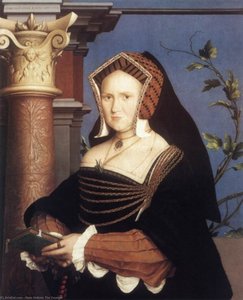
Portrait of Lady Guildford

Ο Χανς Χολμπίν ο Νέος (1497-1543): Ένας κορυφαίος ζωγράφος της Αναγέννησης με εκπληκτικό ρεαλισμό και ψυχική εμβέλεια, γνωστός για τα πορτρέτα του Βασιλιά Εδουάρδου Ζ΄ και την ακριβή λεπτομέρειά του.

Χειροποίητη Αναπαραγωγή σε Έλαιο

Χειροποίητη ελαιογραφία σε καμβά στο δικό σας μέγεθος και πλαίσιο, κατά παραγγελία από τους καλλιτέχνες μας. ( Μετάβαση σε Εκτυπώσεις Μετάβαση σε Ψηφιακή Εικόνα)

P118B $10
P118H $10
P118W $10
P438Z $10
P508JH $12
P508YH $12
P805H $10
P805Z $10
P919BZ $10
P919G $10
P919XJ $10
P959ZH $10
P968JZ $12
W106C $8
W218G $10
W218JH $8
W218Y $10
W307PJ $10
W316G $10
W316PJ $8
W316Y $10
W398PJ $8
W4111J $10
W500HY $15
W500JH $15
W692G $12
W849H $8
W940BG $15
W953PJ $8

Πρότυπο
κατόπιν παραγγελίας
CM
INCH

Επιλέξτε από τις προκαθορισμένες διαστάσεις μας που διατηρούν τις αρχικές αναλογίες του έργου τέχνης.

πλάτος
ύψος

Μπορείτε να ορίσετε δικές σας διαστάσεις ώστε το έργο να ταιριάζει σε ένα συγκεκριμένο πλαίσιο ή χώρο. Εάν το επιλεγμένο μέγεθος δεν συμπίπτει με τις αναλογίες της αρχικής εικόνας, θα περικοψούμε το έργο ή θα επεκτείνουμε τη ζωγραφιά με πρόσθετα χειρόγραφα στοιχεία. Ένα ψηφιακό προσχέδιο θα σας αποσταλεί για έγκριση πριν την έναρξη της παραγωγής.
Παρακαλούμε σημειώστε ότι η προεπισκόπηση στην οθόνη δεν αντικατοπτρίζει την πραγματική περικοπή ή επέκταση. Μόνο το προσχέδιο θα δείξει με ακρίβεια την τελική σύνθεση.
Παρόλο που είναι διαθέσιμα προσαρμοσμένα μεγέθη, συνιστούμε να επιλέξετε μια διάσταση από τη λίστα των προκαθορισμένων μεγεθών για τη διατήρηση των αρχικών αναλογιών.

Παραδείγματα αλλαγών: Αντικατάσταση προσώπου με φωτογραφία του πελάτη· Προσθήκη κατοικίδιου (π.χ., αντικατάσταση γάτας με σκύλο)· Ενσωμάτωση κρυφού μηνύματος στο φόντο· Αλλαγή τοπίου ή στοιχείων του φόντου.
Μετά την παραγγελία, η ομάδα του WahooArt.com θα στείλει email στον πελάτη με οδηγίες και θα παρέχει μια προεπισκόπηση προσχεδίου

Παγκόσμια Αποστολή () σε 3-4 εβδομάδες αντί για τις συνήθεις 5 εβδομάδες. (22 Σεπτέμβριος). Χωρίς συμβιβασμούς στην ποιότητα.

why_choose_icon
Δωρεάν γρήγορη διεθνής αποστολή
why_choose_icon
Κάμβας από Λινό Υψηλής Ποιότητας
why_choose_icon
Πλήρης ασφάλιση μεταφοράς
why_choose_icon
Εγγύηση επιστροφής δασμών και φόρων εισαγωγής
why_choose_icon
Εγγύηση Απόλυτης Ομοιότητας Χρωμάτων
why_choose_icon
Πολιτική Επιστροφής 100 Ημερών (Μόνο σε περίπτωση ελαττωμάτων)
why_choose_icon
Εγγύηση επιστροφής 100% των χρημάτων
why_choose_icon
Έκπτωση για πολλαπλές παραγγελίες

Συνολική Τιμή

$ 272

reproduction

Portrait of Lady Guildford

Τεχνική Αναπαραγωγής

Διαστάσεις Αναπαραγωγής

-

Συνολικό Κόστος

$ 272

Βασικά στοιχεία

  • Location: Kupferstichkabinett, Germany
  • Influences: Erasmus
  • Title: Portrait of Lady Guildford
  • Subject or theme: Portraiture; Female figure
  • Dimensions: 55 x 38 cm
  • Movement: Northern Renaissance
  • Artistic style: Late Gothic influence; Italian Renaissance humanism

A Window into Tudor Elegance: Exploring Hans Holbein the Younger’s Portrait of Lady Guildford

Hans Holbein the Younger's “Portrait of Lady Guildford,” painted in 1527, stands as a cornerstone of Northern Renaissance portraiture—a captivating glimpse into the opulent world of Henry VIII’s court and an enduring testament to Holbein’s unparalleled ability to capture both physical likeness and psychological nuance. Currently residing at the Kupferstichkabinett in Germany, this oil on panel masterpiece transcends mere representation; it embodies a carefully crafted narrative of status, piety, and refined intellect.

  • Artist Background: Holbein’s formative years were spent honing his craft within his father’s Augsburg workshop, where he absorbed the principles of meticulous observation and masterful technique—skills that would propel him to international acclaim as a portraitist of humanist luminaries like Erasmus. His distinctive style fused Late Gothic traditions with influences from Italy, France, and the Netherlands, underpinned by the humanist ideals prevalent during his time.
  • The Painting’s Composition: The portrait depicts Lady Guildford—likely Mary Wotton—dressed in sumptuous black attire adorned with a pristine white collar. Positioned beside a pillar, she gazes directly at the viewer with an unwavering gaze, conveying composure and dignity. This deliberate framing underscores her elevated social standing and invites contemplation on her inner life.
  • Technique & Style: Holbein’s signature technique—characterized by painstaking detail and subtle shading—is evident throughout the painting. He skillfully employed chiaroscuro – the dramatic interplay of light and dark – to sculpt Lady Guildford's form, emphasizing contours and creating a sense of depth that transcends mere surface appearance. The meticulous rendering of fabrics and jewelry speaks volumes about the wealth and sophistication of her surroundings.

Symbolism: Layers of Meaning Beyond Appearance

Beyond its striking visual qualities lies a rich tapestry of symbolism. Lady Guildford’s book symbolizes erudition and piety—qualities highly valued during the Tudor period, reflecting her noble upbringing and adherence to religious faith. The pillar serves as a visual anchor, representing stability and authority – mirroring the power structure of Henry VIII's court.

Historical Context: Tudor England & Renaissance Humanism

Painted amidst the turbulent backdrop of Reformation England, “Portrait of Lady Guildford” reflects the broader intellectual currents of the Renaissance. Holbein’s work aligns seamlessly with humanist ideals—a fascination for human anatomy and psychology—demonstrating a profound understanding of his subject's inner world alongside her outward presentation. This painting exemplifies the artistic ambition to portray not just what is seen but also what is felt.

Emotional Impact & Legacy

"Portrait of Lady Guildford" continues to captivate viewers centuries later, offering an intimate portrait of a woman who embodies grace and intelligence within a pivotal moment in English history. Like Holbein’s other celebrated portraits—Sir Henry Guildford, Sir Thomas More, and the Portrait of a Lady with a Squirrel and a Starling—this artwork stands as a beacon of artistic excellence, securing its place among the most iconic images of the Northern Renaissance.


Βιογραφικό Καλλιτέχνη

Hans Holbein the Younger (1497-1543): Northern Renaissance Master of Realistic Portraiture, Famed for Painting Tudor Royalty and Intricate Detail

Hans Holbein the Younger (1497-1543) remains one of the most celebrated figures in Northern Renaissance art—a painter whose unparalleled skill in portraiture cemented his place as a titan of artistic innovation and psychological insight. Born around 1497 in Augsburg, Germany, he descended from a family steeped in artistic tradition; his father, Hans Holbein the Elder, was a respected painter and printmaker who instilled in young Hans an unwavering dedication to meticulous observation and masterful technique—a commitment that would define his entire career. This formative upbringing wasn’t merely about mastering brushstrokes or blending pigments; it was about cultivating a profound understanding of *seeing*, capturing not just physical likeness but the very essence of a subject's character and inner life—a distinction that distinguishes Holbein’s work from many of his contemporaries.

Early Artistic Training and Basel Years

Holbein’s artistic journey commenced within the Elder’s workshop, where he honed his skills alongside his father before embarking on expeditions to Switzerland and ultimately establishing himself in Basel. During these formative years, he produced a remarkable array of artworks—spanning portraits, religious depictions, and striking woodcut designs, most notably the chilling *Dance of Death* series. These early pieces served as crucial stepping stones toward mastering compositional principles and developing an acute sensitivity to human emotion—traits that would become hallmarks of his mature style. The *Dance of Death*, a macabre allegory exploring mortality and universal human experience, exemplifies Holbein’s ability to convey complex ideas through visual symbolism, demonstrating a level of sophistication rarely achieved by artists of the period. His meticulous attention to detail in rendering textures and facial expressions foreshadowed his later triumphs as a portraitist—a testament to his unwavering commitment to artistic excellence.

The Tudor Court: A Patronage That Shaped His Legacy

Fate intervened decisively in 1526 when Holbein arrived in England, invited by Erasmus of Rotterdam—a connection that swiftly propelled him into the orbit of influential Tudor figures like Sir Thomas More and Henry VIII himself. This patronage afforded Holbein unparalleled access to royal circles and provided him with opportunities to produce some of his most iconic portraits—images that continue to fascinate historians and art enthusiasts alike. His depiction of Henry VIII, arguably the most enduring portrait of the king, captures not only physical grandeur but also a subtle psychological complexity—a feat achieved through masterful use of chiaroscuro (light and shadow) and expressive facial gestures. Holbein’s portraits elevated Tudor royalty to an unprecedented level of artistic prestige, establishing him as one of the foremost artists of his time.

Technique and Artistic Innovation: The Holbein Method

Holbein's distinctive artistic style—often referred to as “the Holbein method”—was characterized by a revolutionary approach to portraiture. Unlike many painters who relied on idealized representations or superficial embellishments, Holbein pursued realism with obsessive precision. He employed a technique known as *sfumato*, blurring edges and softening contours to create an illusion of depth and atmosphere—a masterful manipulation of light and shadow that rendered subjects with astonishing lifelike quality. Furthermore, he meticulously studied anatomy and musculature, incorporating scientific accuracy into his depictions of the human form. This dedication to observation and anatomical understanding distinguishes Holbein’s work from many of his peers and underscores his profound intellectual curiosity. His meticulous layering of glazes—thin translucent coats of paint applied over multiple layers—produced surfaces that shimmered with luminosity and conveyed subtle nuances of color—a technique that would become influential throughout the Renaissance.

A Lasting Impression: Symbolism, Influence, and Enduring Fame

Holbein’s artistic legacy extends far beyond his technical achievements; it resides in his profound understanding of symbolism and his ability to infuse his paintings with deeper meanings. As exemplified by *The Ambassadors*, Holbein employed visual metaphors—such as the anamorphic skull—to convey philosophical concepts related to mortality and human existence—a daring stylistic choice that challenged conventional artistic norms. His influence permeated subsequent generations of artists, shaping the trajectory of portraiture and inspiring painters across Europe. He remains one of the most admired and studied figures in Renaissance art—a testament to his unparalleled skill, intellectual curiosity, and enduring contribution to Western artistic heritage. His meticulous attention to detail ensured that Holbein’s portraits transcended mere likeness; they captured moments in time, preserving them for posterity.

Χανς Χολμπίν ο Νέος

Χανς Χολμπίν ο Νέος

1497 - 1543 , Γερμανία

Στοιχεία καλλιτέχνη

  • Artistic Movement Or Style: Αναγέννηση Βόρειας
  • Artists Or Movements Influenced By This Artist: ['Μετέπειτα καλλιτέχνες πορτρέτου']
  • Artists Who Influenced This Artist: ['Άλbrecht Ντύρερ']
  • Date Of Birth: c. 1497
  • Date Of Death: October or November 1543
  • Full Name: Hans Holbein der Jüngere
  • Nationality: Γερμανός-Ελβετικός
  • Notable Artworks:
    • Οι Πρεσβύτεροι
    • Ανέπτυξη μελέτης για την ένταση: αποκάλυψη του εικαστικού πορτρέτου του Χανς Χολμπίν του Νεότερου
    • Μανώλη η Μαρία
  • Place Of Birth: Augsburg, Germany
Εξερευνήστε έργα τέχνης ταξινομημένα ανά θέμα, στυλ και χαρακτηριστικά.