
1
Sofia Albertina (1753-1829), prinsessa av Sverige, som vestal
Hand-painted oil reproduction from $181 27 × 36 cm
Same size as the original $319 66 × 85 cm Order at original size →

Το έργο Sofia Albertina (1753-1829), prinsessa av Sverige, som vestal (1750) είναι το πιο διάσημο πίνακα του Γκουστάφ Λούντμπεργ, το οποίο βρίσκεται στο Nationalmuseum στην Στοκχόλμη. Οι Nils Palmstierna, 1696-1766, friherre (1750) και Karl XIII (1748-1818), konung av Sverige och Norge (1753) είναι τα επόμενα δύο έργα που ο κόσμος γνωρίζει καλύτερα. Από τα 81 έργα του Γκουστάφ Λούντμπεργ στον κατάλογό μας, ακολουθούν τα 79 που προσεγγίζουν περισσότερο οι συλλέκτες και οι επισκέπτες των μουσείων, μαζί με την χρονολογία, το μουσείο και την ιστορία του καθενός.
Καταταγίζονται με βάση το σκορ δημοφιλίας μας, το οποίο συνδυάζει τις αναζητήσεις, τις επισκέψεις και τις παραγγελίες για κάθε έργο. Ενημερώθηκε Οκτώβριος 2026. Κάθε αριστούργημα σε αυτήν τη σελίδα μπορεί να παραγγελθεί ως μια χειροποίητη αναπαραγωγή σε λάδι υψηλής ποιότητας μουσείου ή ως ένα εκτύπωμα fine art, στο μέγεθος που επιλέξετε.


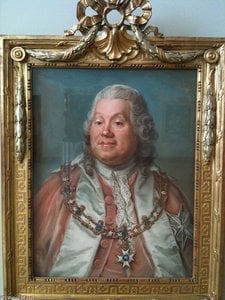
In this portrait, we encounter Adolf Frederick, King of Sweden, captured in a moment of quiet dignity. The subject is rendered with a striking clarity, his gaze meeting…
Παραγγελία αναπαραγωγής from $181 →




Τα τέσσερα θέματα που εμφανίζονται πιο συχνά σε αυτά τα αριστούργημα, με το κορυφαίο παράδειγμα για το καθένα.
Τα 4 μουσεία που φιλοξενούν το μεγαλύτερο μέρος των έργων σε αυτήν τη σελίδα.
| Μουσεία | Πόλη | Έργα του Γκουστάφ Λούντμπεργ | Πάτρια από αυτή τη λίστα |
|---|---|---|---|
 Nationalmuseum |
Στοκχόλμη | 33 | Sofia Albertina (1753-1829), prinsessa av Sverige, som vestal, Nils Palmstierna, 1696-1766, friherre, Karl XIII (1748-1818), konung av Sverige och Norge |
 Finnish National Gallery |
Helsinki | 11 | The Philologist and the Counsellor of Secretary Johan Ihre, Countess Poaton (?), Juliana Elisabet König |
 National Portrait Gallery of Sweden |
Strängnäs | 8 | Fredrik Axel von Fersen (1719–1754), Count and Field Marshal, Fredrik Ulrik Insenstierna (1723-1768), governor, married to Sofia Charlotta Kjerrmansköld, Gustav IV Adolf (1778-1837), king of Sweden, married to Fredrika Dorotea Vilhelmina of Baden |
 Ερμιτάζ |
Σουζ ή Αγία Πετρούπολη | 1 | Portrait of Adolf Frederick, King of Sweden |


Sofia Albertina (1753-1829), prinsessa av Sverige, som vestal (1750), Nationalmuseum, Στοκχόλμη. Ακολουθούν το Nils Palmstierna, 1696-1766, friherre (1750) και το Karl XIII (1748-1818), konung av Sverige och Norge (1753).
55 ετών: το έργο Sofia Albertina (1753-1829), prinsessa av Sverige, som vestal χρονολογείται από το 1750 και ο/η Γκουστάφ Λούντμπεργ γεννήθηκε το 1695.
Sofia Albertina (1753-1829), prinsessa av Sverige, som vestal, Nils Palmstierna, 1696-1766, friherre, Karl XIII (1748-1818), konung av Sverige och Norge, Portrait of a Lady, Fredrik Axel von Fersen (1719–1754), Count and Field Marshal, Prélude de la Gloire, Countess Lovisa Ulrika Tessin, née Sparre, Hedvig Ulrika Taube, Countess von Hessenstein, Sofia Charlotta Kjerrmansköld (1731-1782), married to governor Fredrik Ulrik Insenstierna και Fredrik Ulrik Insenstierna (1723-1768), governor, married to Sofia Charlotta Kjerrmansköld. Η παραπάνω κατάταξη αναγράφει το έτος και το μουσείο για το καθένα.
Ο κατάλογός μας περιλαμβάνει 81 έργα του Γκουστάφ Λούντμπεργ, με ημερομηνίες από 1750 έως 1780.
Τα περισσότερα βρίσκονται στα Nationalmuseum (Στοκχόλμη), Finnish National Gallery (Helsinki) και National Portrait Gallery of Sweden (Strängnäs). Ο παραπάνω πίνακας περιγράφει τα μουσεία ένα προς ένα.
Κατά την περίοδο 1750s: 8 από τα 79 έργα σε αυτήν τη σελίδα χρονολογούνται τότε, ανάμεσα σε αυτά και Sofia Albertina (1753-1829), prinsessa av Sverige, som vestal.
Το παλαιότερο σε αυτήν τη σελίδα είναι το Sofia Albertina (1753-1829), prinsessa av Sverige, som vestal (1750), το νεότερο το The Philologist and the Counsellor of Secretary Johan Ihre (1780).
Portraits (16), Portrait (6) και 18th century (5), από τα 79 έργα σε αυτήν τη σελίδα.
Rococo, όπως τα έργα σε αυτήν τη σελίδα δείχνουν.
Τα Sofia Albertina (1753-1829), prinsessa av Sverige, som vestal, Nils Palmstierna, 1696-1766, friherre και Karl XIII (1748-1818), konung av Sverige och Norge περιλαμβάνονται στα 33 έργα σε αυτήν τη σελίδα που βρίσκονται στο Nationalmuseum, Στοκχόλμη.
Ναι. Κάθε έργο σε αυτήν τη σελίδα μπορεί να παραγγελθεί ως μια χειροποίητη αναπαραγωγή ελαιογραφίας επιπέδου μουσείου ή ως μια εκτύπωση fine art, στο μέγεθος που επιλέξετε, από την αντίστοιχη σελίδα του έργου.
In the grand tapestry of eighteenth-century European art, few threads shimmer with as much delicate brilliance as the works of Gustaf Lundberg. A master of the pastel medium, Lundberg did not merely paint faces; he captured the very essence of an era defined by grace, light, and aristocratic splendor. Born in Stockholm in 1695 to a family touched by the culinary and artistic arts, his early years were shadowed by the profound tragedy of orphanhood. Yet, from this loss emerged a resilient creative spirit, nurtured under the watchful eye of his grandfather, the goldsmith Fredrik Richter. This early exposure to the meticulous precision of fine craftsmanship would later become a cornerstone of Lundberg’s ability to render the intricate textures of silk, lace, and skin with unparalleled sensitivity.
The trajectory of Lundberg’s life took a transformative turn in 1717 when he ventured from the familiar streets of Stockholm to the vibrant, intellectual heart of Paris. It was in this epicenter of culture that his talent truly blossomed. Immersed in the rigorous traditions of French academies, he studied under luminaries such as Hyacinthe Rigaud and Nicolas de Largillière, absorbing the grandiosity of classical portraiture. However, perhaps the most profound influence on his soul was the Venetian master Rosalba Carriera. Her ethereal use of pastel allowed Lundberg to move beyond mere representation, teaching him how to manipulate light and soft color to evoke emotion and movement. This fusion of French structure and Venetian luminosity became the hallmark of his distinctive style.
As his reputation ascended, Lundberg became a fixture in the most prestigious circles of the French and Swedish courts. His ability to immortalize the nobility was not merely a matter of skill, but of psychological insight. He possessed a rare gift for portraying the grandeur of power alongside the intimate vulnerability of the individual. His portfolio serves as a visual chronicle of the 18th-century elite, featuring breathtaking depictions of Louis XV and his queen, Maria Leszczyńska. The artist’s connection to royalty was so profound that he even provided pastel painting lessons to the deposed King Stanisław Leszczyński, demonstrating a level of intimacy with his subjects that transcended the typical relationship between painter and patron.
Beyond the halls of Versailles, Lundberg maintained deep ties to his Swedish roots, acting as a cultural bridge between Paris and Stockholm. His later appointment as a court portrait painter in Sweden allowed him to bring the sophisticated aesthetics of the Rococo movement back to his homeland. Through his work, the Swedish aristocracy could see themselves reflected in the fashionable, luminous style of the French salons. His life’s work remains a testament to several key artistic achievements:
The historical significance of Gustaf Lundberg lies in his role as a definitive voice of the Rococo period. While the era eventually gave way to the more austere Neoclassical movement, the elegance and charm found in Lundberg’s portraits remain timeless. He captured a fleeting moment in history—a time of powdered wigs, opulent fabrics, and a profound belief in the beauty of the decorative arts. Even today, when one gazes upon his work, there is a palpable sense of the atmosphere of 1750: a world of soft light, whispered secrets, and an unwavering pursuit of aesthetic perfection. His legacy survives not just in museums, but in the enduring way we perceive the grace of the Rococo age.