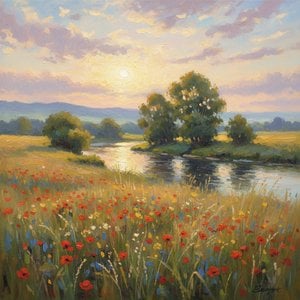
Yamada Kōsaku: Echoes of Tradition in Silk Landscapes
Yamada Kōsaku (山田耕筰, Yamada Kōsaku; 9 June 1886 – 29 December 1965) was a Japanese composer and conductor whose artistic legacy extends beyond the realm of music into the captivating world of silk painting—a medium he championed with remarkable skill and sensitivity. Born in Tokyo during the tumultuous Meiji Era (1868-1912), Yamada’s life coincided with Japan's dramatic transformation from feudal monarchy to modern nationhood, a shift that profoundly shaped his artistic vision. His work stands as a testament to this duality—embracing both Western musical influences and deeply rooted Japanese aesthetic principles.
Early Life and Musical Education
Yamada’s formative years were marked by exposure to European culture through the influence of his parents, who had traveled extensively abroad. However, he received his initial musical training at Tokyo Music School under German composers August Junker and Heinrich Werkmeister—a deliberate choice that would establish a cornerstone for his future artistic endeavors. This grounding in Western pedagogy instilled a disciplined approach to composition while simultaneously nurturing an appreciation for harmonic complexity. Notably, Yamada’s sister Tsuneko Gauntlett and brother-in-law George Edward Luckman Gauntlett were instrumental in fostering his musical curiosity and providing him with invaluable support during his formative years.
The Nihonga Movement and Silk Painting
Yamada's artistic trajectory took a decisive turn when he joined the nihonga movement—a reaction against the dominant yōga (Western-style painting) tradition that emerged during the Meiji period. Nihonga, meaning “pictures of Japan,” prioritized capturing the essence of Japanese landscapes and cultural traditions using techniques honed over centuries. Yamada’s mastery of silk painting exemplifies this ethos. He skillfully employed mineral pigments and organic binders on silk—a medium favored by generations of Japanese artists—to depict serene vistas imbued with symbolic resonance. His canvases often portray misty mountains, tranquil ponds reflecting moonlight, and blossoming cherry trees—imagery deeply rooted in Zen Buddhism and conveying a profound sense of harmony and contemplation. The meticulous layering of colors and textures achieved through traditional silk painting techniques mirrored Yamada’s own artistic philosophy: blending Western musical sophistication with the enduring beauty of Japanese heritage.
Notable Works and Influences
Yamada’s oeuvre encompasses over 1,600 musical compositions, ranging from orchestral works to vocal art songs (lieder) and operas. Among his most celebrated pieces are *Arirang and Akatonbo*, an evocative arrangement of the Korean folk song Arirang—a symbol of national pride—and *The Combined Fleet March,* commemorating Japan’s naval victory over Russia in 1905. His symphonies, particularly *Inno Meiji* (1921), incorporate instruments traditionally associated with Japanese music, demonstrating his commitment to preserving cultural heritage while engaging with contemporary musical trends. He collaborated closely with composers like Rachmaninov and Prokofiev during his time abroad, absorbing influences from both European Romanticism and Russian nationalism. Furthermore, Yamada’s artistic sensibilities were shaped by the pioneering landscapes of Utagawa Hiroshige—a master of woodblock prints known for their exquisite depictions of Edo-period Japan—whose meticulous attention to detail and atmospheric perspective served as inspiration for Yamada's silk paintings.
Legacy and Enduring Significance
Yamada Kōsaku’s contribution to Japanese art extends far beyond his musical compositions. He championed the silk painting medium, elevating it to a level of artistic sophistication rarely achieved elsewhere. His work continues to resonate with audiences today—a testament to its timeless beauty and profound philosophical depth. Exhibited at institutions like the Museum of Modern Art Japan, Yamada’s paintings embody the spirit of the Meiji Era—a period characterized by both rapid modernization and an unwavering devotion to traditional values. He remains a pivotal figure in Japanese artistic history, securing his place as one of the most influential composers and silk painters of the 20th century.